She Left the Violence—Why Are Memory, Headaches and the Next Step Still So Hard? The Hidden Brain Injuries Facing First Nations Women in Australia
Original Chinese title: 她明明已離開暴力,為什麼還是記不住、頭痛、找不到下一站?澳洲 First Nations 女性的「隱形腦傷」把醫療、住房與助人倫理接成同一條路
Australian research and Women's Health Week show how traumatic brain injury caused by family violence can be missed between crisis accommodation, housing and healthcare. The need is not to place more responsibility on individuals, but to connect emergency, community, housing and culturally safe services into a trackable care pathway.
王莉如
王莉如 is a counseling psychology supervisor whose work focuses on trauma recovery, partner and family relationships, professional helping ethics, and social-emotional support.
After “getting to safety,” the problem may only be starting to appear
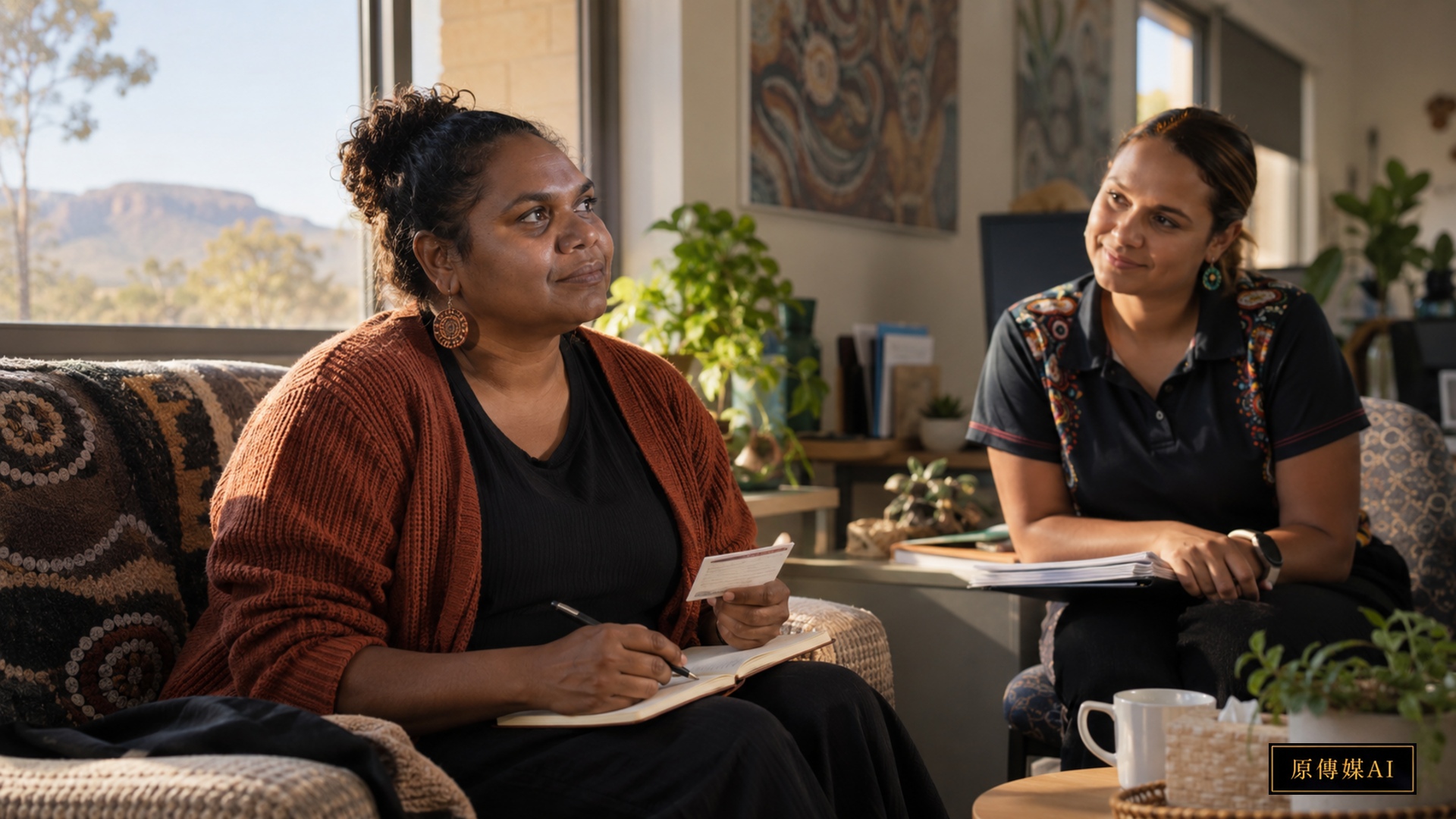
Public discussion of family violence often focuses on whether someone has left the immediate danger. Yet for some women who have experienced repeated blows to the head, falls, strangulation or other violence, leaving does not make headaches, memory confusion, reduced attention, fatigue, emotional changes and sleep problems disappear. Those effects can make it difficult to remember appointments, complete forms, follow calls from several agencies, or explain a complicated history to a stranger in one sitting.
During Women's Health Week 2026, Australia's National Aboriginal Community Controlled Health Organisation (NACCHO) emphasised the health and healing of Aboriginal and Torres Strait Islander women and encouraged women to seek checks, conversations and support in ways that work for them. Read alongside recent traumatic brain injury research, that public-health message raises a practical question: when a service system expects a person to remember every instruction, pursue every referral and repeatedly retell her story, it may misread the functional effects of brain injury as non-cooperation.
Head injury is not a rare side issue; it is a risk that services need to recognise
ANROWS has tracked the issue of Indigenous women living with traumatic brain injury and identifies TBI caused by family and gender-based violence as an important disability and health concern. Updated Australian Institute of Health and Welfare data on family violence affecting First Nations people also show that head and neck injuries account for a substantial share of hospitalisations among women assaulted by family members. The point is not to diagnose every headache as brain injury, but to remind frontline services that treating visible wounds alone may be insufficient.
Crucially, traumatic brain injury does not always leave an obvious external wound. Changes in memory, cognition, executive function and tolerance for stress may become most disruptive after a woman returns to everyday tasks. A 2024 interview study documented the experiences of 18 Aboriginal and Torres Strait Islander women living in regional and remote Australia who had family-violence-related TBI, together with family and community workers. Their accounts did not describe one isolated symptom; they showed memory, concentration, daily management and help-seeking decisions interacting with one another.
The emergency department is not the finish line; the hard question is where the next stop is
A 2026 study in the International Journal of Environmental Research and Public Health interviewed 24 health professionals at a regional hospital, including Indigenous liaison officers, Aboriginal health workers, nurses, medical staff and allied health practitioners. It identified four directions: formal pathways for family-violence-related head injury, stronger links from acute care to community follow-up, practical resources for women and children, and better recognition and response among health workers.
Those recommendations may sound administrative, but they describe everyday barriers. If an emergency department writes “observe at home” when the person has no safe home, if a referral letter expects her to arrange an appointment herself when brain injury makes a multi-step process difficult to remember, or if the next service sees only a “housing need” without knowing about headaches and cognitive difficulty, every agency can finish its own task while the overall pathway still breaks.
Why housing services also need some understanding of brain injury
A May 2026 BMC Public Health study focused on homelessness and healthcare access. It found that homelessness after violence, temporary accommodation and displacement from a previous home can affect First Nations women's access to TBI care. Crisis accommodation can provide safety, yet the environment and service process may not be designed around brain injury: noise, disrupted sleep, complex rules, repeated retelling, transport difficulties and frequent moves can all make symptoms harder to manage.
Researchers also point to the value of multi-agency case management and outreach. This does not mean that every person needs one worker to control every aspect of her life. It means services should share the minimum information needed to keep work connected: who owns the next step, when a response is due, how the woman wants to be contacted, whether accompaniment or reminders are needed, and what information must not spread across agencies. Reducing cognitive load is itself part of accessibility for people living with brain injury.
“Why did she forget again?” should not become a moral judgment
Traumatic brain injury and psychological trauma can coexist and influence one another, but they should not be collapsed into a single label. Missing an appointment does not necessarily mean avoidance; emotional changes do not necessarily mean unwillingness to cooperate; asking the same question again does not necessarily mean deliberate delay. A safer frontline practice is to document observed functional difficulties clearly and refer them for appropriate clinical assessment rather than interpreting them as character or attitude.
Helping professionals can also reduce information load immediately: confirm only one or two next steps at a time, use both written and verbal reminders, let the person choose whether a trusted supporter is present, and avoid making her repeat a full violence history at every doorway. Those practices do not require a formal diagnosis before they begin. They are already good service design because they reduce burden and improve understanding and respect.
Cultural safety is not a box added to the end of a form
The Aboriginal Community Controlled Health Organisations represented by NACCHO emphasise community control, cultural safety and holistic healthcare. In a TBI pathway, this does not mean assuming that every First Nations woman wants the same cultural form of care. It means giving local Aboriginal health workers, liaison officers and community-controlled organisations a real role in designing and delivering the pathway.
Cultural safety also includes the question of who decides how much of a story is told. Family violence, head injury, housing and children's care involve highly sensitive information. Cross-agency coordination must not become unlimited sharing. Copying a complete narrative into every system for convenience can create repeated exposure. A stronger approach is to share what is necessary for a defined purpose and ensure the person knows where information will go, who can see it and when consent needs to be revisited.
What Taiwan's Indigenous community services can learn is not a copy of the Australian system
Australian research cannot establish that Indigenous women in Taiwan experience identical patterns, barriers or prevalence, so its statistics should not be transferred directly. What it offers is a practical service checklist: when family violence, head injury, remote transport, housing and psychological support are present at the same time, do existing professional silos allow a person to fall through the gaps?
Taiwan can begin with small pathway pilots. When an emergency department or local health centre encounters family violence together with a risk of head injury, is there a simple follow-up field after immediate safety and medical care? After referral to social services or accommodation, can the record retain a reminder that low-cognitive-load communication may be needed? When someone returns to an Indigenous community or moves across counties, is there a named handover point rather than asking her to find the entire pathway again?
Artificial intelligence can help organise work, but it cannot replace judgment and consent
If artificial intelligence is introduced, its best role is to reduce administrative friction: turn multi-agency contact records into a task list, flag referrals that have not received a response, translate specialist language into understandable explanations, or help a worker see the two most important tasks for today. It should not decide by itself who has experienced violence, who has a brain injury, or send sensitive narratives to an unauthorised model.
For high-risk cases, any AIGC summary should keep a link to the original record, identify its source and time, and require human confirmation. The system should also allow “do not summarise,” “do not transmit across agencies,” and correction or deletion of wrong labels. Efficiency does not mean centralising more personal data; it means moving necessary information safely between the right people.
Shift the question from “does a service exist?” to “can she complete the whole pathway?”
Women's Health Week carries a simple message: get checked, find someone to talk to and make time for your health. For a woman who has experienced violence, may have a brain injury, is moving between homes or is caring for children, “get checked” can itself be a long journey. The research suggests that service outcomes should not be counted only as completed referrals; systems should ask whether she actually reached the next service, understood the next step and had someone reconnect when contact was lost.
That is the broader lesson of “hidden brain injury.” Sometimes what is hidden is not only the injury, but the fact that institutions split memory, transport, housing, cultural safety and care into separate fields and leave no one responsible for the entire route. When services reconnect those fields, a person no longer has to cross every doorway by willpower alone.
Service quality should measure whether the pathway catches people, not only whether referrals are sent
To turn the Australian research into workable quality measures, services can track whether first contact happened after referral, whether the woman knows the next point of contact, whether there is a safe way to reconnect after contact is lost, and whether important information reached the next service correctly after consent. Those measures say more about continuity of care than simply counting how many referrals were issued. For someone who may have memory or executive-function difficulties, one less repeated explanation, one less confusing form or one less phone number she has to locate herself is a real reduction in the service barrier.
People also need the right to opt out and correct records. If a brain-injury risk note is outdated or wrong, the person should know how to request a correction. If she does not want parts of her violence history circulated across agencies, a system should not override consent in the name of “complete data.” Trackable care should make the chain of responsibility trackable; it should not turn a person into trackable data.
Main sources
- NACCHO | Women's Health Week 2026
- ANROWS | Invisible disability: Indigenous women living with traumatic brain injury
- BMC Public Health | Homelessness and healthcare access for Aboriginal and Torres Strait Islander women with TBI from family violence
- IJERPH | From Emergency Care to Community Healing
- AIHW | Aboriginal and Torres Strait Islander people: family, domestic and sexual violence data
Role-Driven Inquiry
Yuan Media AI | Guided Questions by Role
Select a role first, then review the complete questions from that perspective; clicking a question will display Yuan Media AI’s response in real time.
Select a role
Frontline medical and emergency personnel
Examine the article's evidence, governance boundaries, data rights, and actionable steps from the perspective of a Frontline medical and emergency personnel.
Choose a question
AI use and content-safety disclosure
This English version is AI-assisted and editor-reviewed in the Yuan Media AI workflow. Research findings, service implications and proposed AI uses are kept distinct.