When Missed Appointments Look Like “Non-Compliance”: Why Invisible Brain Injury in First Nations Women Can Disappear Inside Services
Original Chinese title: 那些被當成「不配合」的失約與記憶混亂:First Nations 受暴女性的隱形腦傷,為什麼常在制度裡消失?
Missed appointments, memory problems and fragmented accounts after violence may reflect traumatic brain injury; connected, culturally safe care must not misread cognitive difficulty as non-compliance.
王莉如
A counseling psychology supervisor focused on trauma recovery, couple and family relationships, helping-profession ethics, and social and emotional support.
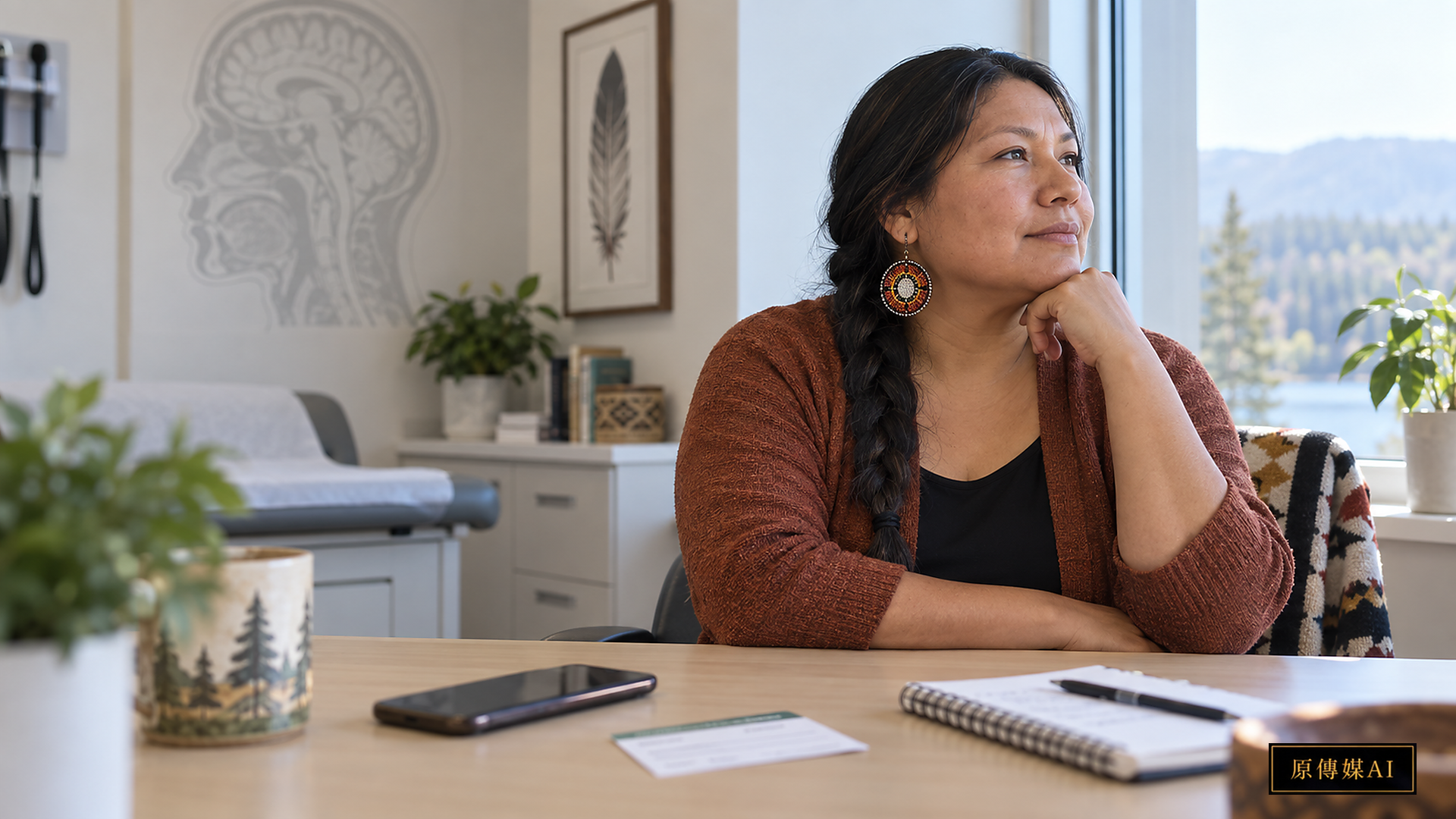
When a missed appointment is not “non-compliance” but a sign that brain injury has disrupted daily order
Domestic- and family-violence services often judge cooperation through punctuality, a clear account of events, remembered documents and the ability to complete an application in sequence. For women who have repeatedly been struck in the head, strangled, knocked down or otherwise injured, those apparently small administrative failures may instead reflect cognitive and memory effects of traumatic brain injury (TBI). When a service reads neurological impairment as attitude, a survivor can be excluded again at the very place where she asks for help.
This issue requires particular care for Aboriginal and Torres Strait Islander women. ANROWS describes TBI associated with domestic and family violence as an important but under-recognized disability issue and notes a much higher burden of head injury among Aboriginal and Torres Strait Islander women than among other Australian women. That does not mean Indigenous culture causes violence, and identity must not be treated as a risk factor. Colonial history, limited remote services, unequal housing and legal resources, institutional distrust, racism and exposure to violence may interact to make injury harder to recognize and sustained support harder to obtain.
Why can an injury that is not visible disappear so easily inside institutions?
TBI does not always produce an obvious wound. Even when there is no open injury, or an initial scan shows no major structural damage, a patient may experience reduced attention, short-term memory difficulty, impaired executive function, fatigue, headache, changed emotional regulation and slower information processing. These signs can overlap with prolonged trauma, depression, anxiety, sleep disruption, pain and possible hypoxic brain injury after strangulation.
If a service asks only whether a woman is unstable, changing her story or failing to attend, it can reduce neurocognitive difficulty to personality or motivation. Housing, courts, social services, child protection, psychological support and health care may each see only their own form. No one then sees the timeline connecting violence, repeated head impacts, sleep loss, worsening memory, reduced work capacity and the first changes noticed by relatives.
Improvement therefore requires more than another screening form. “Possible brain injury” needs to become a shared, testable hypothesis that different systems can recognize, refer and follow over time.
From emergency care back to community: the most dangerous gap may begin after discharge
A 2026 study of a culturally responsive care pathway follows the problem from emergency care into the community. That is important because the hard part of life resumes after an examination: does the woman have safe housing, help returning for care, a realistic way to remember complex instructions, and access to neurological rehabilitation, psychological support, legal aid or transport? If every service expects her to integrate the system by herself, the injury may make that very task especially difficult.
Aboriginal Health Workers and Indigenous Hospital Liaison Officers are not simply language interpreters. They also translate institutions. They understand how a hospital works and how family, community and cultural context affect whether a patient can actually return for treatment. In remote areas, distance, phones and connectivity, childcare, vehicles, cost and kinship responsibilities can all make a standard follow-up process fail.
Two-Eyed Seeing here is not a superficial combination of “Western medicine plus traditional healing.” It places clinical evidence and lived experience on the same care map. Clinical evidence helps assess neurological risk and treatment needs; lived experience shows which arrangements can work in a person’s actual life.
Cultural safety is not merely a friendly attitude; it lowers the risk of misjudgment
Some institutions understand cultural safety mainly as respectful terminology, cultural imagery or competency training. Those measures may help, but a system that still demands high levels of memory, reading, time management and document handling can continue to exclude a woman with TBI.
Cultural safety must also shape the process. Can crucial information be confirmed more than once? Can a trusted relative or support person participate? Can clear images, audio or phone reminders reduce memory demands? Is there one principal contact so that the woman does not have to recount violence to five departments? If her chronology is unclear, does a worker consider injury and trauma before doubting credibility?
These designs also assist non-Indigenous patients with TBI. Indigenous-led cultural safety is therefore not an optional specialist service; it can expose a wider institutional blind spot about differences in human cognition.
AI may assist, but a risk score must not become a new label
AI is best suited here to organizing and prompting. It may assemble a timeline from emergency, rehabilitation, psychological and social-service records; surface documented head injury, strangulation or repeated falls; or prompt an authorized human screening when the relevant evidence exists.
The same system can produce secondary harm. If it converts missed appointments, inconsistent narratives or child-protection involvement into a high-risk personality score without understanding TBI and trauma, it automates institutional bias. An AI system must show provenance, allow human review and strictly limit movement of sensitive information between organizations.
First Nations data also raises sovereignty questions. Health, violence and family information does not become available for secondary use merely because it could improve a model. Access, purpose, withdrawal and cross-border transfer need explicit governance.
Brain injury must not become a new explanation for everything
Taking TBI seriously creates another risk: interpreting every action through that diagnosis. A survivor’s difficulties may involve fear, PTSD, lack of sleep, chronic pain, medication effects, financial stress, unsafe housing, childcare and brain injury at the same time. Professional care should acknowledge interacting causes, not replace one totalizing label with another.
A sound pathway must tolerate diagnostic uncertainty. A worker can say that the causes of a memory problem are not yet known, while recognizing that injury, trauma and sleep all deserve assessment. That is safer than quickly assigning every difficulty to psychology, addiction, personality or TBI.
Replace “Why can’t she do it?” with “How can the system make it possible?”
A survivor who must rapidly remember medical, legal, housing, childcare, transport, financial and safety plans is confronting a system built around executive function. For a person with TBI, that design is itself a barrier.
Concrete changes include delivering only a few priorities at a time; offering written and audio versions; allowing a safe support person; using simple appointment reminders; completing cross-agency referrals behind the scenes instead of demanding repeated applications; and responding to missed appointments with active contact rather than automatic closure.
Those measures do not lower professional standards. They shift professional effort from checking whether a person passed a process to designing a process she can use.
Conclusion: brain injury may be most dangerous when no one knows it is there
TBI is “invisible” not because it has no effects, but because institutions can rename those effects as non-cooperation, unreliability, emotionality, poor parenting or irresponsibility. When labels replace clinical and lived context, a survivor may lose health care, housing, legal protection and support.
For First Nations women, the answer is not one more label. It is a connected pathway from emergency care to community, neurological assessment to cultural safety, and individual support to data governance. Invisible injury begins to be seen when a system asks what harm a woman may have sustained before asking why she failed to comply.
Yuan Media AI | Continue by role
- First Nations woman survivor / family caregiver: Which everyday changes are relatives most likely to notice after a head injury?
- Aboriginal Health Worker / Indigenous Hospital Liaison Officer: How can an emergency assessment connect to community care instead of leaving the patient to coordinate alone?
- Emergency and TBI rehabilitation professional: How should overlapping signs of TBI, hypoxic injury, PTSD, sleep disruption and medication effects be assessed?
- Domestic violence, housing or child-protection practitioner: Which administrative processes most often mistake cognitive disability for non-cooperation?
Sources
- NACCHO | Women’s Health Week 2026
- ANROWS | Invisible disability: Indigenous women living with traumatic brain injury
- PubMed | From Emergency Care to Community Healing
- CDC | Symptoms of Mild TBI and Concussion
- NACCHO | National Health Literacy Framework
Role-Driven Inquiry
Yuan Media AI | Guided Questions by Role
Select a role first, then review the complete questions from that perspective; clicking a question will display Yuan Media AI’s response in real time.
Select a role
First Nations female survivors and family caregivers
Examine the article's evidence, governance boundaries, data rights, and actionable steps from the perspective of a First Nations female survivors and family caregivers.
Choose a question
AI use and content-safety disclosure
This English edition is an AI-assisted translation of the supplied Chinese feature, checked for source parity and evidence boundaries.