Buying a Machine Does Not Mean a Patient Gets Care: WHO's Medical-Device Life Cycle from Procurement to Functionality
Original Chinese title: 買到機器,不等於看得到病:WHO 把醫材、檢驗與輔具拉成「從採購到報廢」的一條生命週期——偏鄉真正缺的是可用,不只是有設備
WHO's life-cycle approach requires procurement to account for functionality, maintenance, consumables and replacement, because rural equity depends on equipment working safely when patients need it.
鄭淑禎|實踐大學專任助理教授
A full-time assistant professor at Shih Chien University focused on industrial transition, long-term care, public-service design and the practical delivery of technology to users and frontline services.
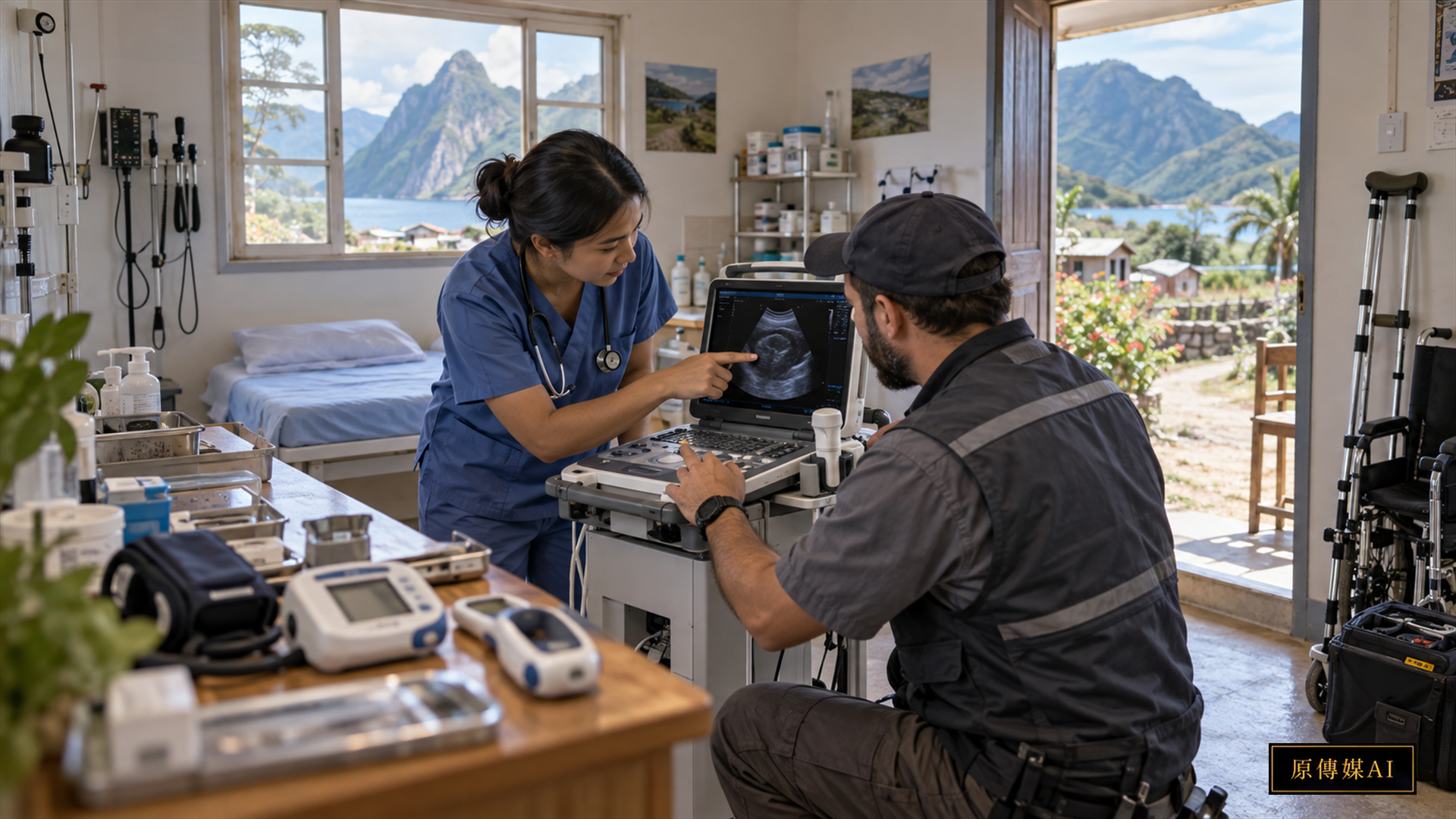
An ultrasound unit delivered to a mountain clinic makes a good photograph, and a laboratory analyzer installed at a health center is easy to count as added capacity. The hard questions begin after the ceremony. Who repairs a failed probe? Will reagents still be available next month? Who renews software, handles calibration and trains replacement staff? If the machine stops, must the patient spend hours traveling downhill again?
WHO's 2026 South-East Asia agenda for medical devices, in vitro diagnostics and assistive products shifts attention from what was purchased to whether it remains functional. WHO warns that inaccessible, unaffordable, unsafe or nonfunctional technology can delay diagnosis, produce inappropriate treatment, require extra referrals, increase out-of-pocket costs and worsen outcomes. Procurement therefore has to connect essential lists, regulation, installation, training, maintenance, spare parts, inventories, downtime, replacement and disposal.
Geography makes that approach particularly important in rural areas. A large urban hospital may have several comparable units and nearby engineers; a remote clinic may have one unit and wait for a technician to cross counties or take a boat. The same machine carries a different risk in each setting. Equity cannot be measured only as devices per ten thousand people. It also requires real availability, repair time, days without consumables, backup procedures and the travel imposed on patients by downtime.
The life-cycle approach also returns biomedical engineering to the center of health systems. Digital blood-pressure monitors, oxygen equipment, ultrasound, X-ray, diagnostic instruments and rehabilitation aids involve firmware, software, networks, cybersecurity, backups and remote vendor access as well as parts. When artificial intelligence enters devices, model updates, algorithm versions, sensor drift and data quality become maintenance responsibilities too.
For Indigenous township public services, this is a Two-Eyed Seeing problem. Central authorities and hospital managers hold budgets, inventories, contracts and warranty records. Frontline workers know which device repeatedly fails, which consumable is unavailable, when roads close, which patient cannot tolerate a six-hour return journey and which issued aid does not fit a steep path or home. Policy moves beyond the statement "purchased" only when these forms of knowledge are considered together.
One practical use of artificial intelligence is therefore equipment-availability forecasting rather than an expensive diagnostic model. Usage hours, faults, parts, stock, travel time and vendor service commitments can support reminders about preventive maintenance, likely shortages before a holiday or advance supplies before seasonal road disruption. A well-designed prediction may create more care than another machine that spends much of its life offline.
A second use is availability before referral. Before a patient travels, the service should confirm that the equipment works, required technical staff are present and the test can be performed. Patients should not bear the cost of discovering a failure only after a long journey. Sharing appropriately protected operational status across facilities can turn a paper referral route into real service coordination.
Assistive products form a third area. Wheelchairs, walkers and respiratory or other aids do not become successful services merely when issued. Slope, thresholds, road surfaces, caregiver strength and distance to repair all affect use. Life-cycle governance follows whether an aid is still used, safe and properly adjusted. Simple accessible feedback may work better than forcing an older resident through a complex clinical portal.
Digitization must not turn remote facilities into objects of surveillance. More downtime does not by itself prove poor local management. Blocked roads, vendors unwilling to travel and centrally specified equipment unsuited to local conditions are system responsibilities. A useful dashboard lets local services identify the source of a problem rather than simply receive a ranking.
The central question is how much usable care time a budget creates. Ten purchased machines do not equal ten functioning services if three lack consumables, two await repair and nobody is trained to operate another. For remote communities, the clearest measure of equity may be whether equipment works when a patient needs it, not whether it appears on an asset list.
By reframing purchase as functionality, WHO changes the accountability of public service. Government is responsible not only for completing procurement but also for lasting usability. Local feedback, predictive maintenance and shared operational status can help rural health care move from one-off hardware grants toward sustainable service capacity. This does not mean WHO itself has supplied every device, consumable or repair service; it is a governance framework for the full life cycle.
Make functionality a public commitment that can be tracked
Procurement documents should define life-cycle costs and duties before a contract is signed: installation conditions, training, calibration, parts and consumables, fault reporting, response times, alternative testing, data transfer and final replacement. Comparing purchase prices alone leaves maintenance, travel and downtime costs with clinics and patients. Rural risk assessments must also include rainy seasons, roads, ferries, electricity and connectivity.
Frontline services need indicators they can interpret and contest. Alongside availability, they can track mean repair time, days without consumables, preventive-maintenance completion, successful pre-referral confirmation and extra patient travel. These measures should diagnose unsuitable specifications, funding gaps, supply delays, engineering shortages or ignored local conditions, not merely rank facilities.
Information systems can organize maintenance and stock alerts, but the data must return to service improvement. Predictive maintenance requires rules for input quality, vendor access, cybersecurity and human review. It must not decide whether a patient deserves referral or label higher rural failure rates as local failure. The useful design gives clinics, engineering teams, procurement offices and community services a shared view of the service chain.
Service design must also define the patient's route during failure: who gives notice, which facility can substitute, how transport is arranged, how test information moves safely and whether the patient is actively rebooked. These steps determine whether a stopped machine becomes delayed care and added expense. Rehearsing the alternative route makes life-cycle management answer the real question of whether a patient can receive care today.
After each exercise, patients and frontline staff should review actual waiting, transport and communication costs so that improvement does not stop at the equipment inventory.
Yuan Media AI | Continue by role
Choose your role to view follow-up questions designed around its responsibilities.
Sources and further reading
Role-Driven Inquiry
Yuan Media AI | Guided Questions by Role
Select a role first, then review the complete questions from that perspective; clicking a question will display Yuan Media AI’s response in real time.
Select a role
Remote patient and family caregiver perspective
Examine the article's evidence, governance boundaries, data rights, and actionable steps from the perspective of a Remote patient and family caregiver perspective.
Choose a question
AI use and content-safety disclosure
This English edition is an AI-assisted translation based on official and research sources, with established facts, open questions and analysis kept distinct.