Diamonds Are No Longer Just Rings: Jewelry Trends in 2026 Are Moving Toward Bolder Brilliance
Original Chinese title: 鑽石不再只是戒指:2026 珠寶流行正在走向更大膽的閃耀
Jewelry trends in 2026 are no longer just low-key, minimalist and everyday wear; they are shifting toward sculptural forms, colored gemstones, mixed metals, large diamonds, personalized symbols and high-visibility styles.
戴美伶
An Amis practitioner working in jewelry and diamond design.
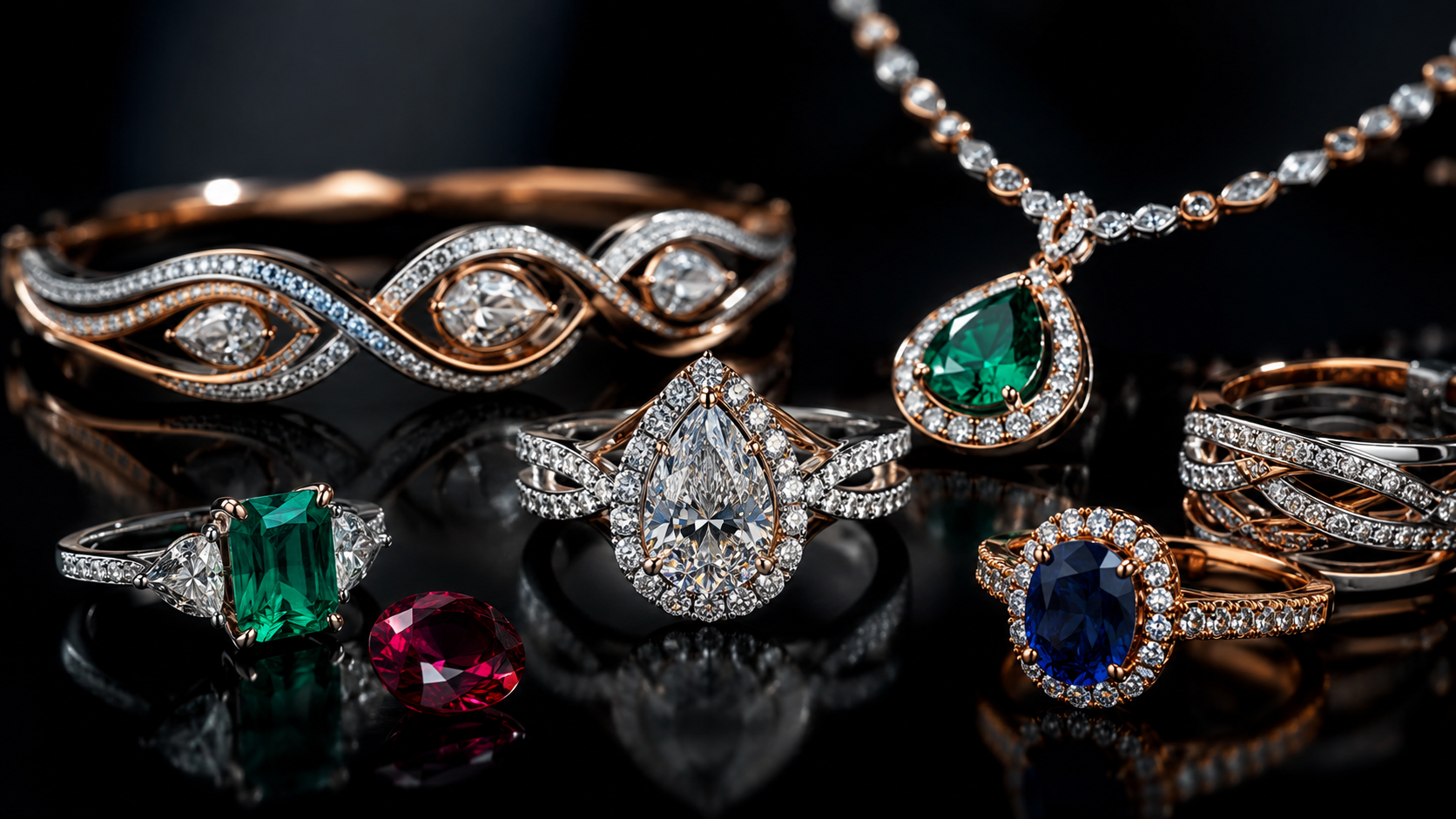
The popularity of jewelry has never been just about decoration. It is a reflection of how an era understands the body, wealth, love, power and self-image.
In recent years, minimalist necklaces, thin rings, low-key stud earrings and everyday jewelry that seemed as if nothing were worn have dominated the market. But entering 2026, international jewelry language has clearly shifted: larger, brighter, more sculptural and more willing to be seen.
Jewelry Becomes a New Personal Statement
This shift is not accidental. From fashion media, jewelry brands to celebrity styling, several clear signals can be observed: pear-shaped diamonds are regaining attention, colored gemstones appear more often in formal and athletic settings, mixed metals and heavy chains return to the center of styling, and earrings are no longer just accessories beside the face but complete protagonists of a look.
These changes indicate one thing: jewelry is no longer confined to weddings, galas and boutique counters. It is entering sports arenas, social media, everyday outfits, workplace imagery and personal branding. People use jewelry not only to express that I am loved, but also to show how I choose to be seen.
Six Notable Directions
First, the return of large diamonds and special cuts. Round brilliant diamonds remain classic, but pear-shaped, oval, emerald-cut, teardrop and asymmetrical cuts create more personal identification. Pear-shaped diamonds are captivating because they combine the softness of a round with the directional sense of a point. Worn on the ring finger it can be an engagement ring; worn on the little finger it becomes self-reward; as a pendant it is like a drop of frozen light.
Second, colored gemstones have become protagonists again. Rubies, sapphires, emeralds, garnets, tourmaline, tanzanite and colored diamonds are not just expensive and rare; they provide more vivid emotional language. Diamonds symbolize light; colored gemstones symbolize character. When people tire of uniform luxury, color becomes the new difference.
Third, sculptural metal lines. Large earrings, twisted ring bands, wide bracelets, architectural brooches make jewelry look like small sculptures that can be worn. This design is especially suited to the image age because it has more presence in photos, short videos and stage lighting.
Fourth, mixed metals and layered wearing. Yellow K gold, white K gold and rose gold are no longer strictly separated; mixing them appears more natural. In the past some worried that metal mixing would look informal, but now exactly the opposite: mixing represents that the wearer is not limited by a single rule.
Fifth, personalized symbols. Constellations, letters, birthstones, family marks, travel memories, pet outlines, city coordinates can all become jewelry design elements. Such jewelry may not be the most expensive, yet often has the greatest emotional value.
Sixth, the addition of AI design tools. Jewelry design used to rely heavily on hand-drawing, CAD and workshop experience; now AI image generation, 3D modeling assistance and rapid visual proposals are changing the design process. Designers can quickly test materials, proportions, lighting, setting methods and style variants with AI before returning to professional craftsmanship to correct structure and manufacturability.
Between Brilliance and Restraint
Truly high-end jewelry has never been about piling all elements together. Large diamonds do not equal good design; colored gemstones do not equal taste; AI-generated images do not mean they can be made. The most difficult part of jewelry is finding balance between brilliance and restraint.
It must shine enough but not appear noisy; it must have personality but not lose elegance; it must follow trends but not become outdated in three months.
From a design practice perspective, a successful piece of jewelry must address at least four issues: proportion, material, body and story. Proportion determines whether it is comfortable to wear; material determines whether it can last; body determines whether it complements the wearer; story determines whether it is worth remembering.
What is most noteworthy in 2026 is not a particular gemstone or a specific ring, but that jewelry has become more attitudinal. It can be a woman's proof of achievement given to herself, a promise between lovers, an aura on the workplace that needs no words, or a medium through which creators transform memory into contemporary aesthetics.
Diamonds are no longer just rings. Jewelry is also no longer just decoration. It is light, posture, a language that does not need to speak loudly in a crowd but is enough to be remembered.
AI use and content-safety disclosure
This article and its main visual were co-produced with Yuan Media AI, confirmed by human editorial review before publication.