Taiwan Takes Center Stage in the Global AI World: From Chip Island to a Laboratory for Smart Civilization
Original Chinese title: 台灣站上 AI 世界舞台:從晶片島到智慧文明試驗場
Taiwan has once again taken center stage on the global technology map, this time not just as a semiconductor hub but as a key node in the worldwide AI infrastructure. The real challenge is whether Taiwan can transform its industrial advantage into civilizational capacity across education, culture, healthcare, public governance and social innovation.
王振庭
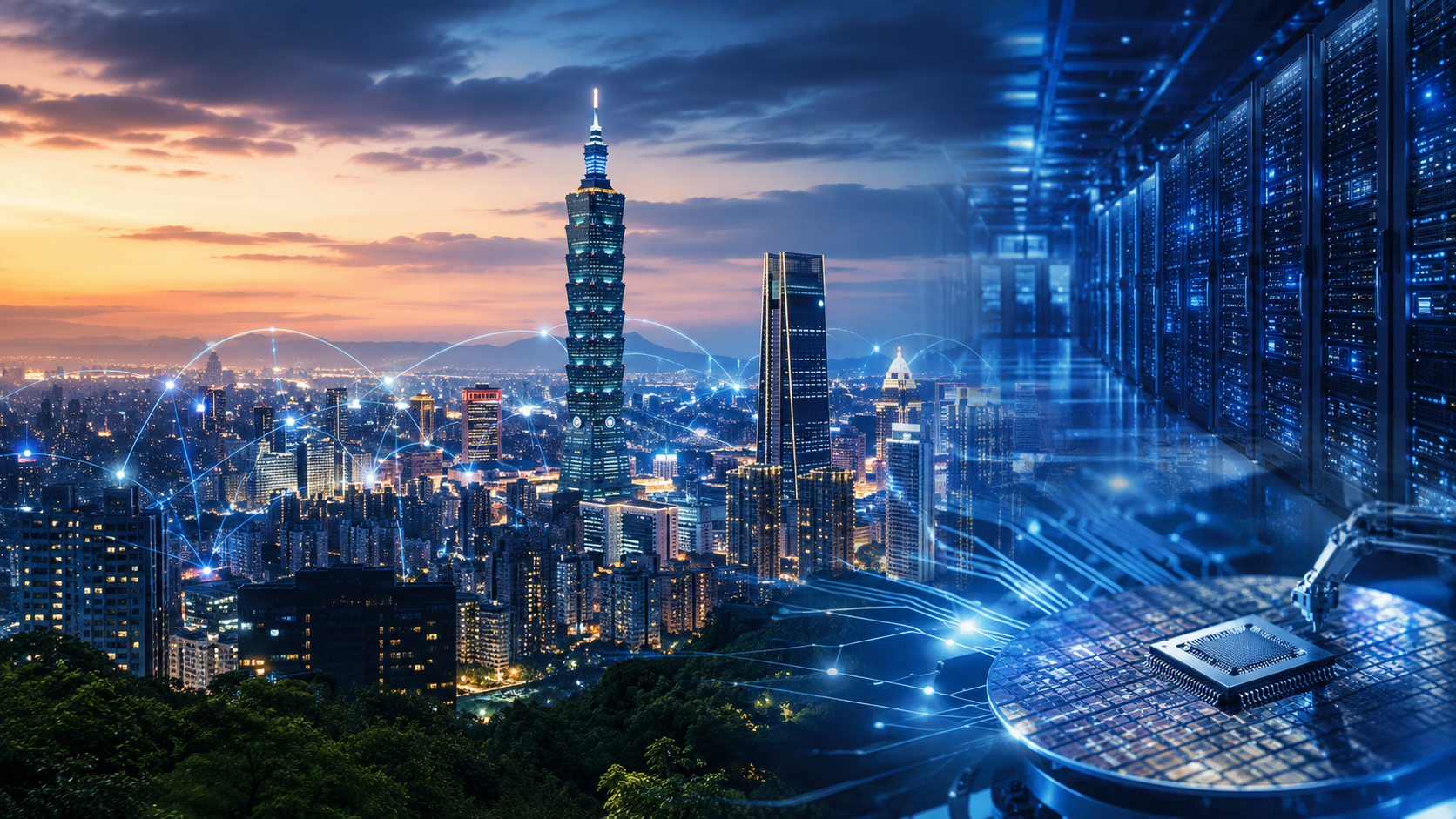
In 2026, Taiwan has once again been thrust to the center of the global technology map. This time, the keyword is not simply semiconductors but far larger artificial intelligence infrastructure. The demand for AI chips, servers, cooling, packaging, cloud computing and data centers means Taiwan is no longer just a manufacturing base but a key node in the global AI economy.
This position is exhilarating yet raises more serious questions: if Taiwan positions itself only as a place that manufactures AI for the world, then this revolution has been completed only halfway. What truly deserves reflection is whether Taiwan can move beyond Chip Island to become a laboratory for smart civilization.
From Hardware Advantage to Social Capacity
What is meant by smart civilization is not simply installing screens, sensors and chatbots everywhere, nor having every agency purchase an AI system. It means more deeply: can a society transform technical capacity into public benefit, knowledge innovation and cultural depth?
When AI can assist medical diagnosis, educational assessment, Indigenous language preservation, environmental monitoring, disaster warning and administrative processes, the question is not what AI can do but what kind of society we want AI to help us become.
Taiwan's current advantages are clear. First, Taiwan has a complete hardware supply chain. From wafer fabrication, packaging and testing, server assembly to cooling components, Taiwanese enterprises play highly critical roles in global AI infrastructure. Second, Taiwan has strong digital social experience: from health insurance data, e-governance, digital citizen participation to open data, substantial foundations have been accumulated. Third, Taiwan's moderate societal scale offers both highly urbanized settings and mountain villages, islands, agriculture, long-term care, educational gaps and multilingual cultures—complex issues that make it an ideal experimental field for AI social applications.
The AI Miracle Also Requires Institutional Depth
The challenges are equally clear. AI infrastructure is highly energy-intensive; data centers require large amounts of electricity and water resources. AI industry prosperity may also intensify talent concentration, urban-rural gaps and uneven educational resources. When high-salary engineering jobs attract large numbers of talents, will cultural preservation, local education, community healthcare, traditional knowledge organization be regarded as low-reward fields and neglected?
If AI serves only capital efficiency without serving social diversity, Taiwan's AI miracle may shine brightly but not necessarily go deep.
Therefore, Taiwan's next-stage AI strategy cannot ask only about output value; it must also ask about institutions. AI governance is not just writing a few principles—it requires establishing actionable norms across education, healthcare, finance, media, public services and cultural data domains.
Whose Knowledge Will Be Seen by AI
For Yuan Media AI, this issue is especially important because we focus not only on AI industry news but on how AI changes knowledge production. In the past, mainstream media liked to report tech company stock prices, investments, chips and new product launches; they rarely asked: when AI becomes the knowledge entry point, whose language will be seen? Whose memory will be datafied? Whose culture will be reclassified? Whose experience will be excluded by algorithms?
This is not about turning every tech article into cultural protest but reminding that as AI goes mainstream, diverse knowledge systems must participate. If Taiwan develops only high-speed AI without developing high-trust AI, high-cultural-understanding AI and high-public-responsibility AI, then it remains an industrial powerhouse rather than a smart society.
Three Directions Worth Advancing
Taiwan can deepen its AI civilizational capacity from three directions in the future.
First is AI popularization in education. AI should not be merely a tool for university labs and tech companies; it must also enter remote schools, vocational education, adult learning and community colleges. Entering education does not mean letting students rely on AI to write assignments but cultivating abilities to ask questions, verify information, compare sources, create content and make ethical judgments. What is truly scarce in the AI age is not answers but people who can pose good questions.
Second is trustworthy preservation of cultural and linguistic data. Taiwan has multilingual, multi-ethnic, multi-generational memories; if these data are not properly organized they risk being marginalized in the era of large language models. Indigenous languages, local stories, old photographs, traditional crafts, agricultural and fishing knowledge, folk beliefs and community oral histories can all be given new preservation and retrieval methods through AI—but only if data authorization, interpretation rights and cultural sensitivity are respected.
Third is transparency in public governance. If AI is used for government decision-making, social welfare allocation, risk assessment or public services, it must be subject to oversight. Citizens need not just convenience but also the ability to understand how systems make judgments, how errors can be appealed and how data are protected. Smart governance without transparency risks becoming black-box governance.
Taiwan stands at a rare position: it is both the world's AI hardware supply chain hub and possesses democratic society experience, multiculturalism and digital governance expertise. This gives Taiwan an opportunity not only to produce AI for the world but to demonstrate a more human-centered, culturally deep and publicly responsible AI development model.
The AI revolution has arrived at Taiwan's doorstep. The next question is not whether Taiwan can keep pace but where Taiwan wants to direct this force. Chips enable machine computation, but only social imagination decides whether AI ultimately serves speed and profit or the better shared life of humanity.
AI use and content-safety disclosure
This article and main visual were co-produced by Yuan Media AI, edited and verified by human editorial staff before publication.