The Real Challenge of Mountain Governance Is Not Remoteness, but Our Reliance on Plains Logic
Original Chinese title: 廖福德|山區治理真正的難題,不在偏遠,而在我們總用平地邏輯做決策
廖福德 argues that mountain governance cannot rely solely on plains logic for decision-making. Terrain, disaster risks, transport conditions, local knowledge and administrative flexibility must be integrated into institutional design.
廖福德
Former director-general of a county government office
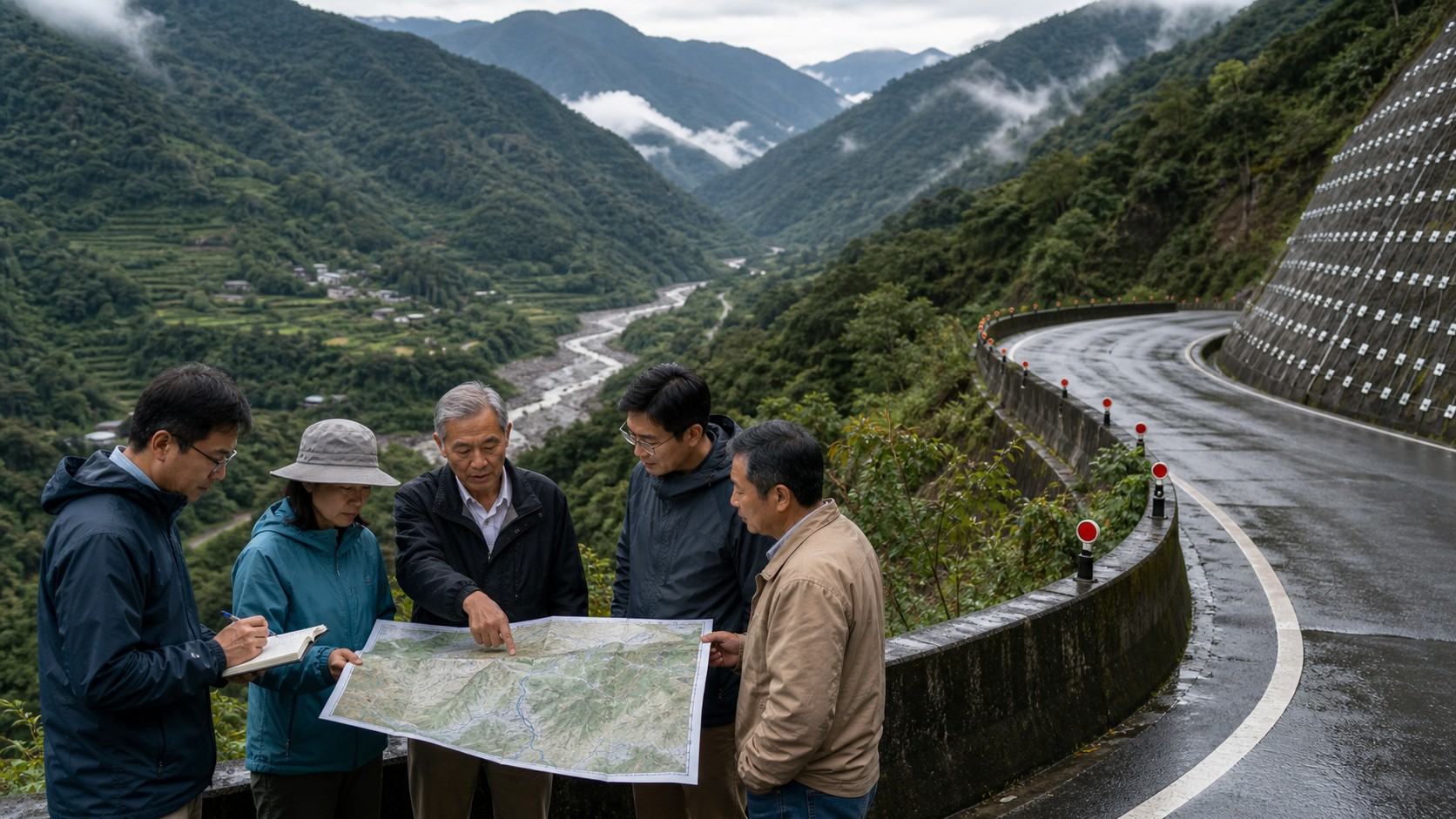
Remote Is Not the Whole Problem
When discussing mountain governance, the most frequently heard word is remote. Roads are far, medical services are far, schools are far, administrative resources are far — all true. But if we attribute everything to remoteness, we mistakenly assume that building more roads, adding more service sites and deploying more online systems will solve all problems.
The real challenge in mountain areas is not just distance; it is difference. Terrain varies, time perception differs, risk profiles change, and community mutual-aid practices are distinct. If administrative systems continue to design policies using plains logic, even abundant resources may get stuck on the ground.
Plains Logic Loves Standardization
Plains administration habitually standardizes. Forms have fixed fields, schedules have fixed deadlines, transport is measured in kilometers, services are evaluated by attendance counts, and risks are marked on regional maps. These tools work efficiently in plains settings, but in mountain areas they often lose detail.
Ten kilometers may take twenty minutes in the plains, but in mountains it could involve rockfalls, passing difficulties, heavy fog and swollen streams. A single torrential rain event that causes waterlogging in the plains can lead to road closures, slope failures and communication breakdowns in mountains. Administratively, a single administrative village might appear unified, yet on the ground it could be separated by ridges and valleys.
If institutions cannot see these differences, mountain residents will be perceived as always late, uncooperative and difficult to serve.
Local Experience Is Not Supplementary Data
Mountain residents often have nuanced perceptions of environmental changes. They know which road sections become prone to rockfalls after rain, which stream sounds signal danger, which slopes are unstable seasonally, and when elders should not descend the mountain. These experiences may not appear in official documents, yet they directly affect governance outcomes.
The problem is that local experience is frequently treated as supplementary data rather than decision-making evidence. In meetings, elders might say "that area has always collapsed," while engineering plans claim risks are controllable; residents could warn that an alternative route is unsafe at night, but project documents only note its existence.
Mature mountain governance must integrate local experience into the decision process, not wait for incidents to occur before acknowledging what was already known.
AI and Data Systems Cannot Rely Solely on Plains Data
Future disaster warnings, traffic dispatching, medical triage and resource allocation may incorporate AI. This offers opportunities but also carries risks. If systems depend mainly on road maps, population statistics and standardized reporting data while lacking mountain micro-terrain information, seasonal road conditions, community care networks and historical disaster memories, their judgments will be fast yet inaccurate.
Mountain data is not simply a matter of installing sensors. How data are collected, who can update it, who has authority to correct errors, and how mistakes are reported must all be designed carefully. Otherwise AI will merely automate plains logic, making errors more efficient.
Redesign Governance Using Mountain Logic
Mountain governance requires several shifts. First, transport cannot be judged solely by distance; time, risk and alternative routes matter. Second, public services should not focus only on the number of sites but on actual accessibility for residents. Third, disaster management must go beyond issuing warnings to include evacuation, communication, care and recovery capacities. Fourth, local knowledge cannot remain confined to interviews; it must influence budgets, engineering plans and institutional frameworks.
These shifts are neither romantic nor simple. They demand that governments acknowledge: a single set of institutions does not necessarily apply everywhere.
Mountain areas are not backward plains or peripheral regions waiting for remedial instruction. They possess their own terrain, rhythms and governance wisdom. The true challenge lies not in remoteness but in whether we are willing to stop applying plains logic to mountain decision-making.
AI use and content-safety disclosure
This article is based on the author's viewpoint. AI assisted in drafting the structure and polishing sentences; for public policy and disaster governance judgments, please verify with local conditions and official sources.