Grandmother's Medicine Cabinet and the Algorithmic Doctor: Who Truly Understands Healing?
Original Chinese title: 祖母的藥櫃與演算法醫生:誰真正理解療癒?
AI healthcare often centers on efficiency, prediction, and diagnostic accuracy. Yet many Indigenous healing traditions attend not only to disease names but also about balance among people, land, seasons, family, emotions, and spiritual order. When traditional medicine is digitized and modeled, the greatest risk is not rapid technological progress but the fragmentation of healing contexts. This article begins with grandmother's medicine cabinet to remind us that in the AI era we must rethink health knowledge sovereignty.
林秀妹
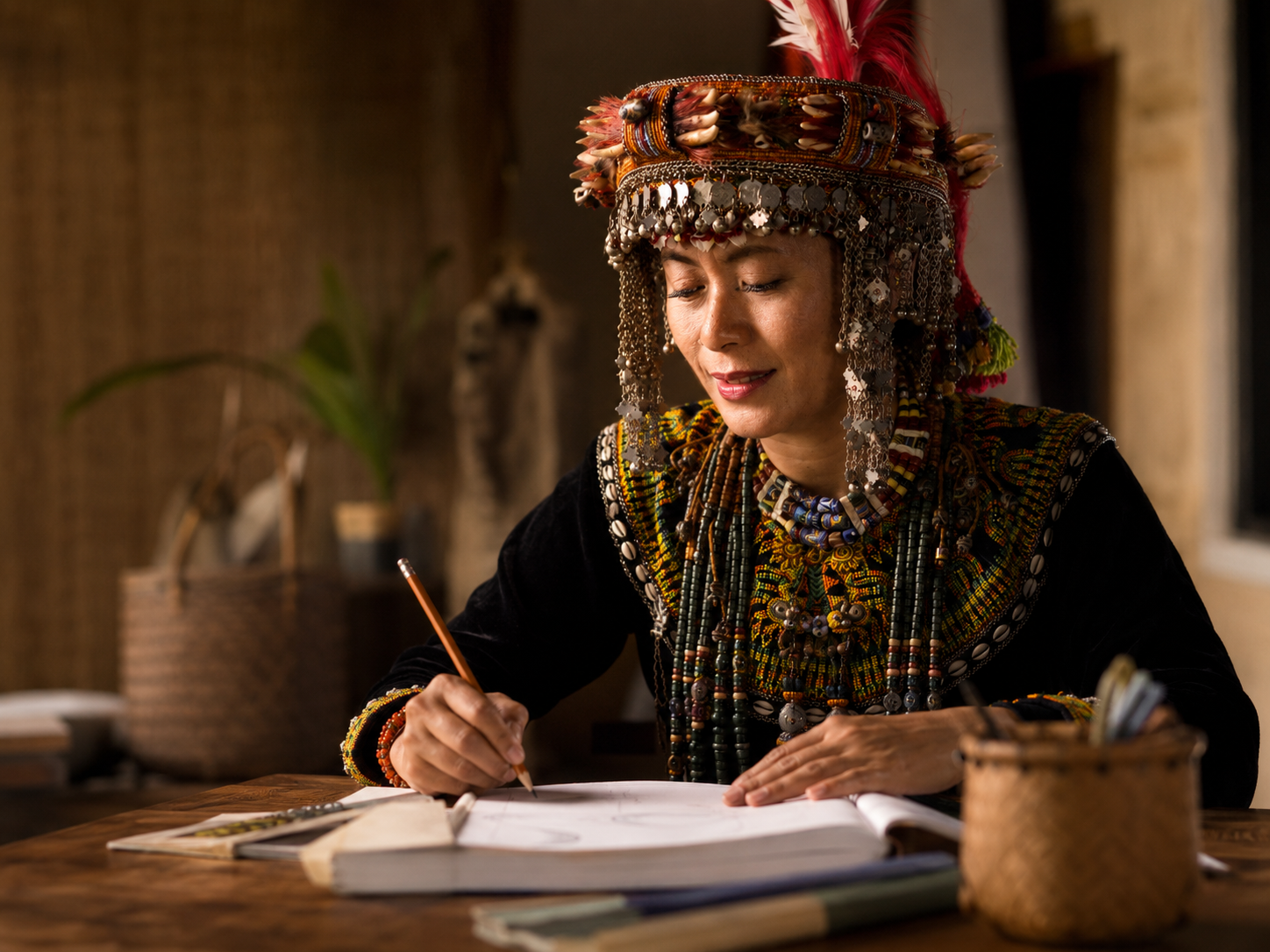
# Grandmother's Medicine Cabinet and the Algorithmic Doctor: Who Truly Understands Healing?
New Issues in Indigenous Traditional Medicine, AI Diagnosis, and Health Knowledge Sovereignty
Author: 林秀妹 / Indigenous-language teacher at 北葉國小 / Paiwan, Vuculj group
Editor's Preface
AI healthcare often centers on efficiency, prediction, and diagnostic accuracy. Yet many Indigenous healing traditions attend not only to disease names but also about balance among people, land, seasons, family, emotions, and spiritual order. When traditional medicine is digitized and modeled, the greatest risk is not rapid technological progress but the fragmentation of healing contexts. This article begins with grandmother's medicine cabinet to remind us that in the AI era we must rethink health knowledge sovereignty.
Grandmother's Medicine Cabinet: Not Just a Few Herbs
When many people talk about traditional medicine, they imagine herbs, folk remedies, and old experiences—as if compiling plant names, uses, cooking methods, and photos into a database would preserve the knowledge.
But grandmother's medicine cabinet was never just a row of dried plants. It contained seasons, mountain paths, who could harvest and when not to, bodily conditions, and interpersonal care. More importantly, it held judgment: what could be handled at home versus requiring a doctor; what is physical pain versus relational pain; what herbs can assist versus what requires family members to sit down and talk again.
AI excels at classification, but healing is more than classification.
The Algorithmic Doctor Sees Symptoms; Elders See People
AI healthcare's greatest strength lies in comparison: image interpretation, risk prediction, symptom summarization, drug interaction alerts—these functions can improve medical efficiency and bring new support to remote-area health services. These advances should not be dismissed.
Yet when AI meets traditional medicine, the question cannot be merely "Can we turn herbs into data?" It must also ask: after digitization, does knowledge lose its bodily context?
For example, the same plant may have different uses and taboos depending on altitude, season, or harvesting method. The same physical discomfort might relate to labor, diet, family stress, living environment, or loss of land. Modern medicine slices disease into organs and indicators; traditional medicine often returns people to their lived whole. They are not enemies, but they view the world differently.
If AI only learns "a certain plant corresponds to a certain symptom," that is likely not wisdom—it is turning grandmother's experience into commodity labels.
Traditional Medicine Cannot Be Stolen Again
Many traditional medical knowledge systems worldwide have been researched, patented, and commercially developed, with little return to the original communities. This sensitivity is especially acute in medicinal plants, ethnobotany, and bioresearch development. Today AI accelerates data collection and makes plagiarism quieter.
In the past, people took seeds; now they take data.
If we feed Indigenous community knowledge about medicinal plants, elder interviews, harvesting routes, healing stories into models without community consent, rights labeling, usage restrictions, or benefit-sharing, then AI is not preserving traditional medicine—it is dressing up data colonialism in new clothes.
Traditional medical knowledge is often collective, belonging to no single author. It may be carried by families, communities, gender roles, ritual functions, and land relationships. Modern copyright systems may not adequately protect such knowledge; thus we need cultural data sovereignty and community authorization frameworks.
Two-Eyed Seeing: Science Must Be Rigorous, Culture Must Be Respected
We do not have to choose sides between modern medicine and traditional medicine. The truly mature approach is Two-Eyed Seeing: one eye looks at scientific evidence, safety, toxicity, clinical efficacy; the other eye looks at cultural context, land ethics, elder authority, and community relationships.
This does not lower standards—it raises them. Because with only scientific indicators we may overlook cultural harm; with only cultural narratives we may miss safety risks. A responsible traditional medicine AI must face both questions: Is this effective and safe? Does it respect the owners of knowledge?
Therefore, a traditional medicine database should not be merely a plant list; it needs data grading: what can be publicly taught, what is for internal community use only, what cannot be digitized, and what requires elders or the relevant community council.
AI Can Help but Cannot Be Grandmother
Future AI may assist in organizing interviews, building non-sensitive plant image archives, creating health education cards, reminding people to seek professional care, and helping youth re-understand the beauty of traditional knowledge. But AI cannot decide for grandmother what can be spoken, decide for the community what can be sold, nor reduce healing to a string of recommendations.
The best AI does not turn grandmother into data; it brings more children back to sit beside her, listening to why she speaks as she does. True healing occurs not only in bodies but also in relationships among people and land, people and family, people and ancestors.
This article is not medical advice. What truly matters: technology can approach traditional medicine, but it must first learn to knock.
AI use and content-safety disclosure
This article was compiled and edited through the Yuan Media AI editorial process.