Image Generators Don't Dream, They Only Peek — AI Image Ethics and the Boundaries of Indigenous Portraiture
Original Chinese title: 影像生成器不會做夢,它只會偷看——AI圖像倫理與原住民族肖像的邊界
AI image tools make portrait production cheap and fast, making cultural appropriation easier than ever. Enter a few prompts and the system can generate 'Indigenous-style' faces, clothing, patterns, and backgrounds; the problem is that these seemingly non-existent faces may still borrow from real communities' bodies, symbols, and history. This article does not call for a ban on creation. It asks us to remember: when AI can draw people out of thin air, creators cannot take others' dignity out of thin air.
Aciang Iku-Silan | University Professor
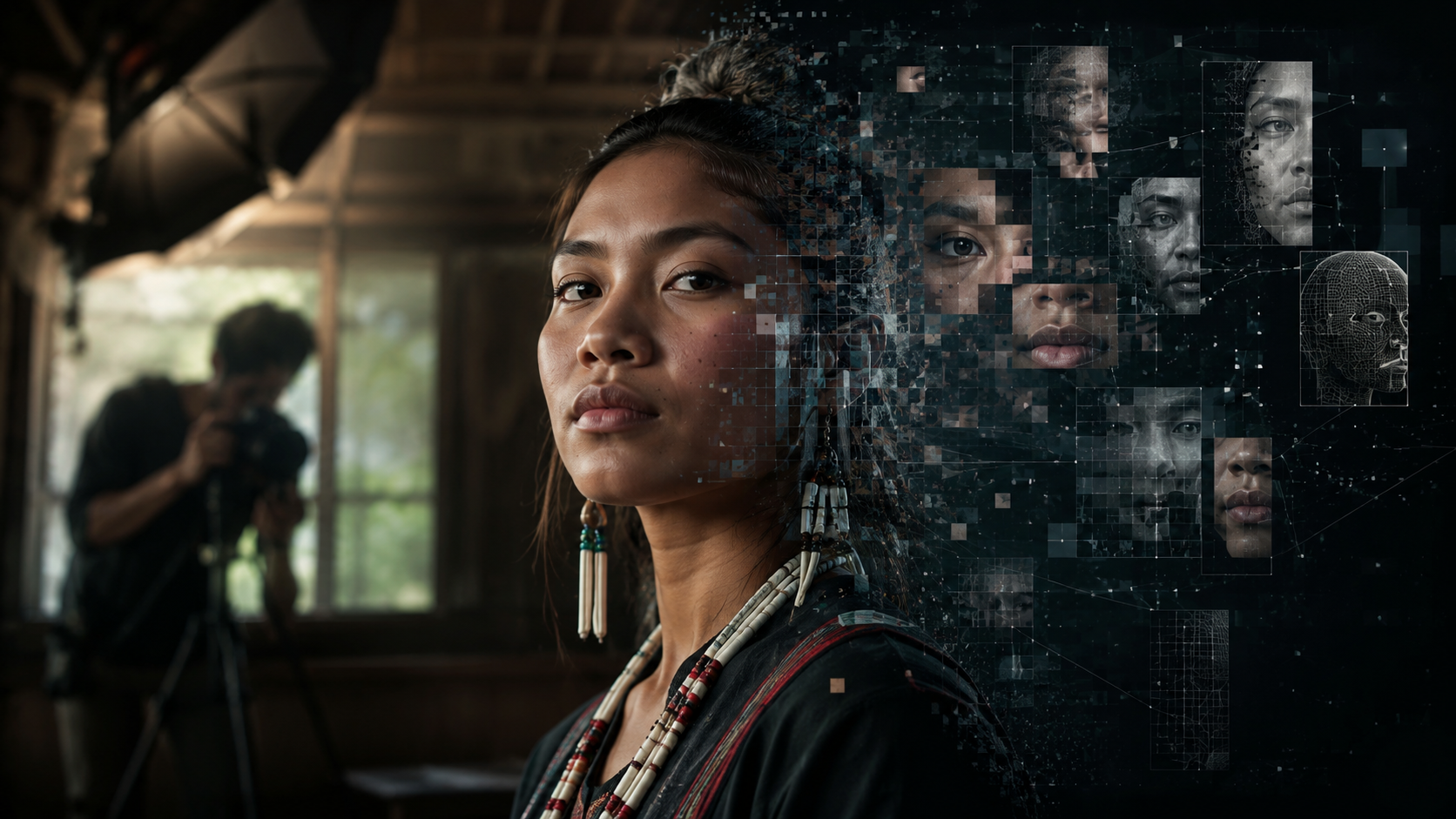
# Image Generators Don't Dream, They Only Peek — AI Image Ethics and the Boundaries of Indigenous Portraiture
When AI learns to draw faces that look like a certain group, media and creators should learn to stop.
Author: Aciang Iku-Silan / University Professor / Author of 《創世之戰》
Editor's Preface
AI image tools make portrait production cheap and fast, making cultural appropriation easier than ever. Enter a few prompts and the system can generate 'Indigenous-style' faces, clothing, patterns, and backgrounds; the problem is that these seemingly non-existent faces may still borrow from real communities' bodies, symbols, and history. This article does not call for a ban on creation. It asks us to remember: when AI can draw people out of thin air, creators cannot take others' dignity out of thin air.
AI Image Is Not a Harmless Toy
AI generates a face in just seconds. Apologies usually take weeks; restoring trust may take years. That is the speed gap of generative imagery: creation fast as magic, harm slow as stone.
Especially when it comes to Indigenous portraiture, the issue isn't merely 'does it look like' or 'is it beautiful'. A face can make viewers associate a particular group, region, historical trauma, gender role, or media stereotype. If AI mixes these elements into one pretty image, on the surface it is creativity; underneath may be an unspoken theft.
A Face Can Be Generated but Should Not Be Impersonated
Some will say that since AI-generated people aren't real humans, there's no portrait issue. That sounds technical but is too easy. AI images don't grow from a vacuum; they learn from existing image data, labels, online narratives, and visual biases. When the output is enough to make someone think of a real group or even resemble a specific person, ethical problems already arise.
Media should be especially cautious. News stories, features, educational materials using AI portraits can easily have viewers treat images as evidence. Even labeling 'AI-generated' does not eliminate the risk. AI isn't an automatic washing machine that washes away responsibility; throwing someone else's face into it doesn't produce clean creativity — it may produce something brighter, slicker, and harder to hold accountable.
Indigenous Portraiture Is Not a Style Material
The most dangerous prompts are often seemingly harmless ones like 'generic Indigenous style', 'Indigenous girl', 'ancient warrior', 'mystic elder'. These terms lump together different peoples, languages, clothing, hierarchies, history, and lived circumstances into one mass, finally outputting a tourist-poster exoticism.
But tattoos, beadwork, woven patterns, garments, hair ornaments, objects, and body postures may all carry specific cultural meanings. They are not decorative accessories that add flavor to an image, nor visual spices anyone can freely season with. If creators don't know the differences, they should at least acknowledge what they don't know.
So-called Inspiration Is Often Just Unsigned Appropriation
AI platforms make appropriation very polite. It doesn't barge into communities to take photos, nor does it hold contracts asking elders to sign; it just smiles in the cloud and produces an image that feels 'very culturally resonant'. The problem is that invisible doesn't mean harmless — no photographer doesn't mean no source.
Creation can reference culture, but referencing isn't owning. If a work needs to borrow recognizable symbols, clothing, or portrait vocabulary from a particular community, it should seek contextual understanding, consent, and review. A better approach is to collaborate with community creators rather than ask AI to imitate them while saving collaboration budgets.
The Minimum Boundaries for Platforms, Creators, and Media
The minimum boundaries aren't hard: don't use sacred or restricted symbols as decoration; don't mix different peoples into one 'primitive style'; don't generate portraits that look like real people to carry news or advocacy; don't let AI images replace occasions where real communities should speak.
Platforms can't push all responsibility onto users. Model data sources, prompt safety, sensitive cultural tags, similar-person generation, appeals and takedown mechanisms — all must be part of governance. Otherwise so-called creative freedom becomes risk outsourcing prepared by large platforms for small communities.
Conclusion: AI Can Be Used but Others' Bodies Cannot Be Borrowed
AI images can be good tools: they can do sketches, composition, abstract illustration, educational support, and help smaller media reduce production costs. But the stronger the tool, the more important the boundaries. Especially when images meet faces, bodies, and cultural markers, creators shouldn't just ask 'can it be generated' but must ask 'who will this image represent'.
Truly mature AI image ethics isn't about painting the world prettier; it's about ensuring those being watched still retain the right to refuse, correct, and speak. Portraits created without consent, no matter how exquisite, are still impersonations. Cultural styles stripped of context, no matter how ornate, are still empty shells.
AI use and content-safety disclosure
This article was compiled and edited through Yuan Media AI's editorial workflow.