Two-Eyed Seeing AI Education: One Eye on Technology, One Eye on Whether Children Are Still Human
Original Chinese title: 雙眼看AI教育:一眼看技術,一眼看孩子還是不是人
AI education is often reduced to efficiency: faster grading, summarizing, generating materials, tracking learning data. But children are not optimized processes or predictable users. Two-Eyed Seeing reminds us that one eye sees what technology can do, while the other sees relationships, culture, and human wholeness.
Ann Ying
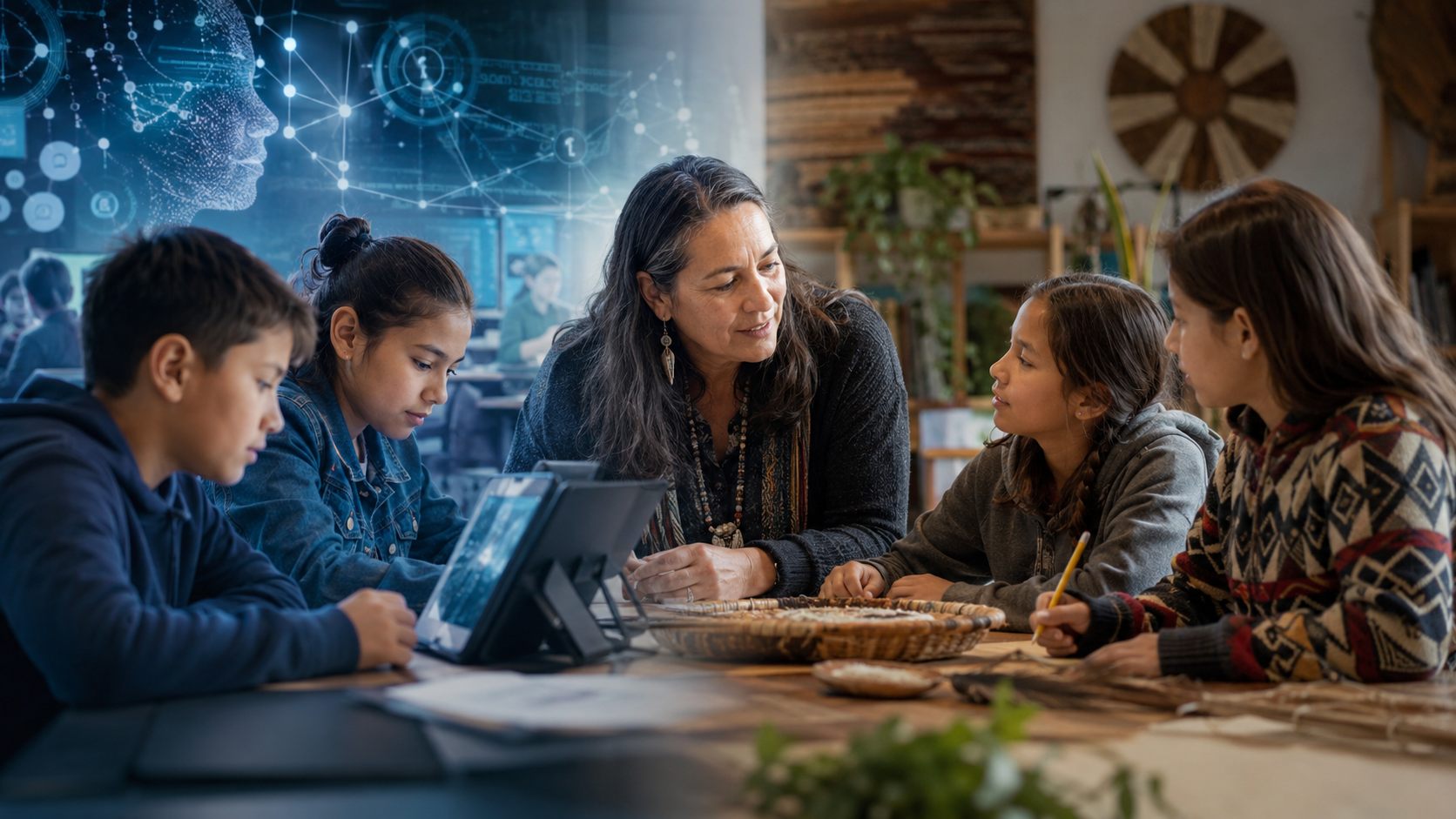
# Two-Eyed Seeing AI Education: One Eye on Technology, One Eye on Whether Children Are Still Human
From a two-eyed perspective, reasserting learning, personhood and cultural context as AI enters the classroom
Author: Ann Ying / English Teacher / Cross-cultural Educator / Paiwan
Editorial Preface
AI education is often reduced to efficiency: faster grading, summarizing, generating materials, tracking learning data. But children are not optimized processes or predictable users. Two-Eyed Seeing reminds us that one eye sees what technology can do, while the other sees relationships, culture, and human wholeness.
AI Education Cannot Treat Children Only as Users
EdTech loves to call children "users." The term is convenient, clean, trackable, and fits neatly on dashboards. But children are not subscribers, not behavioral data, not traffic that can be optimized for engagement rates. They are people forming selves, relationships, languages, and worldviews.
When AI enters the classroom, the temptation is to turn learning into a measurable process: who answers quickly, who makes many mistakes, who needs remediation, who might fall behind. These data can help teachers, but they may also lead children to be prematurely categorized. If education becomes only prediction, children will be seen by systems as incomplete risk models.
From Schedules to Data: Who Defines Children's Futures
AI platforms can generate materials, recommend practice, analyze essays, produce learning reports. The question is how the platform understands "good students," defines "progress," and handles silence, shyness, cultural differences, family responsibilities, community activities, sibling care, seasonal labor, language switching.
Some children are not unable to learn; they simply do not fit the system's default rhythm. Some answers are not wrong but reflect different life contexts. If AI reads learning through a single standard, it may misread cultural difference as lack of ability. This is not smart education; it is more precise misreading.
Two-Eyed Seeing: One Eye on Tools, One Eye on Relationships
Two-Eyed Seeing / Etuaptmumk is not a pretty slogan nor a decorative balance that splits tradition and technology in half. It is a relational knowledge method: one eye sees the power of Western science and technology; the other sees land, community, kinship, responsibility, and experiential knowledge.
In AI education this means we neither romanticize "technology-free pure classrooms" nor worship "fully automated personalized learning." AI can help teachers prepare lessons, organize materials, assist practice, provide multilingual support; but it cannot replace the teacher's understanding of children nor the community's discussion of educational purposes.
In Paiwan Educational Contexts, AI Cannot Be Just a Tool List
When discussing Paiwan education, we must not reduce Paiwan identity to "Indigenous cultural elements." The educational context includes family, hierarchy, land, language, craft, song, care, etiquette, and life responsibilities. These are not decorations outside textbooks; they are how children understand themselves.
If AI is to enter such a field, it must first acknowledge itself as an external tool, not an omnipotent teacher. It can help organize open materials, assist students in expressing ideas, or enable teachers to prepare multiple versions of learning resources more quickly; but when cultural knowledge is involved, community review, teacher judgment, and clear boundaries are still required. We cannot treat a system-generated text that "sounds like a cultural introduction" as culture itself.
Teachers Are Not AI Manuals, They Are Ethical Translators
Many AI education policies imagine teachers as implementers of system adoption: learn the tool, teach students, manage risk. But the truly difficult work for teachers is translating between technology, family, community, student states, and institutional pressures. Teachers must judge when to use AI and when not to; which outputs can be discussed and which must be returned; what data may be kept and what should not be collected.
Without time, training, institutional support, and appeal channels for teachers, AI education becomes dumping new risks on the front line. In the end, platforms own the vision, schools handle procurement, and teachers clean up messes. The phrase is ungraceful, but many educators will understand it.
Conclusion: Children Need Fully Present People, Not More AI
AI can make education more efficient, but efficiency is not education's highest value. Children need not just faster answers; they need someone to accompany them in understanding why questions matter. They need not just system judgments about where they lag; they need someone who sees how they are growing.
The focus of Two-Eyed AI education is not packaging AI as culturally friendly, but returning AI to its place: tool. What should stand at the center is children's dignity, teachers' professionalism, family and community context, and learning as the process of becoming human. Children are not the next data point. Children are where the world is still learning how to be cared for.
AI use and content-safety disclosure
This article was compiled and edited by the Yuan Media AI editorial process.