Indigenous Traditional Medicine Is Not an AI Training Corpus: Who Gives Permission for Your Ancestors' Herbs to Train Models?
Original Chinese title: 傳統醫藥不是 AI 的素材庫:誰准你把祖先的藥草拿去訓練模型?
Indigenous traditional medicine is not a dataset that can be arbitrarily scraped. From data collection to model training, AI may repack ancestral knowledge, so authorization, context, community control and cultural ethics must be faced.
流羽
Technology company engineer / Atayal
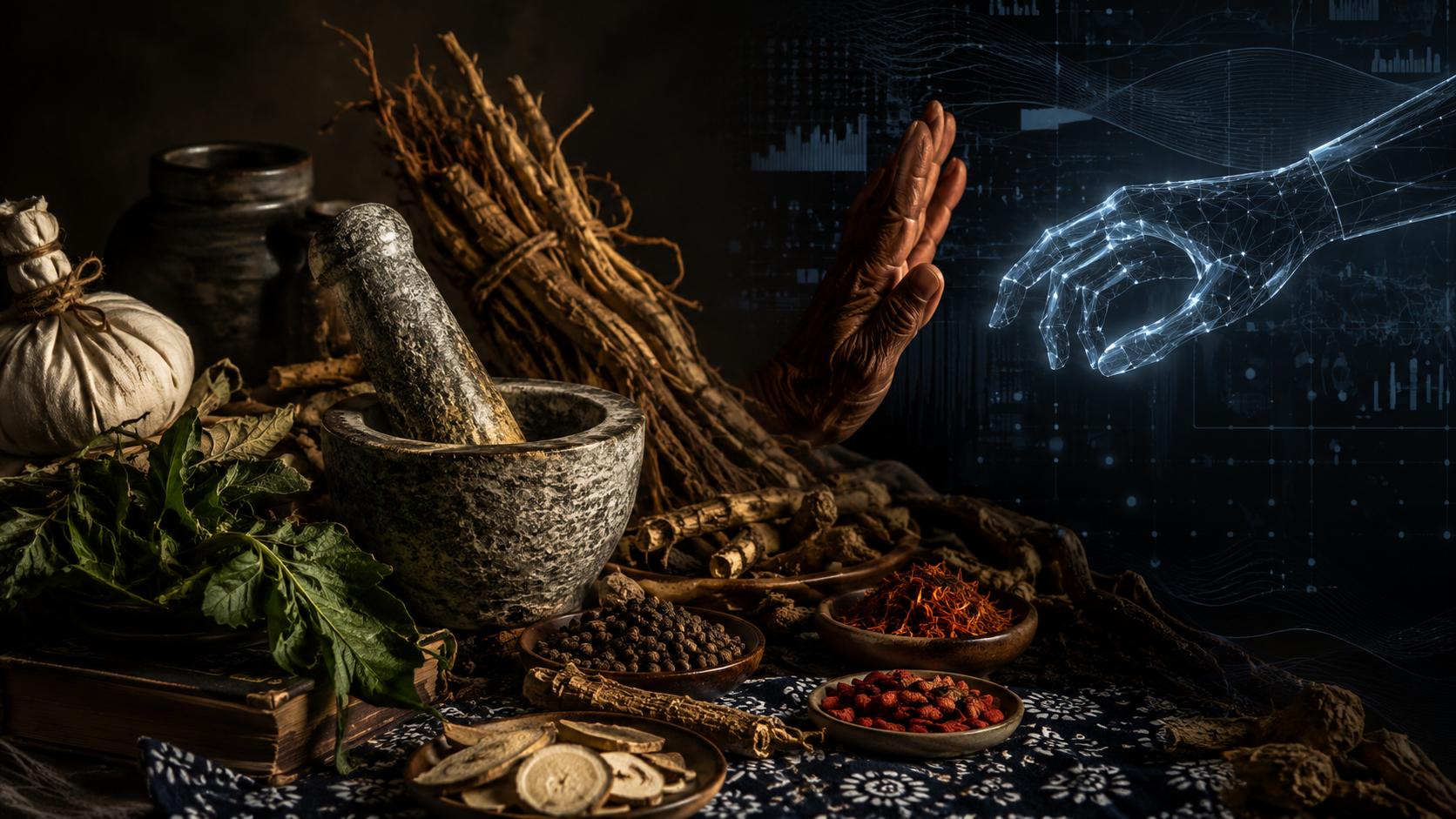
Indigenous traditional medicine faces new risks in the AI era. Past biopiracy might have been researchers entering Indigenous communities, collecting plants, taking samples; today's collection may be automated scraping and aggregation of databases, article abstracts, medicinal plant atlases, ethnographic records and patent texts.
AI Will Not Walk Into the Forest, But It Will Walk Into Databases
Indigenous traditional medicine has often been described as "local knowledge," "folk remedies" or "cultural assets." These words sound gentle, but actually hide power issues: who names? who records? who owns? who has the right to decide which knowledge can be made public and which must only be transmitted under specific family, gender, age, ritual or seasonal contexts?
The new trouble in the AI era is that it does not need to personally enter the forest; through already published papers, atlases, museum records, patent databases, news reports and social media posts, it can reorganize Indigenous traditional medicine into a searchable, inferable, commodifiable knowledge network.
Digitization Is Not a Neutral Act
Many institutions like to say "we are just preserving." But preservation is never neutral. Putting the name of a herb, its uses, collection sites, Indigenous language terms, ritual norms, taboos and therapeutic experiences into a database changes its life form. It becomes knowledge in relationships turned into data in fields; from elders' oral responsibility turned into search results; from knowledge that requires learning ethics to approach turned into content that can be summarized by models.
In black humor, AI is very polite: it does not steal, it only "infers based on public data." The problem is that much of the public data was originally made public in histories of colonialism, research inequality, language inequality and ambiguous authorization.
WIPO Traditional Knowledge Treaty Reminder
In 2024, WIPO adopted an intellectual property treaty related to genetic resources and associated traditional knowledge; a core part is that patent applications based on genetic resources or associated traditional knowledge must disclose the source or origin. This is not a magic wand that solves all problems, but it at least acknowledges: Indigenous traditional knowledge and genetic resources are not ownerless things, nor can modern innovators pretend to get inspiration from thin air.
However AI brings new questions: if models learn herb uses through large amounts of text, subsequent drug hypotheses or product concepts proposed by research teams—how must sources be disclosed? If model training data mixes thousands of texts, how is responsibility traced back? If an AI-generated "new formula" actually recombines Indigenous traditional knowledge, does that count as plagiarism?
Indigenous Traditional Medicine's Knowledge Rights Are Not Just About Benefit-Sharing
Mainstream systems love to talk about benefit-sharing, as if once there is money at the end, prior collection, translation, digitization and model training can be whitewashed. But Indigenous Peoples' knowledge governance asks not only about benefits but also authority, responsibility and relationships.
CARE Principles remind us that data governance must value Collective Benefit, Authority to Control, Responsibility, Ethics. Applied to Indigenous traditional medicine, this means communities should not just be "informed"; they should have the right to decide whether data is created, how it is classified, who can read it, whether it can be used for AI training, whether it can be commercialized, and how to hold people accountable for misuse.
How Can Two-Eyed Seeing Be Applied to Indigenous Traditional Medicine and AI?
One eye looks at modern science: component analysis, toxicology research, clinical evidence, drug interactions, safe dosages. The other eye looks at Indigenous Peoples' knowledge: land relationships, collection norms, ritual responsibilities, elder authorization, taboos, seasons, stories and community well-being.
True Two-Eyed Seeing is not sending Indigenous traditional medicine into a laboratory and then calling the rest that cannot be quantified "cultural context." It should be co-designing research questions, jointly deciding data boundaries, jointly reviewing outcomes, jointly deciding what cannot be made public. Two-Eyed Seeing originally emphasizes viewing the world together with the strengths of Indigenous knowledge and Western knowledge, not letting one side swallow the other.
Minimum Ethical Design for an AI Indigenous Traditional Medicine Database
If we are to build an AI system for Indigenous traditional medicine in the future, there must be at least several lines of defense. First, data classification: public knowledge, community internal knowledge, restricted knowledge and prohibited knowledge cannot be mixed. Second, authorization records: each piece of data must have source, scope of authorization and revocation mechanism. Third, model limits: not all data can be used to train generative models. Fourth, community review: output content must be able to be corrected or sealed by knowledge holders. Fifth, commercial firewalls: education, cultural preservation and drug development cannot swap concepts.
Otherwise we are just upgrading "collecting plants" to "collecting corpora," swapping specimen cabinets for vector databases.
Ancestors' Knowledge Is Not an Unsupervised Open-Source Project
Open data has its value, but not all knowledge should be open. Indigenous traditional medicine is especially so. It involves bodies, land, spirituality, families, seasons, ecology and responsibilities. AI can assist preservation, education and research, but on the condition that it must accept community governance rather than treating communities as data sources and enterprises as innovation subjects.
In one sentence: Indigenous traditional medicine can enter the digital era, but cannot be thrown into an AI blender to make a juice called "innovation."
AI use and content-safety disclosure
This article discusses cultural data governance; it does not provide prescriptions, dosages, efficacy promises or personal medical advice; health issues should consult qualified medical professionals, and use of cultural knowledge should obtain appropriate community authorization.