When AI Learns to Speak 'Diversity', We Must Be Even More Cautious
Original Chinese title: 當AI學會說「多元」,我們反而要更小心
The most dangerous thing is not that AI doesn't understand culture, but that it has learned to pretend to do so in a very polished tone.
山海資料筆記
Now every AI product will say that it values diversity, inclusion, fairness and responsibility. The problem is that when these words are spoken too smoothly, they often lose their teeth.
AI has learned the tone of 'respecting differences', the sentence structure of 'cultural sensitivity', and even learned to add a few seemingly humble reminders in its answers. But this does not mean it truly understands culture. It may simply rearrange the safest, most moderate sentences that will never cause trouble on the internet.
The most dangerous thing is not that AI doesn't understand culture, but that it has learned to pretend to do so in a very polished tone. This is especially important for education settings, media work and Indigenous knowledge dissemination.
In education settings, teachers are easily tempted to treat AI as an instructional assistant. It can generate presentations, worksheets, quizzes, discussion questions — appearing time-saving and efficient. But if the topic involves Indigenous Peoples, Indigenous language, ceremonies, traditional medicine, place names, weaving, hunting grounds, dreams or ancestral spirit beliefs, AI's 'fluency' may actually mask errors. It might mix different ethnic groups together, write sacred knowledge as popular stories, turn taboo knowledge into tourist introductions, and flatten cultural context into standard answers.
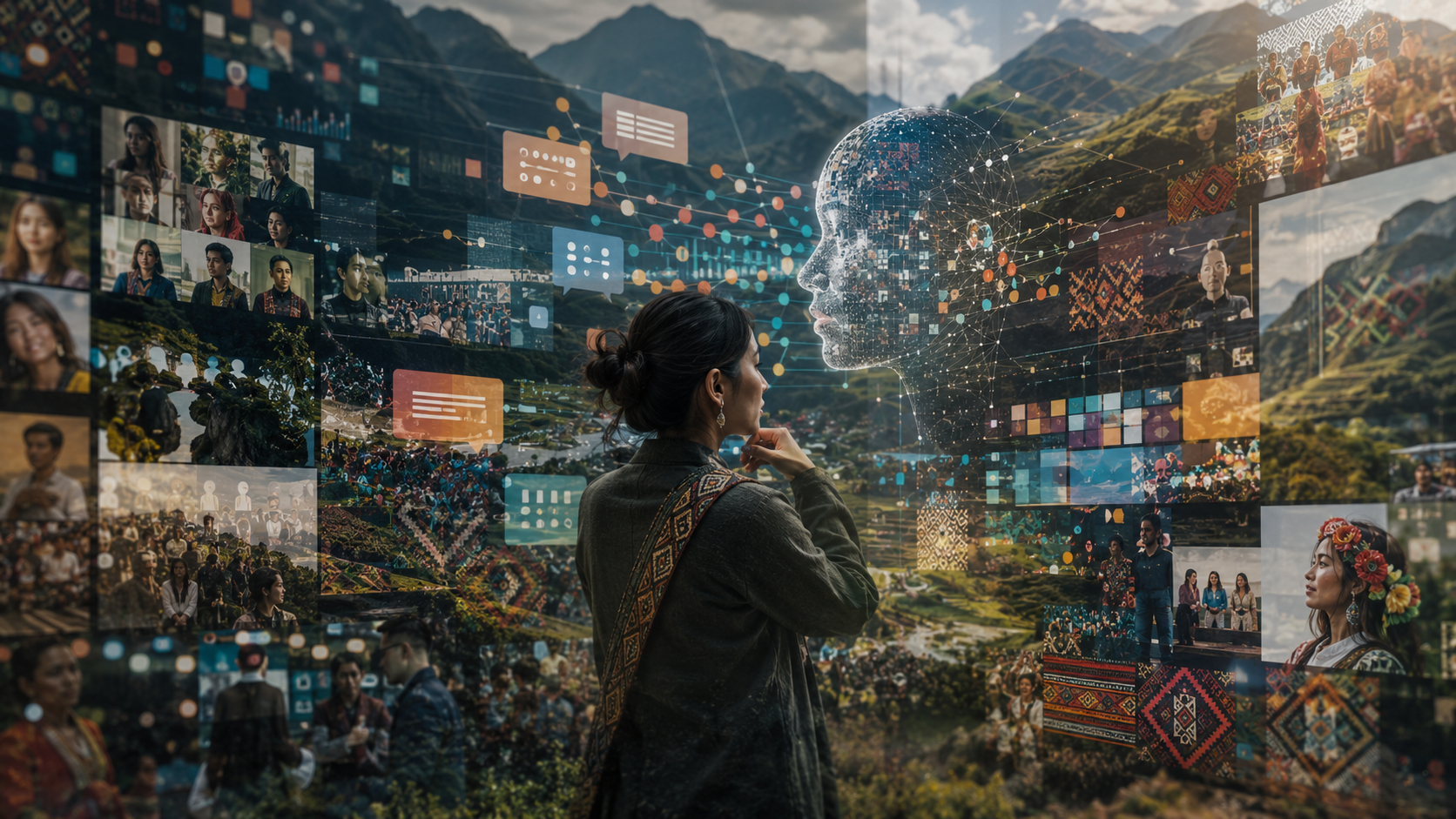
Media is the same. When news editors use AI to quickly generate headlines, summaries and accompanying images, what most often appears is a 'pan-Indigenous style'. Mountains, fire, feathers, elders, children, mysterious gazes, sunset lighting — everything looks culturally rich, but it may actually be just a colonial filter inside the algorithm.
AI's multilingualism is often sophisticated packaging. It speaks differences gently, smooths conflicts, turns power issues into communication problems, and frames historical harms as cultural features. This is precisely why we must be even more cautious. Because when machines start saying 'I respect your culture', we need to ask: Whose data did you read? Who consented for you to read it? Who has the right to correct your errors? Who bears responsibility for the misunderstandings you cause?
True AI media literacy is not just teaching students how to craft prompts, but teaching them how to question answers. It's not merely asking whether AI can help me make a report, but asking: Does this report turn living people into material? Does it reduce an ethnic group to stereotypes? Does it rewrite complex history into beautiful sentences?
For Indigenous knowledge, AI is not unusable — it just cannot be without boundaries. AI can assist in organizing data, transcribing interviews, generating subtitles, creating bilingual teaching materials, building search interfaces, and helping local media quickly organize public issues. But it should not replace the judgment of elders, teachers, cultural workers and communities.
Multiculturalism is not a slogan that a model can memorize; it is a set of rights, responsibilities and relationships. If AI truly wants to enter cultural education, it must admit that it is not the final answer. It can only be an auxiliary tool, never a cultural judge.
Sometimes, the things that most resemble progress actually need the most checking. AI may say 'diversity', but that does not mean it truly stands on the side of diversity. It might have simply learned the expressions most readily rewarded in respectable public discourse.
So when AI starts politely telling us 'culture is important', we can nod, but we should not be too quickly moved. What really matters is: who defines culture, who governs data, who corrects errors, and to whose hands do benefits return.
AI use and content-safety disclosure
This article is published according to the approved draft; the cover image was generated by AI without text overlay. When using generative AI for cultural content, it still requires verification and judgment by teachers, cultural workers and communities.