Jiuliao Creek Is Not a Background Image, It Is the Data River of Lunpi's Future
Original Chinese title: 九寮溪不是背景圖,是崙埤走向未來的資料河流
From 紅土部落, songs in Indigenous languages, millet, weaving to Jiuliao Creek ecology, remote community development should not wait for tourists but learn to tell its own story with AI.
楊淑貞
Language promotion teacher at Datong Township Office
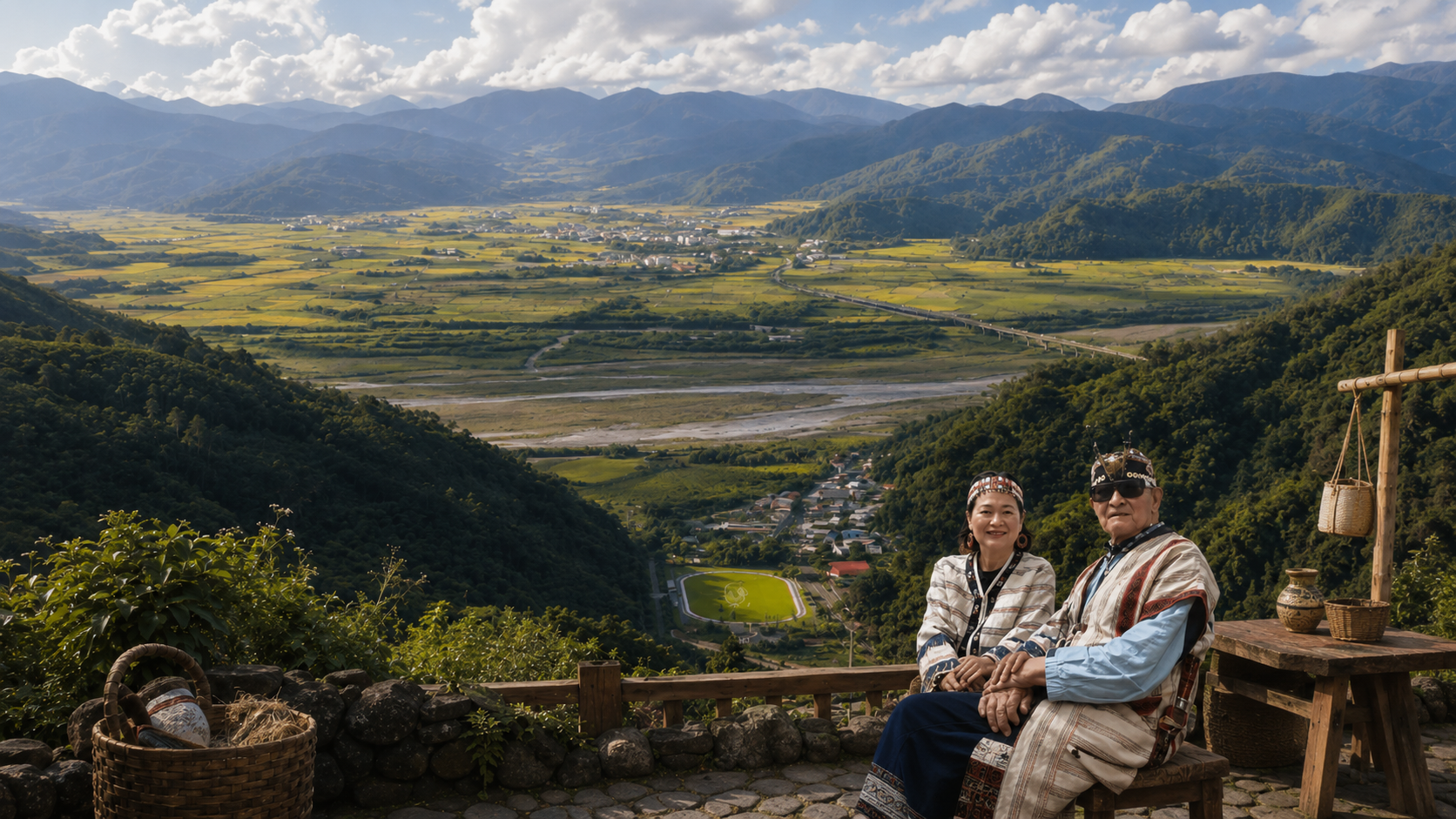
The most common difficulty in remote community development is not lack of culture or scenery, but that too much valuable knowledge remains locked in scattered memories. Elders know which paths to take; women know how to identify weaving patterns; hunters know seasonal plants in the mountains; language promotion teachers know how much life experience hides behind a word; yet young people often only see others' worlds on short video platforms.
Lunpi's future should not be turning the community into a holiday spot, nor making culture into a few pretty posters. Millet, weaving, elder stories, songs in Indigenous languages, mobile recordings, AI organization and digital archiving actually already form a new community development route: letting culture be not just memory but tomorrow's power.
Jiuliao Creek is especially important here. It is not the background in landscape photos, but a data river that can be reinterpreted. Stream, waterfall, ferns, epiphytes, valley light and shadow, seasonal changes, Indigenous language place names and community memories can all become entry points for ecological education, Indigenous language teaching, youth guiding and local industry.
In the past when we talked about regional revitalization, we often rushed to ask whether it could be sold, photographed or checked in. But for Indigenous communities the truly important questions should be: who tells? In what language? What can be made public? What must remain inside the community? Which knowledge cannot be simplified into tourist material?
If Yuan Media AI can become a community’s AIGC toolbox, it is not just generating copy but assisting in organizing, preserving and translating local knowledge. For example Jiuliao Creek can be made into a sound map: stream sounds, bird sounds, wind sounds, elder oral histories, Indigenous language place names, plant names and youth guiding. Millet can become food-agriculture education materials; weaving can become craft video records; plant dyeing can combine ethnobotany with environmental education; Indigenous language courses can be turned into short videos, interactive cards and bilingual stories.
But AI must also be governed by the community. The power of mother tongue lies not only in single words but in metaphor and metonymy. A place name may not be a map coordinate but traces left by ancestors. A plant name may not be botanical classification but harvest season, use, taboo and memory. A weaving pattern may not be decoration but relationship, identity and ancestral gaze.
Therefore Lunpi does not need to dump all cultural data into models; it needs its own cultural data grading. What can be publicly introduced, what suits community education, what requires elder review, what should not enter AI models must be decided jointly by the community.
A strong economy in a remote community is not selling scenery but building knowledge-based local brands. Lunpi's advantages are clear: Jiuliao Creek ecology, millet culture, 泰雅生活館, weaving and plant dyeing, Indigenous language promotion, valley landscape, youth return stories. If each is done separately it remains an activity; if linked through Yuan Media AI they can become a route of culture, ecology, education and industry developing together.
One can imagine a Lunpi AIGC community development module: Jiuliao Creek ecology and Indigenous language sound map, millet and weaving interactive materials, elder interview digital archiving, youth short video training, ethnobotany educational materials, cultural ecological one-day route. This is not putting AI into the community to show off but letting AI pave the way for local knowledge.
A community's future does not have to borrow answers from afar; it may be hidden in stream sounds, loom sounds, the season when millet ripens, and in the moment a child first speaks land names in their own language.
AI use and content-safety disclosure
This article is published according to the approved draft; the cover image was generated by AI without text overlay. Use of Indigenous community cultural data, Indigenous language and traditional knowledge should be governed jointly by the community and respect cultural boundaries.