The Future of High Jewelry: 2026–2027 International Luxury Accessories Design Trends
Original Chinese title: 高級珠寶的未來色彩:2026–2027國際精品配飾設計新趨勢
Future high jewelry is not louder but more precise. Material, cut, metal temperature, and body proportion together form a new luxury language, giving works both collectibility and personal identity while remaining contemporary in everyday life.
戴美伶
An Amis practitioner working in jewelry and diamond design.
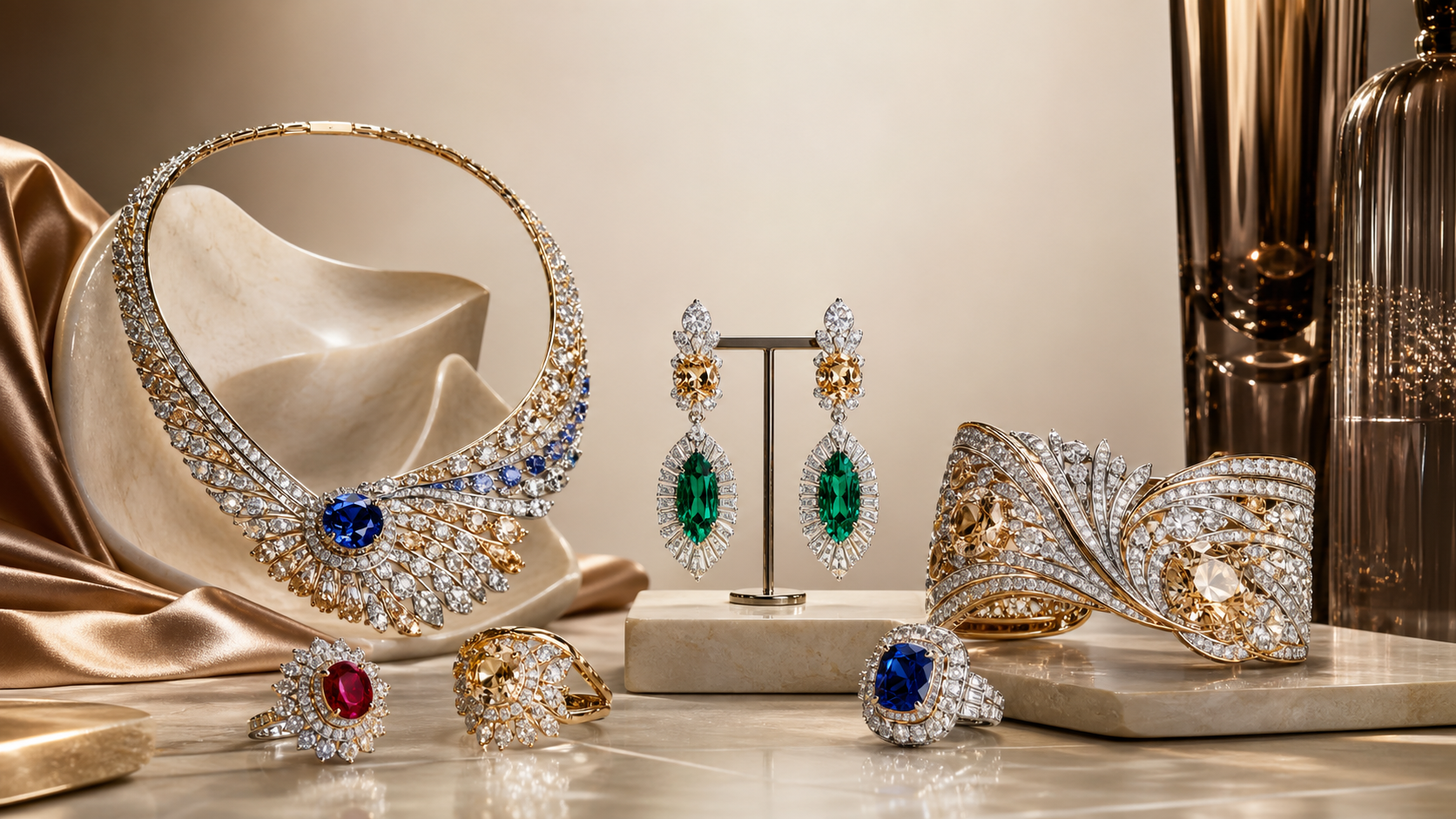
The color of high jewelry is moving from the splendor of a single gemstone to narrative built across the whole form. By 2026–2027, designers face not just "which center stone to choose" but how to let the hue of the gem, the temperature of the metal, the rhythm of the cut, and the wearer's skin tone, clothing, and lifestyle form a complete relationship.
Color from Embellishment to Structure
In the past, colored gemstones were often seen as decoration beyond diamonds; now color itself becomes the architecture of the piece. Shades such as deep blue, emerald green, burgundy, smoky pink, and golden brown can guide the eye and body movement through gradients, contrasts, or asymmetrical arrangements.
True mature pairing does not mean putting all colors together; it means controlling lightness, transparency, and hierarchy. High-saturation center stones need breathing room; softer gems gain depth through layered settings. The richer the color palette, the more restraint is required in design.
Platinum and Champagne Gold: A Dual Tone
Cool-toned platinum makes diamonds and blue-green gemstones appear clear and crisp; champagne gold adds a softer gray-brown warmth to yellow gold, helping jewelry blend into indoor lighting and everyday clothing. The two metals need not exclude each other—mixing them creates light-and-shadow layers.
Future mixed-metal design focuses not just on dual tones but on structural division of labor: cool metals support sharp lines; warm metals handle wrapping, connections, and skin contact, allowing the same piece to show different personalities from different angles.
Sculptural Presence Returns to the Body
Large earrings, wide bracelets, three-dimensional brooches, and wrap-around necklaces continue to be valued, but weight does not equal bulk. Design must address weight distribution, moving joints, and skin-contact surfaces so jewelry feels present in photographs yet remains comfortable for real-life wear.
Sculptural presence also lets jewelry transcend flat decoration: light passes through openwork structures; gemstones shift with movement; the piece truly completes itself together with the body.
Convertible Design Extends Wear Contexts
A high-jewelry piece that appears only in a few rare occasions risks keeping the collector's relationship to it at storage. Detachable pendants, adjustable-length necklaces, brooch-to-hairpin conversion, and modular earrings let one work move between formal events and daily styling.
This design does not stack functions; it lets mechanisms be absorbed by beauty. Clasps, pivots, and hidden structures must be durable, easy to operate, and never compromise the front-facing integrity of the piece.
Technology Cannot Replace Craft Judgment
AI imaging, 3D modeling, and virtual try-on can speed color comparison and proportion testing but cannot replace the fire, inclusions, weight, and setting safety of real gemstones. Perfect screen gloss may face material thickness, stress, and repair issues once it reaches the workshop.
Future design workflows will be more digital, yet high jewelry's value still comes from human understanding of materials. Technology expands imagination; craft ensures that imagination can be worn for generations.
Future Color Is a Personal Identifier
Luxury accessories in 2026–2027 will not revolve around a single trend color. The more important direction is letting wearers build their own color combinations: cool white diamonds with smoky pink, emerald green with champagne gold, or a single dark center stone contrasted against abundant negative space.
The true future of high jewelry is not chasing every season's novelty but forming relationships between color, material, and body that are memorable. When a piece still represents the wearer years later, it moves from trend accessory to personal collection.
AI use and content-safety disclosure
This article was collaboratively prepared through the Yuan Media AI editorial workflow and verified by human editors; the main visual is an AI-generated concept image and does not represent specific brand products.