The Growing Appetite of AI: When Data Centers Begin to Devour City Power
Original Chinese title: AI 的胃口越來越大:當資料中心開始吃掉城市的電
We often imagine AI as cloud magic: input a sentence, and the world spits out an answer. But magic also needs electricity, and it is getting more power-hungry. In 2026, AI data centers are no longer just back-end equipment for tech companies; they are new infrastructure that drives energy policy, land use, urban governance, and industrial resource allocation. As models grow larger, servers become denser, and chips run hotter, the question is not 'Will AI replace humans?' but 'Who pays the electricity bill, water usage, land occupation, and environmental costs for AI?' This is a civilization-level redistribution of infrastructure.
王振庭
Long-term focus on digital technology, media transformation, and public knowledge governance; skilled in analyzing AI technological development from a social institutional perspective.
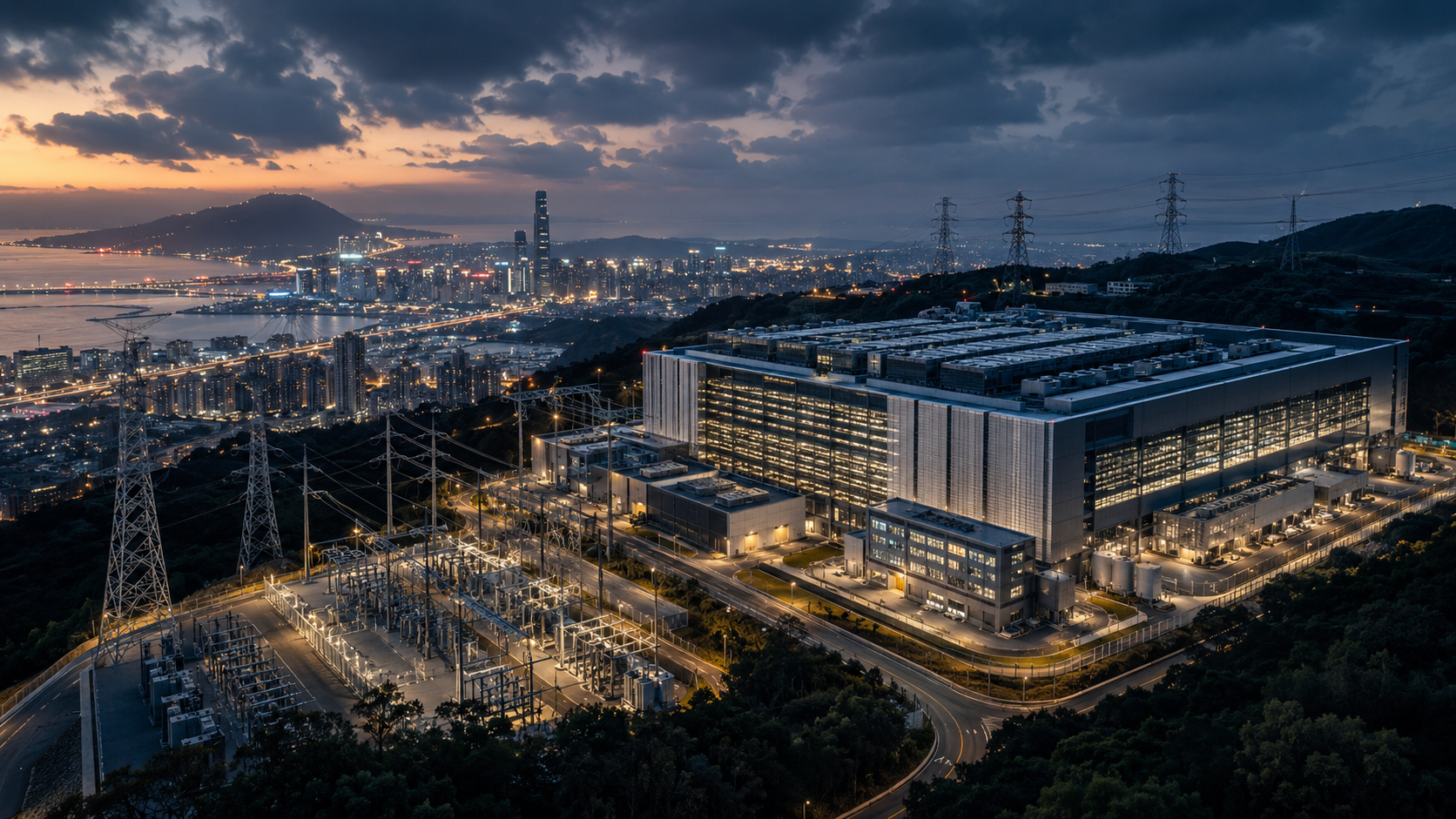
In the past, we said AI is in the cloud; it sounded light, like a white cloud floating in the sky. Now we know better: that cloud is actually heavy. It has server rooms, chips, cooling water, land, power lines, and an electricity bill fatter than many local government budgets.
The changes in artificial intelligence over recent years are not just about models becoming smarter; it's about its body growing larger. In the past, discussions of AI focused on algorithms, datasets, model parameters, whose chatbots seemed to understand more. By 2026, the real issues have shifted underground—to substations and cooling systems. AI is no longer just a software industry; it has become an infrastructure industry. More precisely, it has become energy politics.
Recent signals from the international tech market are very clear. Large AI companies are not only buying GPUs; they are racing for long-term computing power, data centers, chip supply, and electricity capacity. Capital markets no longer view AI as a pretty subscription service; they finance it as new industrial facilities. This is like 19th-century railways, 20th-century petrochemicals and telecommunications—except this time the tracks are laid in server racks, and the locomotive is called model inference.
The problem arises: when AI's appetite grows larger, who will feed it?
A data center does not operate in a vacuum. It needs stable power, cooling, land, connection to local grids, and for local governments to believe this is an industry worth offering incentives, reviews, coordination, and tolerance. Tech companies love to say 'cloud services,' but for local residents that is not a cloud; it is a building requiring massive energy. It may bring tax revenue and jobs, or it may bring grid stress, water resource competition, and land use disputes.
Here lies a civilization-level black humor: we use AI to generate energy-saving policy briefs, yet behind the scenes there may be a data center that is increasing power consumption. AI is very good at helping humans write sustainability reports, but it also needs to be written into those reports. More awkwardly, many companies claim AI will assist climate governance while simultaneously rapidly increasing computational demand. This does not mean AI is inherently unenvironmental; rather, the phrase 'AI can help the environment' cannot serve as a talisman. A talisman cannot be plugged into a transformer box.
For Taiwan, this issue is even more sensitive. Taiwan plays a key role in the global semiconductor supply chain; AI chips and advanced packaging have propelled Taiwan onto the world stage. Yet Taiwan is also an island with highly constrained land, power, and water resources. As the world treats AI as the next industrial lifeline, Taiwan cannot ask only 'Can we sell chips?' It must also ask 'How do we govern the external costs of AI infrastructure?'
AI sovereignty therefore becomes more complex. Previously, discussions of AI sovereignty focused on where data resides, who controls models, and whether language and culture are seen. Now an additional layer is required: where computing power lies, where electricity comes from, where fiber optics extend, and what the cooling systems consume. Without infrastructure, AI sovereignty risks being merely a PowerPoint presentation. To put it bluntly, sovereignty looks like a slide deck, but the plug is in someone else's hand.
This also reminds Yuan Media AI that when advancing digitization of traditional knowledge, we cannot focus only on databases and models; we must consider infrastructure ethics as well. Traditional knowledge is not preserved simply by dumping it into the cloud. The cloud has costs, governance, and power relations. Who holds the data? Who pays for computation? Who decides model updates? Who has the right to delete, archive, or refuse training? These questions appear technical but are actually matters of cultural governance.
More importantly, AI infrastructure cannot be decided solely by tech companies and investment banks. Local communities, energy departments, environmental groups, Indigenous Peoples, and public policy researchers must all enter the discussion. If data centers are new industrial facilities, they should not enjoy the romantic treatment of 'I am cloud, so I have no footprint.' They should undergo environmental assessments, ensure energy transparency, provide local feedback, and accept public oversight.
We need a new public language to discuss AI. Do not ask only how strong the model is; also ask how much electricity it uses. Do not ask only how fast responses are; also ask whether infrastructure is fair. Do not ask only about corporate valuations; also ask what local societies gain. AI is not a bodiless ghost. Its body is large and is getting fatter.
In the coming years, a truly mature AI society will not be one that owns the most chatbots, but one that integrates computing power, energy, environment, and cultural governance into institutional design. The problems of AI have never been about whether it can answer questions; they are about whether we dare to ask those less pretty, less product-launch-meeting-friendly questions behind them.
For example: exactly whose electricity did this cloud eat?
AI use and content-safety disclosure
This article was compiled and edited through the Yuan Media AI editorial process.