Diamonds Do Not Fear AI; They Fear Designers Reduced to Keywords
Original Chinese title: 鑽石不怕 AI,怕的是設計師只剩關鍵字
AI is rapidly entering jewelry design: from sketch generation, gemstone arrangement, visual proposals, and brand identity, it can produce stacks of seemingly expensive images in seconds. But the most captivating aspect of jewelry has never been merely its beauty. It rests against skin, near pulse, participating in a person's posture, memory, and social scenes. When AI can generate a thousand rings, what designers must truly guard is not drawing ability but judgment—selection, deletion, proportion, material, craft, and story.
戴美伶
Amis jewelry and diamond design practitioner, long-term focus on accessory aesthetics, gemstone culture, personal style, and contemporary design language.
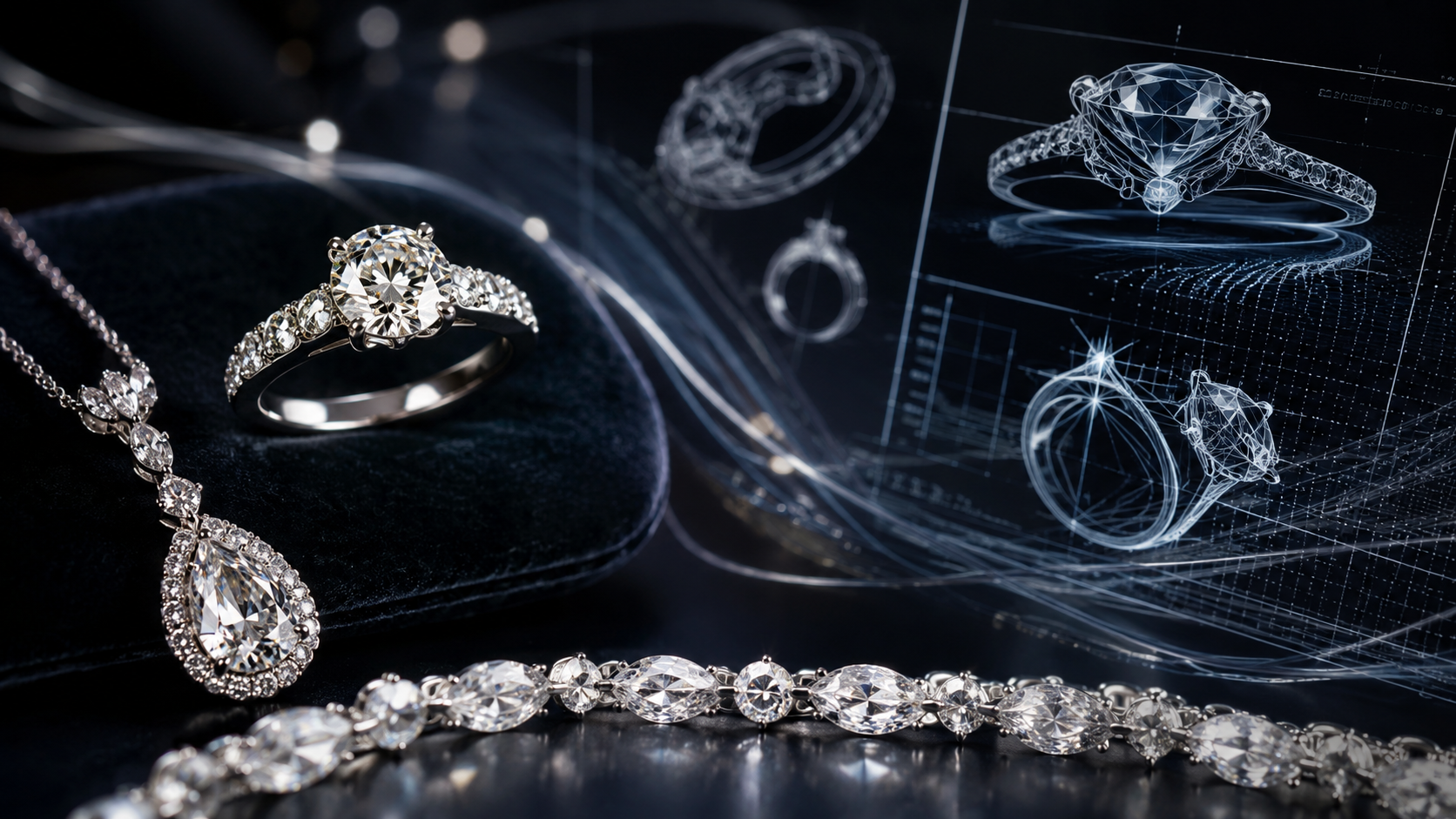
The phrase jewelry designers most often hear lately is probably: 'Will AI replace designers?'
If asked too urgently, the answer can be dull. AI will certainly change designers' work. It can generate a hundred rings, a hundred necklaces, a hundred gemstone arrangements in seconds. It won't complain of fatigue, say it has no inspiration today, or refuse to sketch because coffee tastes bad. From this angle, AI is indeed terrifying—especially for design processes that already rely on pasting popular elements; AI isn't a competitor but a mirror.
But true jewelry design isn't just putting shiny things together.
What makes jewelry special is its proximity to the body. Rings sit on hands, earrings near faces, necklaces against collarbones, brooches alter a garment's attitude. Unlike large sculptures meant for distant viewing or flat ads existing only on screens, jewelry is worn; it appears with skin, posture, occasion, age, makeup, scent, and memory. It's a small object but carries great emotional weight.
AI is very good at generating things that 'look like jewelry.' We don't need to deny this. It knows how to place diamonds on gold, sapphires beside platinum, craft curves reminiscent of high-end brands, and light them as magazine covers might. The problem is that looking like jewelry doesn't make it a good piece of jewelry. Just as copy that looks like love doesn't mean anyone will marry, the world already has too many beautiful but hollow things; AI simply makes them faster.
Jewelry's value comes from choice: which stone to pick, which flaw to keep, how much air to let claws expose, whether metal lines should be hard or soft, whether a main stone should feel like a manifesto or a secret. These decisions aren't merely aesthetic—they're embodied experience and social language. Good designers know if a ring will make fingers look short; they know if earrings are too heavy when turning the head; they know how a necklace's character shifts under dinner lighting versus daylight.
AI can help, but it has no neck or earlobes. It can calculate proportions yet won't truly feel an accessory's weight. It can simulate luster but won't know that a guest fell silent for three seconds beside their mother's ring—that silence is where design begins.
This is why AI's biggest impact on jewelry design isn't replacement but redivision of labor. Future designers shouldn't fear AI drawing sketches; they should fear being left only with sketching. When generative tools quickly produce visual options, a designer's real value shifts to curatorial judgment: which piece deserves continuation? Which is merely pretty nonsense? Which has craft potential? Which would be disastrous on a person? Which aligns with brand spirit rather than looking like it was stolen from a database?
For luxury brands, AI raises an awkward question: if everyone can generate high-end feel, does that feel still hold value?
The answer is surface-level high-end will depreciate; true luxury becomes rarer. Because luxury has never been just expensive—it's precise. It knows precisely when to restrain, when to amplify, when to let materials speak, when to let stories remain silent. AI-generated images often err by trying too hard to prove their beauty: lighting is overfilled, diamonds are piled on, curves twisted dramatically—like someone who entered a boutique and immediately wore every accessory. Glamour exists; temperament is crushed.
Truly mature designers treat AI as an assistant, not an oracle. AI can explore silhouettes, simulate materials, create moodboards, generate brand visuals, and help clients understand wearing effects across styles. But final judgment must return to humans: does this piece need to exist? Does it deserve production? Can it accompany a person's life fragment rather than merely trick three seconds of Instagram scrolling?
For Amis designers, the question adds another layer. Identity isn't decoration; culture isn't pattern material. When bringing tribal memory, beadwork vocabulary, or natural imagery into contemporary design, we need translation—not appropriating our own culture to please markets. AI easily mashes all cultural elements into a visual stew that looks diverse but loses context. A designer's responsibility is to hold the boundary between speed and depth.
Future jewelry design will be more interesting and more ruthless. Those who use AI won't necessarily win, because tools spread quickly; those who truly win are people who extend their eye through AI. When everyone has a machine that spits out inspiration, what becomes precious isn't inspiration but judgment—not generation, but deletion. Not more, but just enough.
Diamonds fear not AI. Diamonds waited underground for ages and won't panic over a few prompts. What should truly worry are designers who only glue popular keywords together. Because once AI arrives, everyone finally sees clearly: some works aren't design—they're keywords in golden coats.
The future of luxury lies not in whether AI can draw shinier jewelry but in whether humans can still distinguish what is merely bright from what truly has light.
AI use and content-safety disclosure
This article was compiled and edited through the Yuan Media AI editorial workflow.