The Forest Is Always Recording: AI Soundscape Monitoring Gives Biodiversity a Voice—and Exposes Human Noise
Original Chinese title: 森林其實一直在錄音:AI聲景監測讓生物多樣性開口,也讓人類噪音現形
The forest is not a quiet backdrop but a continuously sounding database. Birdsong, frog calls, insect wingbeats, bat ultrasonics, streams, wind, and even human chainsaws, gunshots, and road noise all record an ecosystem's health. AI and passive acoustic monitoring let researchers listen to environmental change over long periods with low disturbance. But the question arises: when forests become sound data, who is responsible for interpretation? Who has the right to preserve?
莊溪
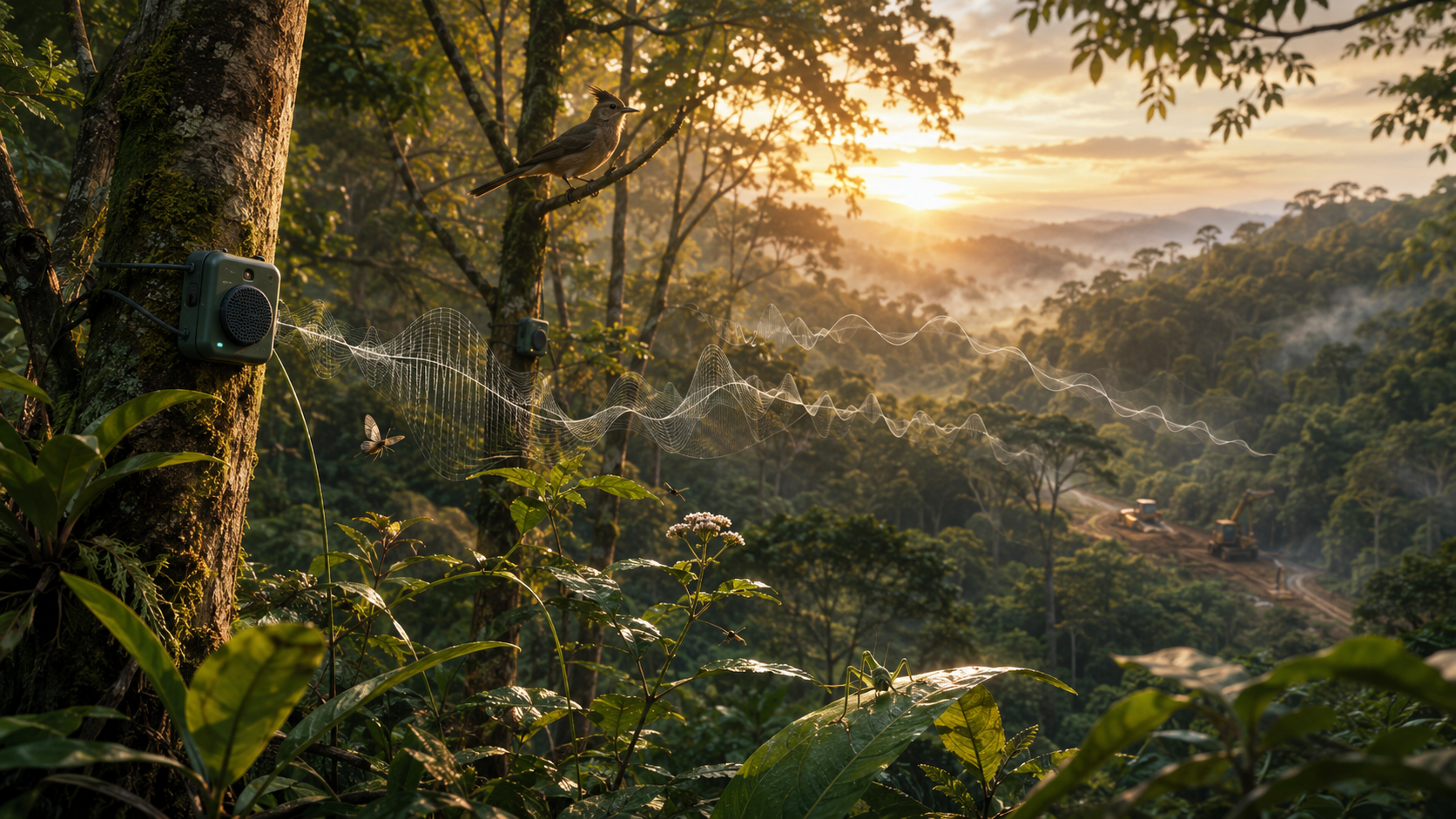
The forest has never been quiet. It is only that humans are too noisy to hear it clearly. Morning birdsong, night frog calls, insect wingbeats, bat ultrasonics, streams striking stones, leaves rubbing together, distant motorcycles, chainsaws, gunshots, and tourist horns all layer together to form a place's soundscape. In the past we treated these sounds as atmosphere; now science begins treating them as evidence. The forest is not background music—it is always recording, just that no one has had the patience to listen through before.
Passive acoustic monitoring is conceptually simple: place recording equipment in forests, wetlands, coastlines, or at sea, collect environmental sound over long periods, then analyze species signals and human activity via manual or AI methods. The advantages are low disturbance, extended duration, and broad coverage. Researchers do not need to stand on mountains daily with binoculars waiting for birds, nor risk entering sample zones more enthusiastically than research assistants amid mosquitoes. Recorders can sit quietly, preserving the ecosystem's 24-hour changes.
AI brings this into a new phase. The biggest past problem with sound data was not that it could not be recorded but that too much was captured. Hundreds of hours, thousands of hours—human ears cannot finish them. Machine learning models now assist in identifying birds, bats, primates, elephants, insects, and even detecting chainsaws and gunshots. This shifts soundscape monitoring from "interesting natural documentation" to a tool potentially supporting conservation decisions: where do endangered species occur? Where does nighttime human activity increase? Which restored forest's bird communities are returning? Sound provides clues.
The most captivating aspect of the soundscape is that it simultaneously records life and disturbance. Images often require capturing an object as evidence, but sound lets invisible organisms leave traces. Bats need not show their faces; their ultrasonics already indicate passage; nocturnal birds need not appear on camera; insects need not be pinned in specimen boxes—their wingbeats and calls can become ecological signals. Likewise, humans cannot escape: chainsaws, vehicles, machinery, gunshots, construction—all are sound fingerprints of human activity. The forest does not issue press releases, but it leaves recordings.
This is highly attractive for environmental governance. Traditional assessments often rely on short-term surveys—selecting a few days to enter the site, fill forms, take photos, write reports. The problem is ecosystems do not operate only during human working hours. Many species are nocturnal; many changes become apparent across seasons. Acoustic monitoring fills this blind spot, letting governance know that a place is not just "has trees" or "no trees," but whether it has sound diversity, species activity rhythms, and whether human noise overwhelms other life.
Yet any datafication technology brings new questions. When forest sounds become data, who owns these recordings? Research institutions? Government? Equipment vendors? Communities? If a protected species is recorded, does publishing the location invite disturbance? If tribal hunting grounds are captured, does that involve community knowledge and land-use privacy? If human speech, ritual sounds, or specific site activities are recorded, can they still be treated as general environmental data? Sound is not as clean as tables; it always carries relationships.
Indigenous Peoples' knowledge offers important reminders here, but should not be romanticized. Many hunters, fishers, gatherers, and forest rangers have long understood the environment through sound: which bird calls signal weather changes, which insect noises indicate seasonal shifts, which stream sounds suggest water volume differences, and which silences are unusual. This is not "superstitious feeling" but multisensory observation accumulated from living in place over time. If AI soundscape monitoring collaborates with local knowledge, it approaches reality more closely; if recorders are simply dropped into mountains while communities are excluded from data interpretation, that merely upgrades colonial surveys to a cloud version.
Soundscape data should not serve only scientific papers. It can become educational tools—letting children hear their hometown's seasonal sounds; disaster-risk assistance—observing stream flow, rain patterns, and animal behavior changes; patrol support—providing timelines for illegal logging or poaching; cultural preservation—recording a place's gradually disappearing sounds. Every place has its own sound identity card, though modern development often grinds it into uniform noise.
The black humor is that humans have now invented AI to listen to forests partly because we ourselves no longer know how to listen. Cities train ears to recognize only notification chimes, subway arrivals, and delivery notifications, forgetting that wind, water, and bird sounds also convey messages. AI can help us hear the world anew, but it cannot restore our respect for it. Identifying a hundred bird calls while continuing to fragment habitats is not conservation—it is high-tech self-comfort.
The forest has always been recording. The question remains: are humans willing to admit they have also been recorded?
Further Reading and Sources
- Cornell K. Lisa Yang Center for Conservation Bioacoustics
- National University of Singapore:AI to monitor biodiversity by sound
- Nature Communications:Passive acoustic monitoring and ecosystem restoration
AI use and content-safety disclosure
This article was compiled and edited by the Yuan Media AI editorial process, for publication after manual review.