Lost Cities Are Not Lost: What LiDAR Archaeology Reveals, Often the Blind Spots of Colonial Narratives
Original Chinese title: 失落城市沒有失落:LiDAR 考古照亮的,常是殖民敘事的盲點
Media loves to write 'lost cities discovered,' as if ancient cities waited millennia in forests for modern people to rescue them with lasers. LiDAR does reshape archaeological vision, penetrating canopy to reconstruct terrain, roads, platforms, terraces and water systems. But what truly needs rewriting is the old bias that Indigenous Peoples had no cities, no engineering, no complex societies. Many cities were not lost but made invisible by colonization, disease, violence and academic arrogance.
山海資料庫筆記
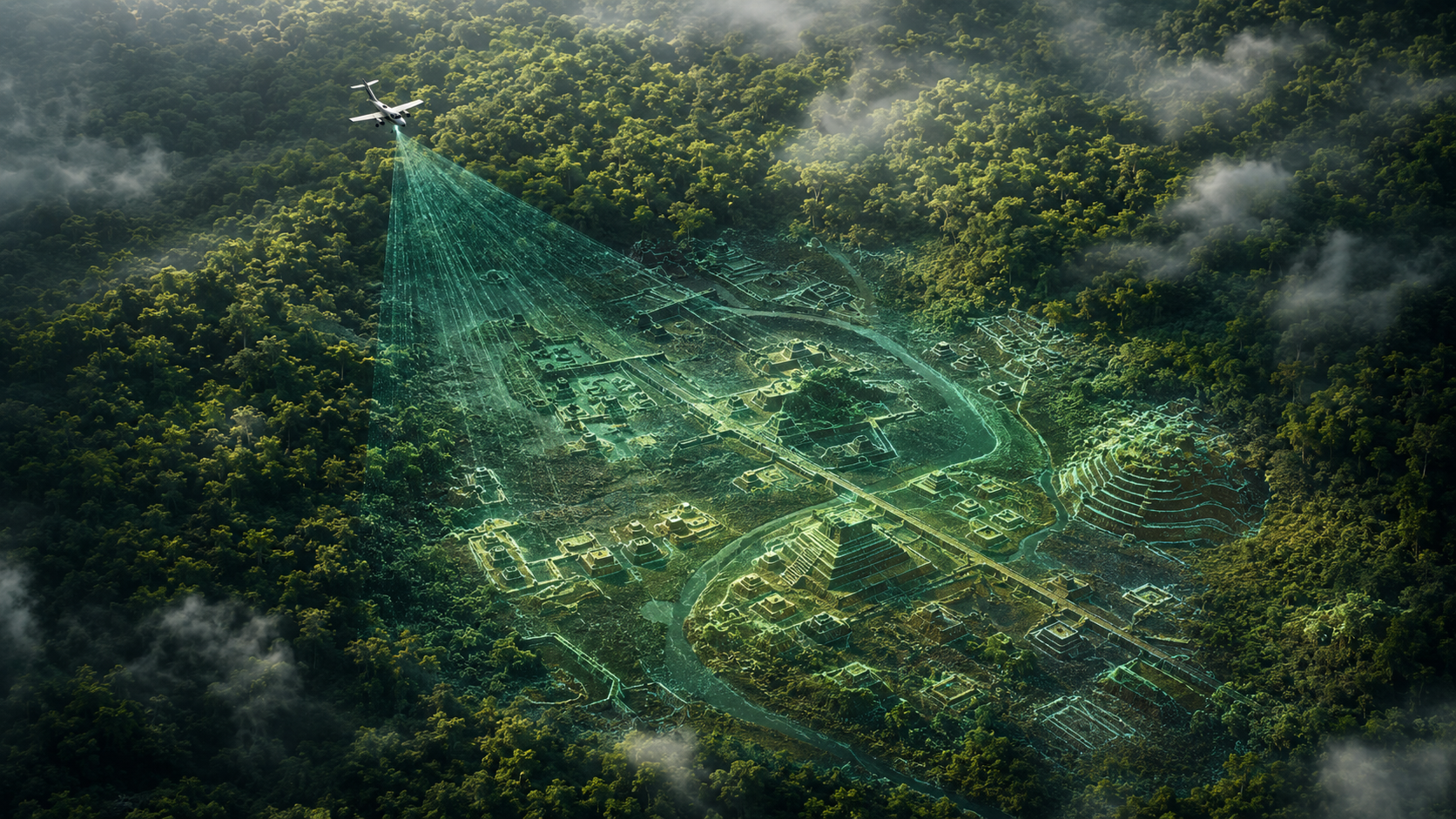
"Lost cities discovered" is one of the most beloved archaeological headlines in modern media. It has jungle, mystery, technology, explorers; best paired with a laser scan image, as if human history finally rescued from darkness by some expensive instrument. Such headlines are eye-catching and suspicious. Because many so-called lost cities were not truly lost to locals, ancestral memory, place names, legends, farmland boundaries and archaeologists. They often just obscured by colonial narratives, academic bias and forest vegetation, while modern media translates "we didn't see it before" into "the world discovered for the first time".
LiDAR is indeed a powerful tool in archaeology. Using laser ranging, it scans ground from air, processes data to remove vegetation cover, reconstructs terrain details. In tropical forests this matters greatly. Traditional ground surveys may take years to traverse an area; LiDAR lets researchers see roads, platforms, terraces, canals, causeways, walls and settlement networks. For Amazon, Maya lowlands it is not just another pretty visualization but directly challenges past imagination that "forests cannot support complex societies".
That imagination itself has colonial flavor. For long mainstream history narratives treated tropical forests as wilderness, Indigenous Peoples as scattered, simple groups lacking engineering capacity. The denser the forest, the more modern people imagined no cities there; roads invisible meant no transport; stone structures not obvious meant no political organization; farmland shapes unfamiliar to European eyes meant no agricultural civilization. This reasoning is convenient, so convenient it can provide moral background for colonial plunder: since that place looked uncivilized, our development was just helping tidy up.
LiDAR scans of ancient landscapes are dismantling this story. In Amazon researchers found ancient settlements, water systems, roads, gardens and managed forestscapes; in Maya region LiDAR and other technologies made academia see more clearly the complexity of cities, agriculture, transport and political networks. These discoveries do not claim ancient societies were perfect nor romanticize all Indigenous civilizations as eco-saints. What truly matters is they force us to admit: Indigenous history is not blank pages in mainstream civilization history but a knowledge landscape long misread, underestimated and obscured.
But technology brings new vision also new arrogance. When media writes LiDAR archaeology as "lasers find lost cities" it easily centers research teams, instruments and images while placing local communities, long-term ground surveys, oral memories and archaeological context in background. This is a tech version of explorer narrative: before white explorers took maps and compasses into forests; today data explorers take point clouds and algorithms into forests. Props changed but protagonist position sometimes unchanged.
Truly good archaeological technology should not only make external researchers see clearer but also give local communities greater interpretive authority. Which sites can be opened? Which data might attract looting, tourism pressure or land disputes? Who can access high-resolution terrain data? How do results return to community education, land rights, cultural preservation and public history? These questions are no less important than laser resolution. Maps have never been neutral tools. Whoever draws maps, names them, opens them, redistributes power.
This also connects with Yuan Media AI's concern for data governance. LiDAR data seems just terrain information but once it reveals ancient roads, burials, sites, ritual spaces or settlements it is no longer natural terrain. It involves history, identity, land, cultural assets and political recognition. If fully opened may promote research but also guide looters; if fully closed may deprive communities and public education of participation opportunities. Truly mature approach is to establish graded access, authorization, feedback and co-governance rather than sweep all ethical issues into cloud storage with four words "open science".
We should also re-examine the word "lost." Cities can disappear? Yes. Populations can collapse? Yes. Disease, colonization, war, climate, politics and economic change may cause settlement decline. But "lost" should not become a lazy romance. It often masks concrete violence: population collapses from colonial diseases, migrations from land theft, memory fractures from state education, knowledge extraction from museums and academic classification. Cities did not walk away; many were lost by the world.
LiDAR makes lines beneath forests visible again and also modern civilization's blind spots more visible. It reminds us technology does not invent history but sometimes finally catches up with its complexity. What truly worth excitement is not "another mysterious ancient city found" but we finally have one less excuse to pretend Indigenous Peoples were merely peripheral characters in civilization.
Lost cities are not lost. Lost often is modern people's ability to acknowledge others once complex.
Further Reading and Sources
- Cambridge University Press:LiDAR and Lost Cities
- National Geographic:Ancient Amazonians
- The Guardian:Maya civilization and LiDAR archaeology coverage
AI use and content-safety disclosure
This article was compiled and edited by Yuan Media AI editorial workflow for human review before publication.