Cancer Vaccines Are Not Miracle Drug Ads: mRNA Is Personalizing Treatment
Original Chinese title: 癌症疫苗不是神藥廣告:mRNA 正在把治療從大鍋飯改成個人訂製
mRNA cancer vaccines are not a universal shot for preventing cancer, nor the mystical 'boost immunity' claims in health food ads. They are more like personalized immune warrants for a patient's tumor: read the mutations, then teach the immune system to recognize residual cancer cells. ASCO 2026 data shows personalization is advancing in melanoma and pancreatic cancer, but public discourse must keep hope alongside caution.
Yuan Media AI Editorial Desk
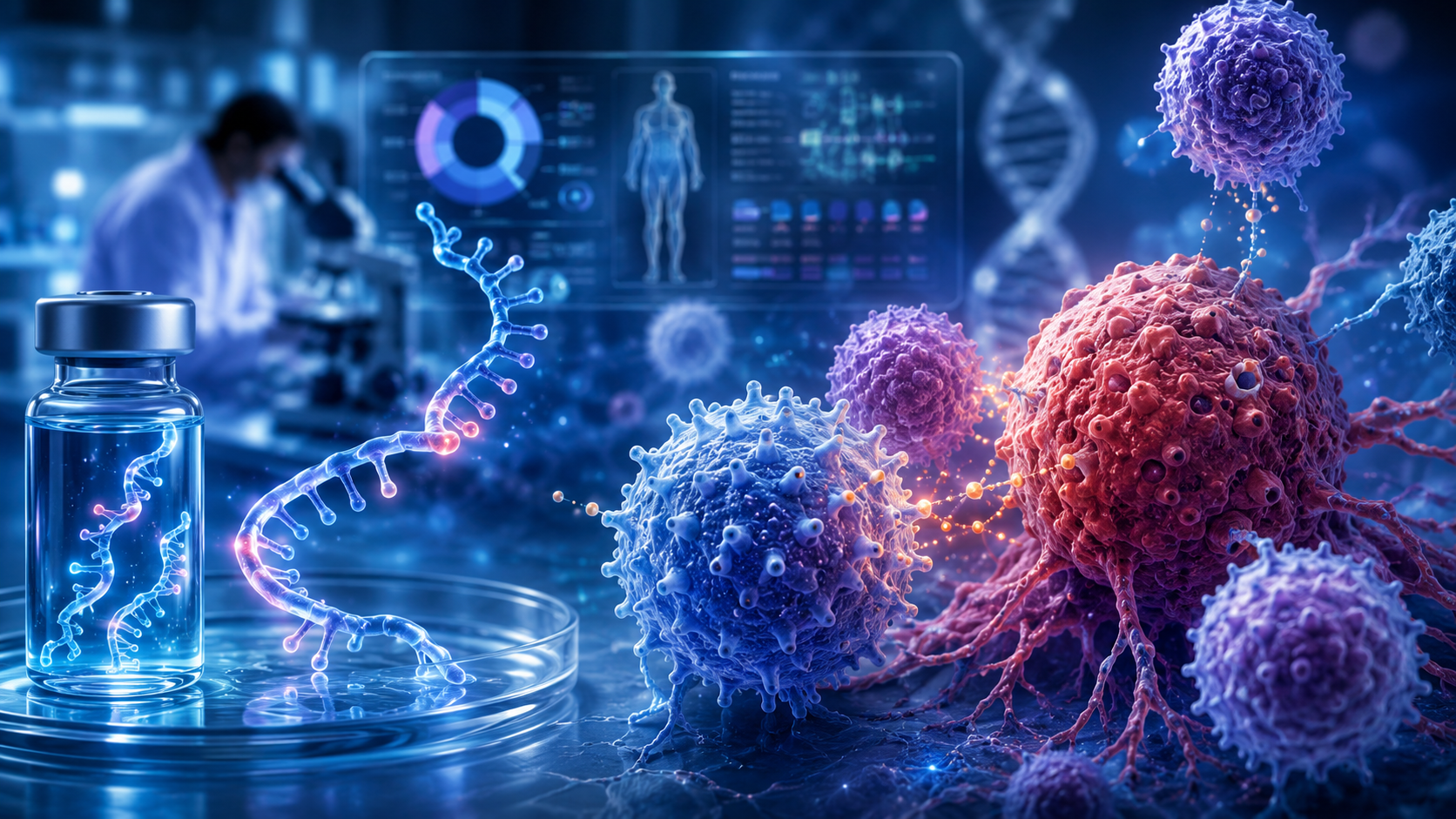
The phrase 'cancer vaccine' easily misleads. Most people think of vaccines as preventing infection: one shot, no future disease. But mRNA cancer vaccines are not that. They are not meant to prevent all cancers in healthy people, nor a magic needle that makes cancer cells quit en masse. More accurately, they try to make the patient's immune system recognize their tumor's unique flaws—like issuing a personalized warrant for the cancer cells.
This is where mRNA technology shines in cancer treatment. Every person's tumor mutations differ; cancer is not one enemy but many enemies that look alike yet have bad personalities and can disguise themselves. Traditional treatments are like massive bombing: surgery, chemotherapy, radiation, immunotherapy trying to release the brakes on immunity. Personalized mRNA vaccines first read tumor gene data, find new antigens unique to cancer cells, then deliver those targets via mRNA to the immune system. In short, they don't kill cancer directly; they teach the body to recognize it.
It sounds sci‑fi, but clinical trials are making it concrete. ASCO 2026 reports show melanoma, pancreatic cancer, brain cancer and other mRNA vaccine studies gaining attention. Especially in melanoma, Moderna and Merck's personalized mRNA vaccines combined with immune checkpoint drugs have shown promising signals over five years of follow-up. These data are not a 'cancer is cured' press release, but they signal that personalized immunotherapy is moving from concept to verifiable clinical pathways.
Public discourse must avoid packaging hope as myth. Medical progress is precious; cancer patients and families do not need outsiders declaring on the internet that 'a new therapy has arrived, no more fear of cancer.' That sounds warm but is cruel. Clinical trials have indications, stages, inclusion criteria, side effects, costs, failure rates—not every patient qualifies, nor does every cancer respond similarly. Science is not a wishing well; medicine is not a direct sales meeting.
The real revolution in mRNA vaccines lies not in erasing all cancers overnight but in reshaping treatment imagination. Past care placed patients into disease categories: stage, subtype, standard regimen. Precision medicine asks further: what mutations does this tumor have? Why can't the immune system see it? Can we tailor therapy to this person? This shift is deep because it pulls patients out of statistical tables and back as individuals.
Personalization brings new challenges. First, time. Cancer treatment races against time; personalized vaccines require tumor sampling, sequencing, data analysis, antigen screening, manufacturing, quality control—not a same-day blood draw and next-day delivery e-commerce flow. Second, cost. The more personalized the care, the higher the price. If efficacy is proven, how will health insurance, private insurers and public systems cover it? That may be a political problem harder than the technology itself. Third, data. Tumor gene data are highly sensitive; who stores them, analyzes them, reuses them cannot be swept under a consent form.
AI also plays a role here. Personalized vaccines must sift vast genomic data for antigens recognizable by immunity, involving bioinformatics, model prediction and clinical interpretation. AI can accelerate screening but may amplify bias. If training data come mainly from certain populations, are predictions equally reliable elsewhere? If medical AI becomes a black box, how do clinicians and patients understand why it chose those targets? Precision medicine must not serve only the wealthy nor ignore those with insufficient data.
mRNA technology gained global recognition through COVID-19 vaccines and became politicized. Now entering cancer treatment, it needs clear scientific communication. Supporters cannot overhype; detractors cannot dump all mRNA into conspiracy theory trash. Mythologizing or demonizing a technology is lazy. The real difficulty is acknowledging its potential, risks, limits and promising future.
Cancer vaccines are not miracle drug ads. They reflect medicine slowly learning 'not using the same key for every door.' This path will be unromantic, expensive, slow, complex, and include failures. But if it lowers recurrence risk after surgery for some patients or helps the immune system remember cancer cells' faces, that is already significant. Modern medicine's most hopeful sign is not sudden miracles but finally admitting: each patient's body is not a standard answer.
Further Reading and Sources
- Reuters:Cancer vaccines based on mRNA advance despite US cuts
- Reuters:Moderna and Merck cancer combo melanoma follow-up
- Memorial Sloan Kettering Cancer Center:mRNA vaccines and pancreatic cancer clinical research
AI use and content-safety disclosure
This article was compiled and edited by Yuan Media AI editorial workflow, for human review before publication.