The Sun Is Not a Romantic Filter: When Auroras Become Warning Lights for GPS, Power Grids, and Social Panic
Original Chinese title: 太陽不是浪漫濾鏡:當極光變成 GPS、電網與社會恐慌的預警燈
Auroras are beautiful, but the problem is that behind them may lie communication interference, GPS errors, satellite damage, and power grid stress. In June 2026, NOAA announced SOLAR-1 has officially entered operation, allowing coronal mass ejection imagery to enter warning systems faster. This is not a romantic small happiness for astronomy fans; it is modern civilization beginning to admit: our mobile phones, airplanes, electricity, financial transactions and navigation systems all live under the sun's temper.
Lawrence Lee | Technology Journalist, Science Fiction Critic, and Space Science Educator
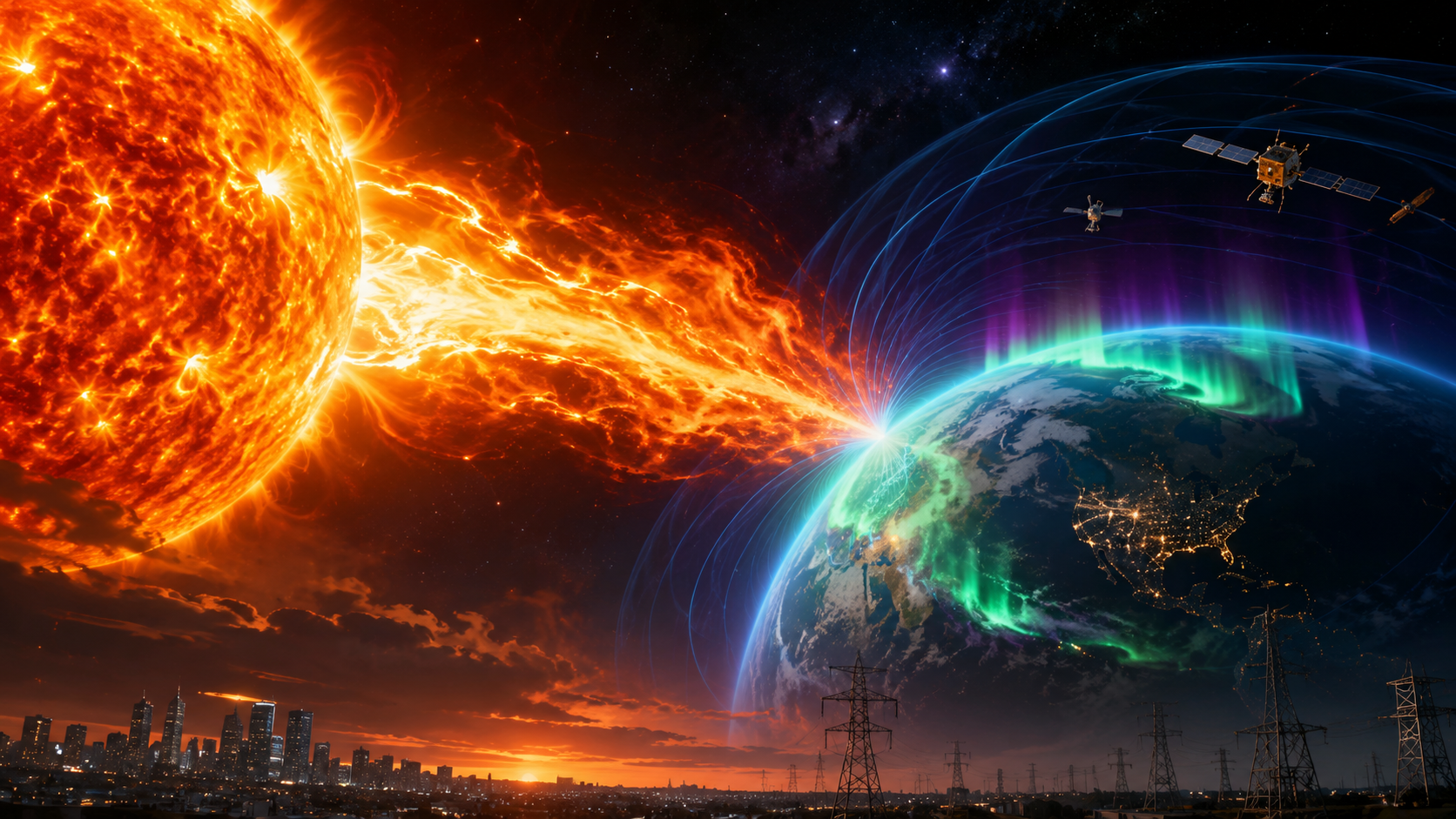
Auroras are one of the astronomical phenomena most easily misunderstood by modern people. In photographs, they look like the sky has opened a free light show for humanity; on social media platforms, they are usually packaged as must-see dream lists. The problem is that behind the aurora is not the universe helping the tourism bureau shoot promotional films, but the sun pushing high-energy particles and magnetic field disturbances toward Earth. To put it more coldly: when the sky becomes beautiful beyond words, sometimes it means our satellites, power grids, navigation and communication systems are undergoing stress tests.
In June 2026, NOAA announced that SOLAR-1 has officially entered operation; on the surface this is a space technology news item, but in reality it is a public safety news item. The mission of SOLAR-1 is not to take prettier sun photos for astronomy fans, but to detect solar wind, coronal mass ejections and space weather that may affect Earth faster. In the past we thought weather meant rain, typhoons, cold waves, heatwaves; now we must admit there is another layer of weather outside the atmosphere. It will not blow your umbrella over, but it can interfere with airplane communications, cause GPS positioning drift, create problems with satellite attitude control, and even make power grids bear extra induced currents.
The most absurd thing about modern civilization is that we have built our daily lives on a set of space-based systems that appear stable but are actually highly fragile. Logistics rely on positioning; financial transactions depend on time synchronization; agricultural machinery depends on satellite navigation; mobile phone maps depend on GPS; flight routes depend on communications and navigation; even delivery riders not being able to find your home can become indirect victims of space weather. Humans say technology lets us conquer nature, but in reality we have simply moved fragility to higher orbits.
Solar storms are not equal to the end of the world. Most of the time they will not burn cities into black caramel like disaster movies. But serious space weather events do indeed produce chain risks. Satellite damage expands positioning errors; power grid protection systems become tense, transformers bear pressure; high-latitude flights must adjust routes, radio communications may be interrupted. For ordinary people, the most troublesome thing is not "not understanding science," but that society rarely treats space weather as part of public education. When it really happens, social media platforms will immediately sprout a forest of conspiracy theories, faster than coronal mass ejections.
This is also why SOLAR-1 is important. Faster observation data is not just one more picture for scientists; it gives governments, power companies, the aviation industry, satellite operators and emergency management systems a little more reaction time. Public safety often does not rely on heroes, but on being able to respond three minutes earlier, several hours earlier, or even days earlier. True maturity of human civilization is not holding press conferences beautifully after disasters occur, but admitting before disasters that we might make mistakes.
Space weather also makes us rethink "infrastructure." In the past when talking about infrastructure, people thought of roads, bridges, water pipes, power lines. Today's infrastructure includes invisible time signals, orbital data, satellite links, cloud services and energy dispatching. They are usually so quiet that people forget they exist; once they break, society will discover it does not actually live on the ground but in a network woven from signals, algorithms and electricity.
The black humor is that modern people most often use "bad weather" as an excuse for being late. In the future there may be higher-level versions: "Sorry, I'm not slacking; my navigation got messed up by a solar storm." This sounds like an excuse, but in some contexts it might actually be true. The sun does not care whether you are on time for meetings or whether your e-commerce packages arrive today. It only follows its own physical rules, and we must admit that no matter how precise civilization is, it still lives within the cosmic environment.
Space weather education should not just be tucked away in a corner of an astronomy museum. It should enter schools, news media, public disaster prevention and infrastructure discussions. Let people know both the beauty of auroras and the risks behind them; let them understand that solar storms are not mysterious prophecies nor doomsday memes, but natural phenomena that can be observed, warned about and managed. Otherwise, next time the sky lights up, people will only rush to take selfies while system engineers sweat in the background — a scene too comical for modern civilization.
The sun is not a romantic filter. It is both the energy source of Earth's life and an external stress tester for digital civilization. SOLAR-1 does not represent humanity finally controlling the sun; it represents our willingness to admit: even the smartest civilizations need to learn how to read the sky.
Further Reading and Sources
- NOAA:NOAA’s SOLAR-1 enters new era of space weather monitoring
- ESA:Space weather monitoring and January 2026 space weather event
AI use and content-safety disclosure
This article was compiled and edited by the Yuan Media AI editorial process, for human review before publication.