Loans on Indigenous Reserved Land and Lending by Farmers' and Fishers' Associations: If Financial Tools Don't Reach the Mountains and Seas, Industrial Policy Remains Only Slogans
Original Chinese title: 原保地貸款與農漁會承貸:金融工具若不進山海,產業政策就只剩口號
Loans on Indigenous reserved land and lending by farmers' and fishers' associations may look like financial procedures, but the real issue is whether Indigenous rural industries can actually access policy tools.
Yuan Media AI Editorial Desk | AI-Driven Indigenous Township Economy and Policy News
Focuses on indigenous township industries, local finance, policy governance, and technology public service translation.
# Loans on Indigenous Reserved Land and Lending by Farmers' and Fishers' Associations: If Financial Tools Don't Reach the Mountains and Seas, Industrial Policy Remains Only Slogans
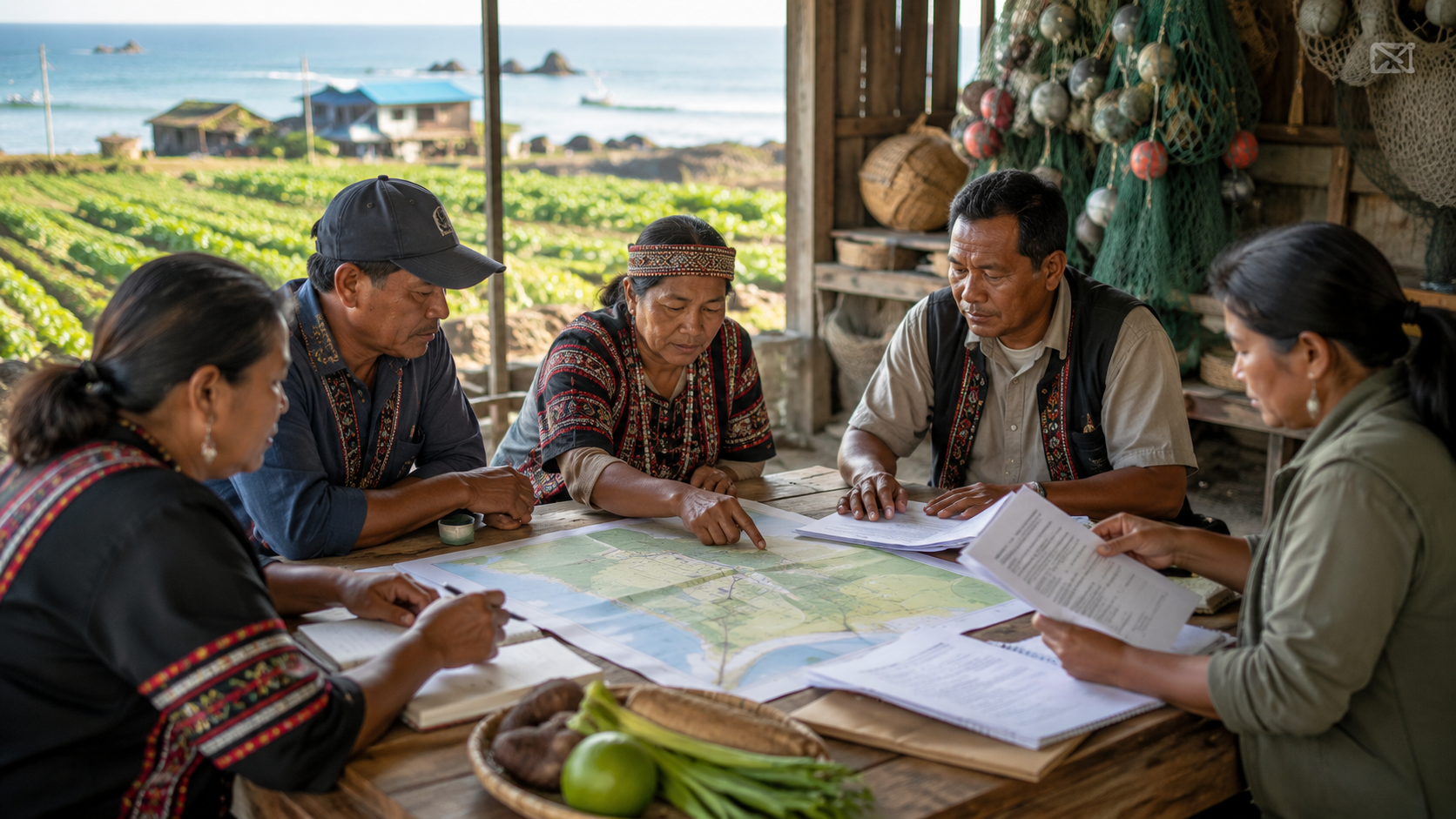
Legislator Chen Ying recently brought loans on Indigenous reserved land and lending by farmers' and fishers' associations back into public discussion by releasing related information. Viewed superficially, this may look like a matter of financial procedure. In the context of Indigenous rural industries, however, it asks a more basic question: when tribal youth want to return home to farm, coastal residents want to expand production, and small cooperatives want to integrate processing and marketing, is the system actually prepared to let capital reach them?
The most common difficulty facing Indigenous rural industries is not a lack of ideas, but a failure to connect with available tools. Policy slogans may promote regional revitalization, smart agriculture, marine-industry upgrading, and tribal branding, yet many plans stop at the slide-deck stage when financing remains inaccessible. Loans on Indigenous reserved land, tribal land use, and production conditions in mountain and coastal areas differ from standardized credit assessments designed for the plains. If the system still uses a single yardstick, the result is not sound risk management but the direct exclusion of local communities.
Farmers' and fishers' associations play an especially important role here. They are not merely lending windows; they can be the financial nodes closest to local production cycles. Clearer, more stable lending mechanisms that better reflect local industry structures could shift Indigenous rural finance from fragmented subsidies toward longer-term industrial support. Conversely, opaque procedures, insufficient frontline knowledge, and local information asymmetries reproduce a familiar absurdity: the central government says tools exist, but local communities cannot access them.
This is not a call to relax reviews unconditionally. It is a reminder that when financial systems fail to reflect the actual production conditions of mountain and coastal areas, risk governance becomes risk avoidance. Better assessment and support mechanisms should be tailored to Indigenous reserved land, fisheries, agricultural processing, community cooperation, and young people returning home. Indigenous rural industries do not need encouragement to dream; when dreams are ready to become work, they need an institutional path forward.
AI use and content-safety disclosure
This article was compiled and proofread by Yuan Media AI editorial process, published after human editorial review.