Markets Cannot Be Singular: Indigenous Township Resilience Through Taitung Agricultural Exports
Original Chinese title: 市場不能只有一個:從台東農產外銷看原鄉產業韌性
Taitung agricultural exports cannot rely on a single market. When quarantine rules, logistics, exchange rates, and buyer preferences shift, local industries need diversified markets and stable public support.
Yuan Media AI Editorial Desk | AI-Driven Indigenous Township Economy and Policy Watch
Focused on Indigenous township resilience, digital public services, agricultural infrastructure, AIGC content generation, and public policy analysis.
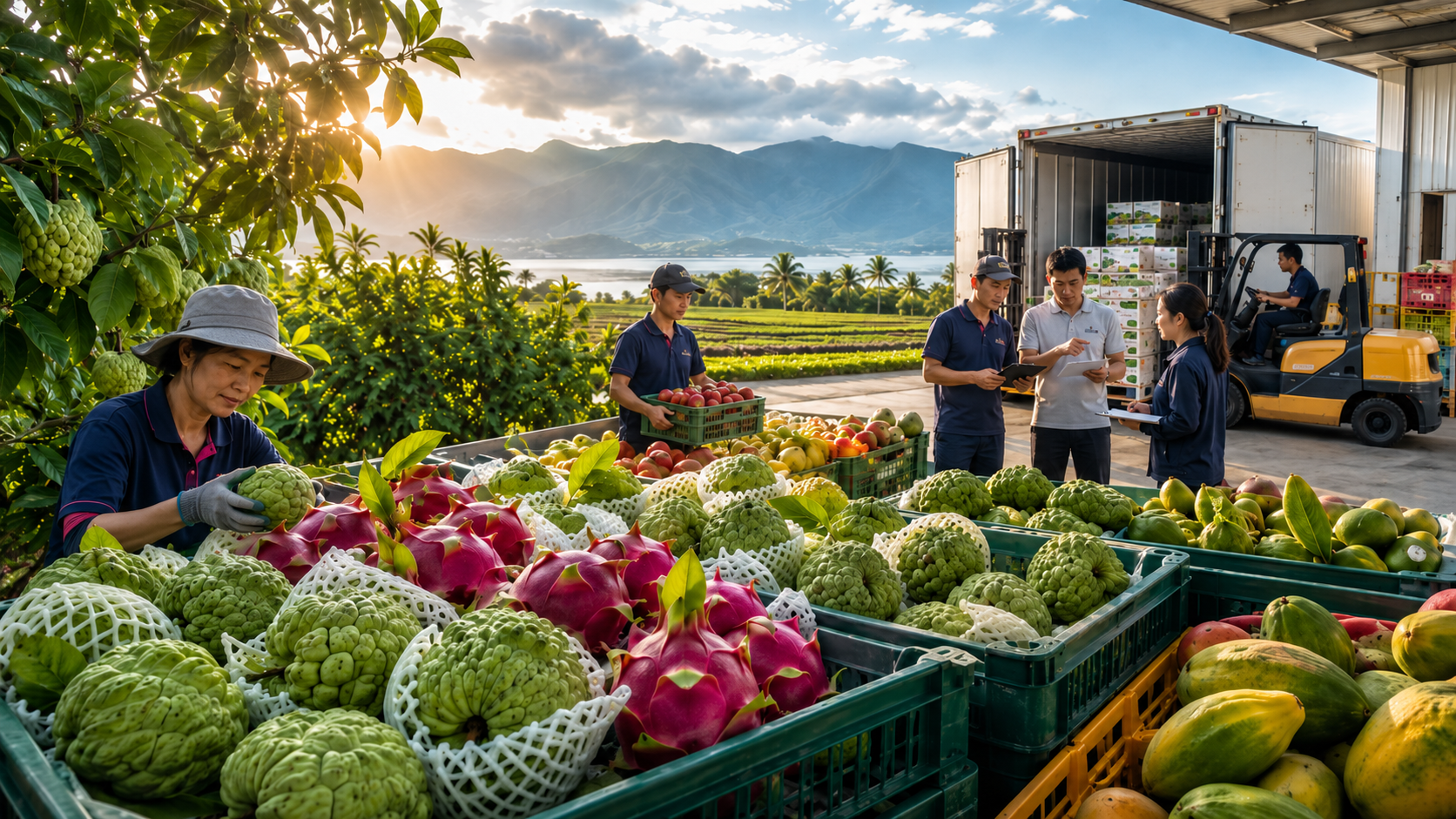
# Markets Cannot Be Singular: Indigenous Township Resilience Through Taitung Agricultural Exports
Exporting Is Not Just Shipping Fruit Outward
When discussing Taitung agricultural exports, the most visible aspects are orders, flights, press conferences, and sales figures. These matter, but they represent outcomes only. This issue also stems from Legislator 陳瑩's public advocacy for diversified markets in Taitung agriculture and her stance that farmers should not become political casualties; what truly determines whether farmers can benefit long-term is market diversification, stable logistics, trusted quality grading, and local organizations' capacity to assist households during price volatility.
If a local industry relies too heavily on a single market, short-term efficiency comes at the cost of concentrating risk on farmers. Changes in quarantine rules, shifts in consumer preferences, rising shipping costs, or exchange rate fluctuations can suddenly narrow previously stable channels. For Indigenous communities and township agriculture, market resilience is not just rhetoric—it's about whether income remains steady day-to-day.
Indigenous Township Industries Need Market Portfolios
Taitung agriculture's strengths lie not only in yield but also in landscape, varieties, cultural narratives, and producer relationships. Yet packaging these advantages as one-off marketing stories rarely translates into lasting bargaining power. Public policy should help localities build market portfolios: domestic channels, regional exports, processed goods, institutional catering procurement, e-commerce, and tourism consumption all belong on the same industry map.
This does not mean every farmer must become a cross-border e-commerce expert; rather, agricultural associations, cooperatives, local governments, and central agricultural agencies should jointly share information and channel costs. AIGC can assist in generating multilingual product descriptions, origin stories, and marketing materials, but data sources, brand authorization, and pricing information must remain under the watch of local organizations—content generation cannot replace industry governance.
Resilience Is Public Investment, Not Farmer Self-Reliance
Market diversification requires cold chain infrastructure, warehousing, grading, inspection, packaging, and digital customer service. These elements may not be as visible as export press conferences, yet they form the foundation of industrial resilience. If policy only subsidizes one-off marketing without strengthening basic infrastructure and organizational capacity, farmers will continue to bear risks alone during each market shock.
The core question for Indigenous township resilience is whether public resources can shift localities from single-point sales toward multi-channel governance. Markets cannot be singular because farmers' futures cannot rest on a single buyer, route, or policy window.
AI use and content-safety disclosure
This article was compiled and edited through Yuan Media AI editorial processes, with human editorial verification before publication.