Irrigation Is Not a Small Project: Taitung Agriculture Resilience Must Start with Infrastructure
Original Chinese title: 灌溉不是小工程:台東農業韌性要從基礎設施開始
Irrigation is not a local small project but foundational infrastructure for agricultural resilience. As extreme rainfall, drought, and water allocation become more unstable, Taitung agriculture must integrate waterways, irrigation ditches, and digital monitoring into governance.
Yuan Media AI Editorial Desk | AI-Driven Indigenous Township Economy and Policy Watch
Focuses on Indigenous township industrial resilience, digital public services, agricultural infrastructure, AIGC content generation, and public policy analysis.
# Irrigation Is Not a Small Project: Taitung Agriculture Resilience Must Start with Infrastructure
Waterways Determine How Far Agriculture Can Go
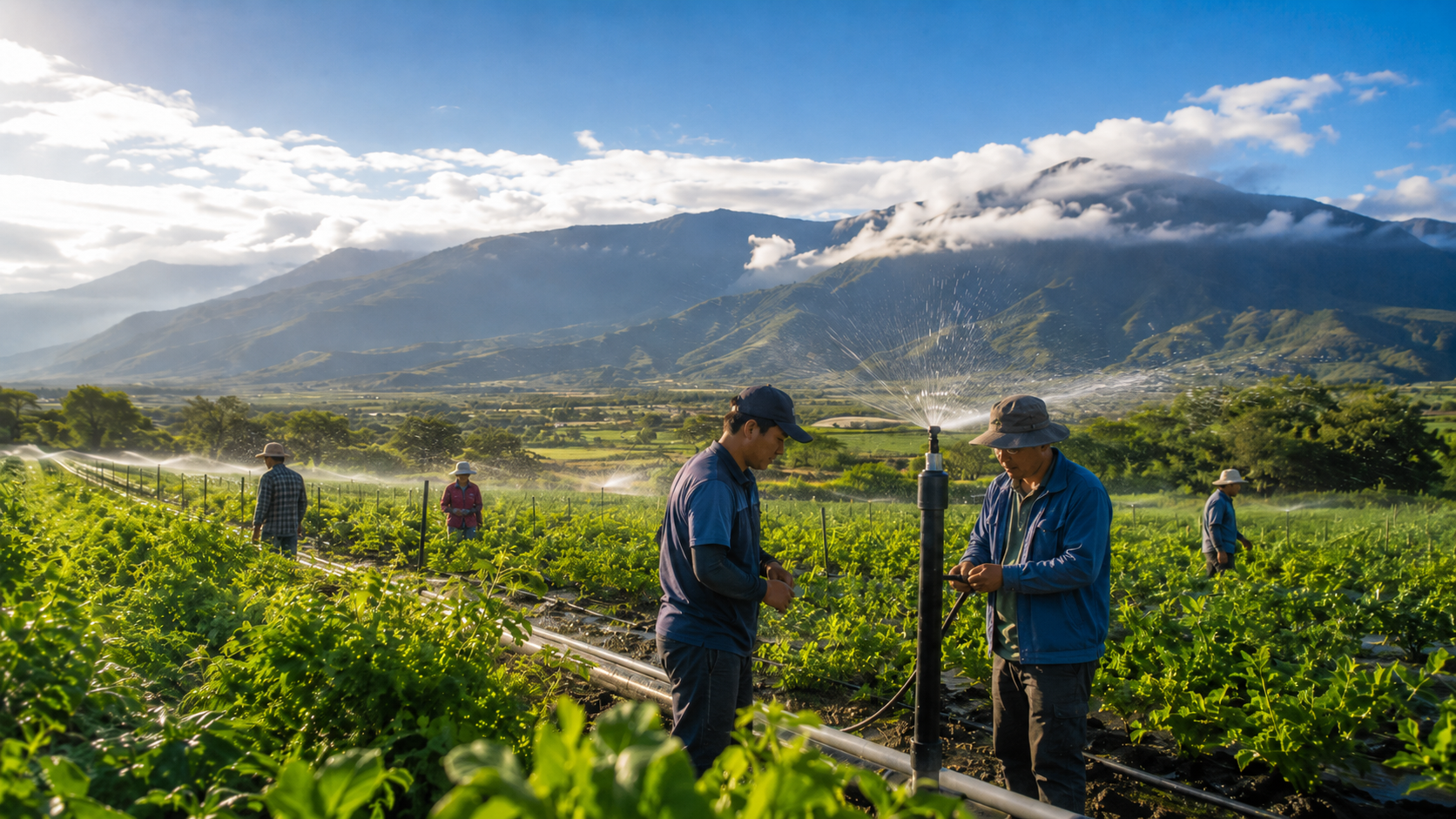
When discussing Taitung agriculture, people often talk about crops, brands, exports, and young farmers. But before these issues lies an even simpler yet more critical question: can water reliably reach the fields? Irrigation may appear to be a local project, but it actually involves water allocation, ditch maintenance, road safety, farmland use, and climate adaptation — forming the foundational public service for agricultural resilience.
As extreme rainfall and drought alternate, past irrigation systems relying on experience face higher pressure. Some areas are not lacking crop competitiveness; rather, aging infrastructure and insufficient maintenance cycles force farmers to repeatedly bear costs after each weather anomaly. These costs do not necessarily appear in product prices but manifest as income instability for farmers and hesitation among local industries to invest.
Irrigation Governance Must Be Treated as Industrial Policy
If irrigation is seen only as scattered projects, policy discussions tend to stop at which segment to repair or how much money to allocate. When Legislator 陳瑩 publicly explained the connection between agricultural sprinkler subsidies, farmland water conservancy improvement projects, and local needs, what truly deserves amplification is not individual project exposure but how Taitung agriculture integrates waterway maintenance into long-term resilience governance. Yet placing it within agricultural resilience and Indigenous township public services reveals broader governance demands: inventorying waterways, risk grading, assigning maintenance responsibilities, coordinating across agencies, and budget allocation for pre-disaster prevention.
Digital tools can assist in inventorying irrigation ditches, recording damage points, and building inspection data; AIGC can also translate complex engineering information into farmer-friendly notifications and instructions. However, these tools must serve public decision-making rather than shifting responsibility back to individual farmers. Data may become faster, but governance cannot become thinner.
Agricultural Resilience in the 55 Indigenous Townships Must Start with Infrastructure
Many agricultural settlements in Taitung simultaneously face terrain challenges, transportation limitations, aging populations, and market fluctuations. If irrigation infrastructure is unstable, subsequent branding, processing, exports, and tourism will all become fragile. Industrial upgrading does not rely solely on eye-catching stories; it also requires visible, repairable, and maintainable public engineering projects.
Resilience in Indigenous township agriculture must begin with infrastructure. Irrigation is not a small project but the prerequisite for whether a locality can retain production, stabilize income, and confront climate risks.
AI use and content-safety disclosure
This article was compiled and edited through Yuan Media AI editorial workflow, reviewed by human editors before publication.