Cancer Vaccines Are Not Miracle Cures: Molecular Medicine Is Rewriting Treatment, But Don't Rush to Turn Hope Into Advertising
Original Chinese title: 癌症疫苗不是神藥:分子醫學正在重寫治療,但別急著把希望拿去做廣告
From mRNA to immunotherapy to personalized medicine, cancer vaccines are not myths; they are molecular medicine pathways still under rigorous validation.
Yuan Media AI Editorial Desk | Public Science and Health Observer
Organizing technology, medicine, culture, and public issues in understandable language, avoiding overpromising and medical misinformation.
# Cancer Vaccines Are Not Miracle Cures: Molecular Medicine Is Rewriting Treatment, But Don't Rush to Turn Hope Into Advertising
The phrase "cancer vaccines" is easily misunderstood. It sounds like a single injection that will drive cancer cells out of the body, like some medical version of a savior appearing. Reality isn't so dramatic. Cancer is not a single enemy; it's a collection of highly variable diseases that can disguise themselves and take detours. When science tries to open new avenues using molecular medicine, mRNA, and immunotherapy, we should certainly pay attention and keep expectations alive; but more importantly, don't package hope too early as a miracle.
Science Is Indeed Advancing, But Not Every Headline Should Be Like a Trailer
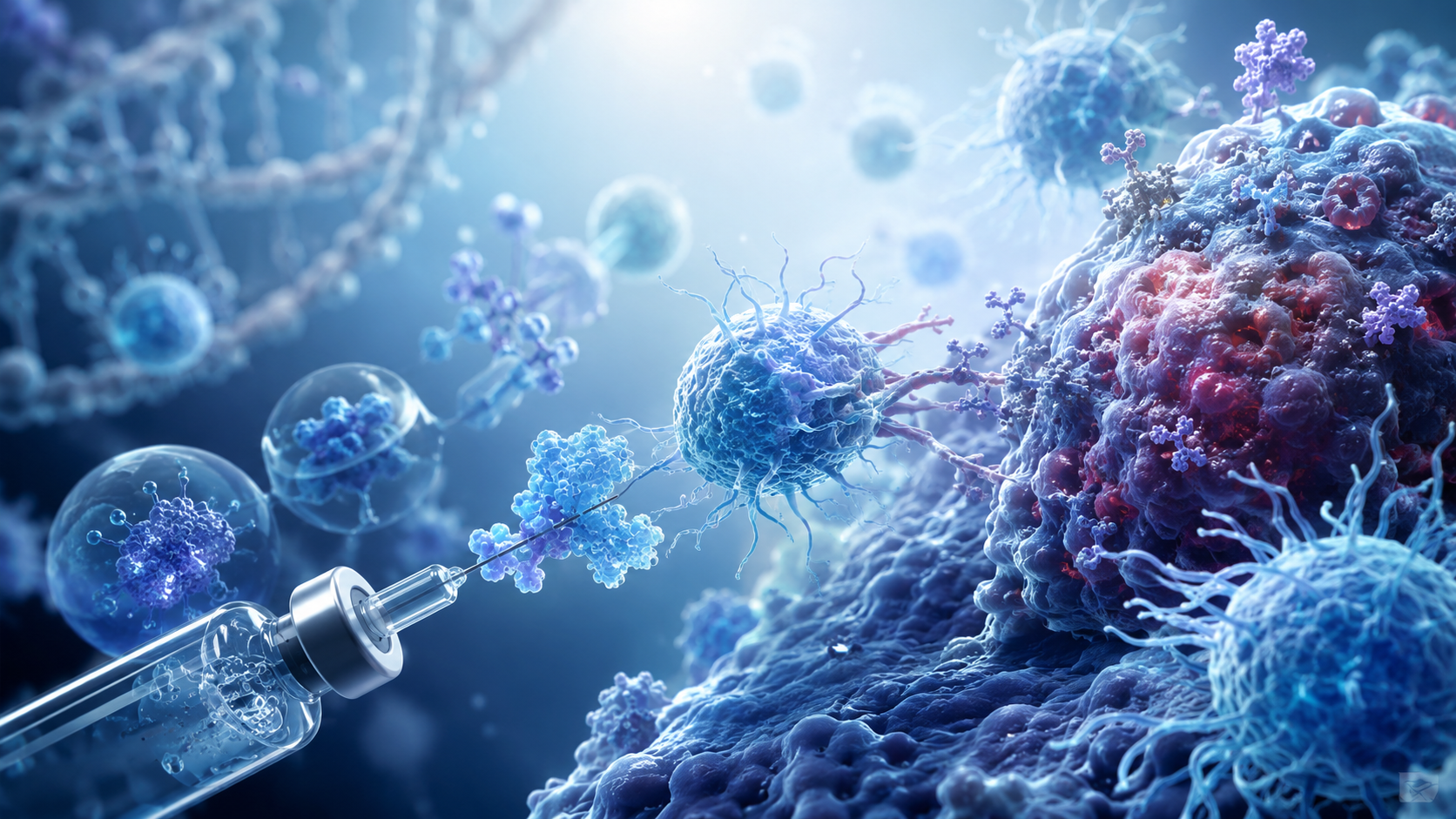
The key shift in molecular medicine over recent years lies in treatment moving from "broad attacks" toward "more precise identification." Some research hopes to use tumor neoantigens, gene sequencing, and personalized design so the immune system can more accurately find cancer cells; certain vaccine platforms combined with immunotherapy have indeed shown potential in some clinical studies. These directions are worth tracking because they may make treatment more precise, lower toxicity, and open new possibilities for some patients.
But medical news most fears turning "potential" into "victory." Many studies are still in early or mid-stage clinical phases, with limited sample sizes, limited indications, effects needing longer follow-up, and huge differences across cancer types. Science is never a straight line forward; it's more like slowly groping for switches in the dark. Occasionally there's light worth celebrating; but we can't yet declare that the whole building will have electricity forever.
The Biggest Problem Is Often Not Technology, But Who Can Afford It
The real difficulty of molecular medicine is often not just the lab—it's the system. Personalized cancer vaccines may require tumor sequencing, data analysis, custom manufacturing, strict cold-chain logistics, and intensive clinical follow-up, meaning their cost, thresholds, and medical infrastructure demands are very high. So the question arises: who can enter clinical trials? Who lives near a hospital capable of providing such treatment? Whose insurance can cover it? Who will be excluded from new technologies?
As medical technology advances further, social inequality sometimes puts on even more sophisticated clothing. In the past it might have been about whether you had a hospital to go to; in the future it may depend on whether your tumor can be fully sequenced, whether your case can be included in trials, and whether your payment ability is sufficient to sustain the whole process. This isn't opposing medical progress—it's reminding everyone that the light of new technology shouldn't only illuminate a few people.
Hope Is Worth Cherishing, So It Must Not Be Abused
For patients and families, cancer news is often not knowledge but emotion. Every "breakthrough" can be read as a lifeline. Precisely because of this, medical reporting needs restraint. Overly exaggerated headlines, cherry-picked study interpretations, writing experimental therapies as mature treatments—all these can cause people who truly need information to bear unnecessary expectations and disappointment. The black humor is that some markets excel at selling unproven hope.
A more responsible approach should be: molecular medicine is opening new paths for certain cancers, but differences across cancer types, stages, and patient conditions are huge; any specific treatment requires physician evaluation, formal evidence, and comprehensive judgment of individual cases. Such sentences may lack heroic flair, but they're far more honest than heroism.
Cancer vaccines aren't miracle cures. They're a path under rigorous validation, not a guarantee. The value of medicine lies not in painting all unknowns as hope, but in remaining honest even when facing the unknown. Hope is inherently precious; precisely because it's precious, it cannot be used as advertising copy.
AI use and content-safety disclosure
This article was compiled and edited by the Yuan Media AI editorial process, with human editorial review before publication.