Fake images outrun the news: in the age of generative imagery, public verification cannot rely on eyes alone
Original Chinese title: 假畫面跑得比新聞快:生成式影像時代,公共查證不能只靠眼睛
Generative AI makes images, sounds and personas easy to fabricate, eroding the evidentiary weight of things that look real. From AI influencers to deepfake political imagery, public society faces new verification pressures: the problem isn't just detection technology but whether platform labeling, creator responsibility, media literacy and institutional governance keep pace.
Yuan Media AI Editorial Desk
# Fake images outrun the news: in the age of generative imagery, public verification cannot rely on eyes alone
Seeing now counts as one suspect among many
We used to say "seeing is believing." Now it's more fitting to say: "seeing is preliminary suspicion."
Generative AI has pushed the public world into an awkward phase: images look real, sounds look real, videos look real, and even influencers can be not real. More troubling, fake content doesn't need to be perfect to work. It just needs to be fast enough, convincing enough, and aligned with the emotions audiences already want to believe in, and it will get its job done. Truth is still putting on shoes; fake images are already live-streaming sales while simultaneously signing two brand deals.
International media recently reported that brands are beginning to use AI-generated influencers for product promotion, raising concerns about transparency labeling and consumer deception. This is just the tip of the iceberg. Political deepfakes, war imagery, disaster photos, celebrity endorsements, investment scams, fake news covers—all are being lowered in production threshold by the same technology. In the past, forging images required technical teams; now it only needs prompts, templates, cheap tools and a little moral bankruptcy. Frankly, moral bankruptcies have never been hard to find. The real trouble is that fake images don't need to beat truth; they just need to arrive at the emotional scene half an hour before truth does.
Detection tools are not panaceas
Public discourse most often simplifies the problem to "detecting true from false." Of course, detection matters. Watermarks, content provenance standards, platform labeling, AI image detection, digital signatures—all are necessary tools. But if we think detection tools will save public truth, that's like sending a fire brigade to handle climate change. It can save one fire, but it cannot stop an entire forest from drying out.
The real challenge is institutional. NIST's AI Risk Management Framework reminds us that AI risk isn't just technical flaws in the model itself; it involves overall governance of individuals, organizations and society. This matters greatly for media: we cannot wait for fake images to appear before rushing to debunk them; instead we must shift content provenance, usage workflows, labeling obligations, editorial responsibility, platform cooperation and reader education all upstream.
Media literacy also needs upgrading. Teaching students to spot fake news used to start with URLs, headlines, sources, dates, reverse image searches of pictures. Those still help, but they're no longer enough. Because AI-synthesized content can have pretty URLs, reasonable headlines, realistic photos, fabricated expert tones and a mass of mutually referencing fake sources. Future media literacy cannot just ask "Is this image real or not?" It must also ask: "Who wants me to believe it now? What emotion is it trying to produce? Is it labeled? Can its provenance chain be traced? Why did the platform push it to me?" In other words, verification is no longer just a technical act; it's a public capacity for understanding how information power flows.
Fake images often don't deceive intelligence—they comfort positions
Here lies an uncomfortable fact: many fake images succeed not by deceiving intelligence but by comforting positions. People often share them not because they don't know they might be false, but because they feel true. An angry image, a video humiliating an opponent, a scene that appears to show the weak being victimized—once it aligns with group emotions, it gets moral clearance before verification even begins. AI simply mass-produces this human weakness into content formats.
So platform responsibility cannot stop at "we provide tools" or "users judge for themselves." When algorithms profit from emotional traffic, platforms can't pretend they're just passing utility poles. Labeling AI content, restricting undisclosed synthetic advertising, providing provenance tracing, reducing malicious content spread, protecting those whose portraits are misused—these aren't extra kindnesses; they're basic hygiene of the information environment. Public platforms without hygiene management will eventually become large digital night markets: lively, cheap, fun to browse, but you might get diarrhea after eating.
Cultural imagery cannot be treated as AI decorative parts
For Yuan Media AI, this issue also carries cultural-level warnings. Indigenous Peoples' imagery, ceremonies, costumes, portraits and traditional spaces are easily taken by generative AI to produce "looking very Indigenous" fake images. This misplacement isn't always malicious; sometimes it's ignorance plus art templates. But the result can be equally severe: ethnic differences get flattened, sacred spaces become entertainmentized, cultural symbols get ripped into decorative parts. What AI generates most often is not culture itself but high-definition versions of stereotypes.
Therefore public verification needs three layers of capacity. The first layer is technical: knowing how to trace sources, compare images, spot anomalies. The second layer is institutional: requiring platforms, media, schools and governments to establish workflows. The third layer is cultural: recognizing that not all imagery can be arbitrarily fabricated, reposted and reinterpreted. Especially when facing minority groups, disaster sites, war victims or cultural ceremonies, verification isn't just about distinguishing true from false; it's also about identifying who gets used as material, whose context gets stripped away, and who is forced to endure being watched again. Even a true image without context can hurt; only contextualized verification can protect public discourse.
Eyes once were our gateway to understanding the world. Now they're just one gateway—and need protection. The most dangerous thing in the age of generative imagery isn't that we'll be fooled by fake images once; it's that we might end up believing nothing at all. When all evidence is suspected, those with the strongest power will be happiest, because they can say to any truth: "That was AI-made too, right?"
This is the future public media truly faces—not teaching people to fear AI, but teaching them not to outsource their eyes to AI and not to outsource judgment to platforms. Verification isn't a cold skill; it's democracy's immune system.
When the immune system fails, what falls first isn't usually fake news—it's truth itself. If public society still wants to preserve shared reality, we can't just train better eyes at spotting flaws; we must also build media more willing to take responsibility, platforms more accountable, and readers who know how to doubt their own emotions.
Further reading and sources
- NIST AI Risk Management Framework and Generative AI Profile
- UNESCO Media and Information Literacy resources
- The Guardian: AI-generated influencers and transparency concerns
AI use and content-safety disclosure
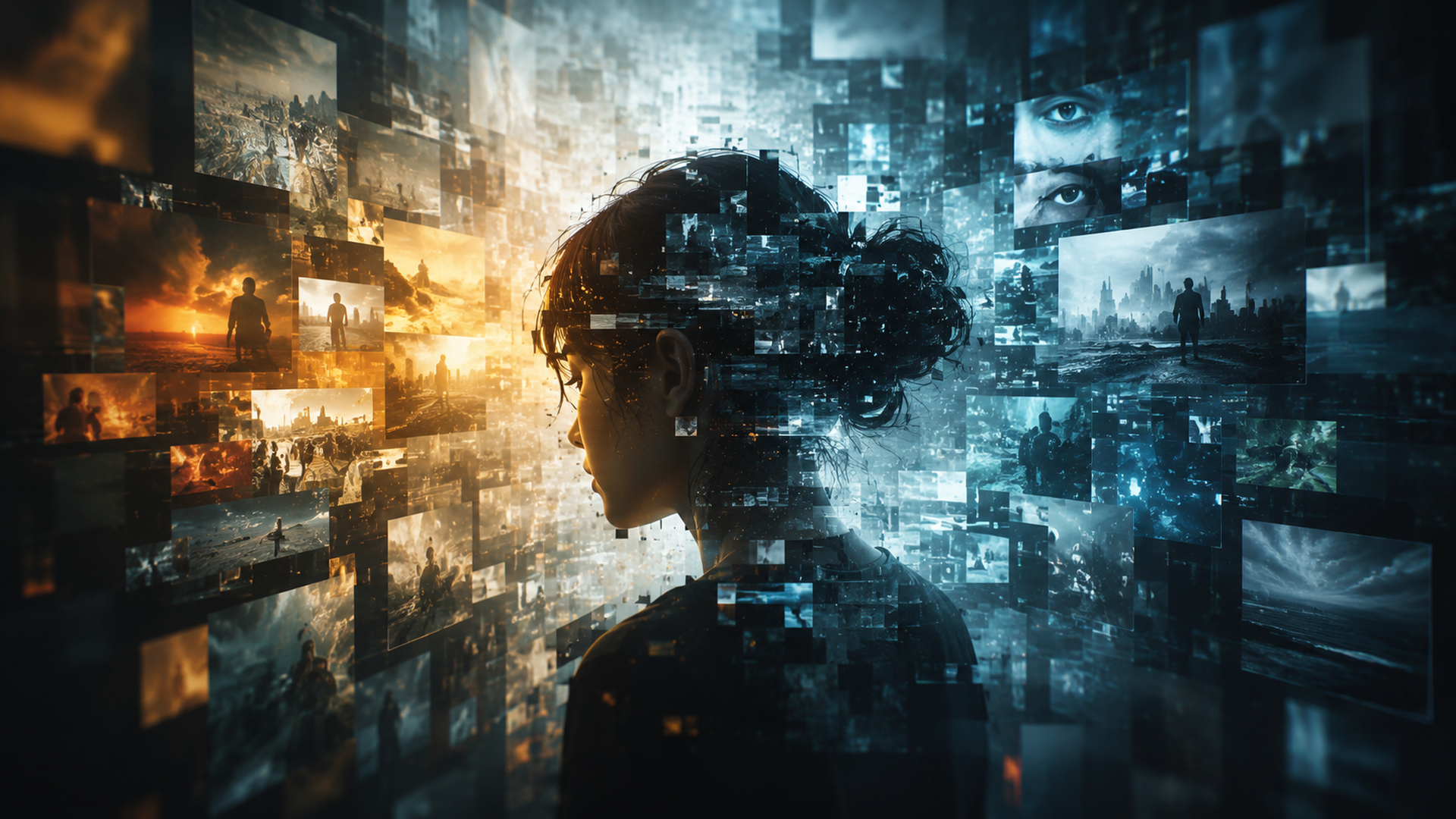
This article was compiled and edited through Yuan Media AI's editorial workflow, reviewed by human editors before publication; the cover image is AI-generated and does not use news photographs or identifiable people.