AI-Driven Indigenous Township Economy and Policy Watch | Official Announcement Data Map: How AI Sees Industry Resilience and Public Services from 55 Indigenous Townships
Original Chinese title: 官方公告資料地圖:AI 如何從 55 原鄉看見產業韌性與公共服務
Using official announcements from the 55 Indigenous township offices as primary sources, we organize information on land, agriculture, Indigenous language technology, regional revitalization, subsidy training, and disaster resilience signals to build a trackable Indigenous township economy and policy map.
Yuan Media AI Editorial Desk | AI-Driven Indigenous Township Economy and Policy Watch
Focusing on official announcements from the 55 Indigenous townships, industry resilience, digital public services, Indigenous language technology, land governance, and public policy analysis.
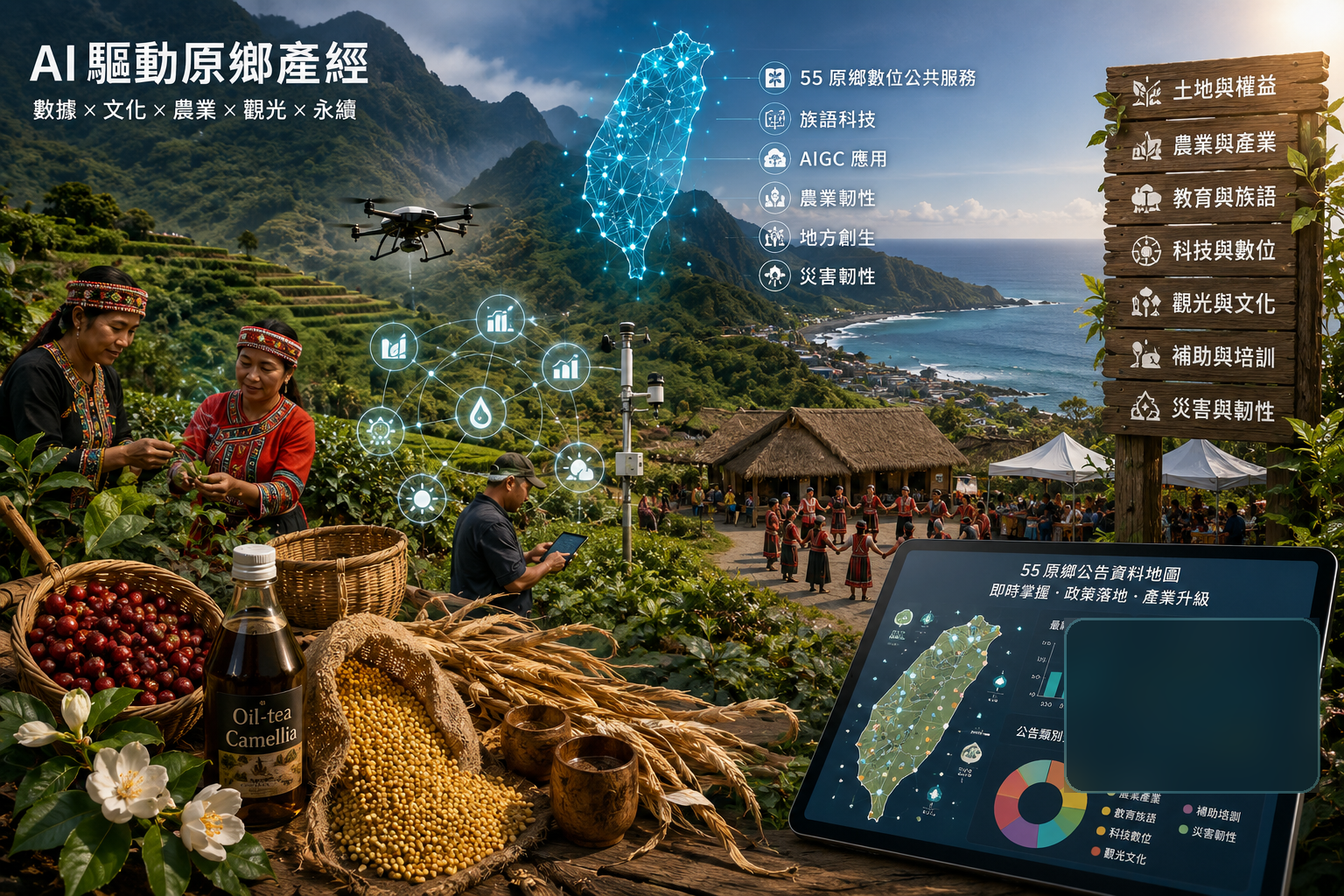
# AI-Driven Indigenous Township Economy and Policy Watch | Official Announcement Data Map: How AI Sees Industry Resilience and Public Services from 55 Indigenous Townships
Today we recommend publishing general Indigenous township economy/technology policy commentary, not character essays. From connected township office official announcements, the messages with public policy value over the past two days are not single events but governance clues scattered across land, agriculture, Indigenous language technology, and cultural tourism.
The first clue is land. On June 23, Wanrong Township Office in Hualien County announced multiple applications for allocation of state-owned Indigenous reserved lands and objections to such allocations. Such announcements appear administrative but are actually infrastructure for Indigenous township economy. Whether land rights are notified immediately, easily searchable, and understandable by community members directly affects agricultural use, tribal industry, housing safety, and local development. If the 55 Indigenous township announcements can be scanned daily, classified, and tagged, information on Indigenous reserved lands will not remain static official documents but become part of community member rights services.
The second clue is agricultural resilience. Recent Taichung City Office announcements include oil-tea garden field observation, Southern Island Coffee Festival, digital farming training, food-agriculture education, allocation of Indigenous reserved land, and guidelines on Taiwan macaque and wild boar hazard prevention. Together these indicate that local agriculture now involves crop selection, digital tools, educational outreach, pest management, brand events, and land systems—not just planting and selling. Agricultural resilience should not only be discussed after disasters but built from regular township announcements into early warning and service networks.
The third clue is AI and cultural tourism. Yanping Township relayed the "Indigenous Township Industry Smart Prosperity Plan" workshop on technology tourism and AI cultural marketing, showing AI entering tribal tourism and local industry empowerment fields. Dareng Township's Millet Cultural Life Festival and Wanrong Township's community revitalization experience also place culture, craft, markets, tours, and local brands into regional industry design. The real question is: can these events leave data? Can they link to subsequent registration, merchant lists, agricultural specialties, Indigenous language content, tribal routes, and revenue tracking? If only events occur, heat fades quickly; if data accumulates, an Indigenous township industry knowledge base may form.
Therefore today's observation focus is: Indigenous digital public services should not be merely website portals but connect announcements, events, land, agriculture, subsidies, and training. The 55 Indigenous townships generate many daily announcements—many are not news headlines but early signals of policy trends. AI can assist not by writing pretty copy for township offices but by building a queryable, classifiable, trackable Indigenous policy data map.
From Wanrong's reserved land announcement to Taichung City's digital farming and food-agriculture education, to Yanping's AI cultural marketing and Dareng's Millet Cultural Life Festival, today's common message is clear: upgrading Indigenous township industry must simultaneously address land rights, agricultural resilience, cultural data, and digital services. Announcements are not noise; they are the most daily and valuable public data for Indigenous governance.
Data Sources
- Government Open Data Platform / Council of Indigenous Peoples, Taiwan: 55 Indigenous Township/Urban District Datasets.
- Hualien County Wanrong Township Office, June 23, 2026, Announcement on Acceptance of Applications and Objections for Allocation of State-Owned Indigenous Reserved Lands.
- Taichung City Office, June 12–22, 2026, Announcements on Oil-tea Garden Field Observation, Southern Island Coffee Festival, Digital Farming Training, Indigenous Reserved Land Allocation, Indigenous Language and Technology Empowerment, Food-Agriculture Education, Wildlife Hazard Prevention.
- Taitung County Yanping Township Office, June 17, 2026, Announcement on Indigenous Township Industry Smart Prosperity Plan / Technology Tourism and AI Cultural Marketing Workshop.
- Taitung County Dareng Township Office, June 3, 2026 / Event Day June 27, 2026, Stitching Mountains and Seas | Millet Cultural Life Festival.
- Hualien County Wanrong Township Office, June 15, 2026, Wanrong Fada Tribal Revitalization Experience Activity.
AI use and content-safety disclosure
This article is compiled and edited by Yuan Media AI editorial process, reviewed by human editors before publication; primary material is limited to official township office announcements and government datasets. Today's cover/hero uses user-specified HD image; this piece allows the image to retain stylized people and embedded editorial text.