Caves Are Not Earth's Basement: Ancient Antibiotic Resistance May Hide in the Dark
Original Chinese title: 洞穴不是地球的地下室:黑暗裡可能藏著比人類醫院更老的抗藥性
Humans assume caves are just basements, with some stalactites, bats and tourist lights. In fact, caves are not empty rooms of Earth but another kind of time. There is no sunlight, no calendar, no Wi-Fi, yet there may be ancient microbes and antibiotic resistance evolutionary logic. Cave life reminds us that the modern hospital antibiotic resistance crisis is not the first time microbes have learned to fight back.
Yuan Media AI Editorial Desk
Yuan Media AI content team, focusing on AI, education, culture, public issues and cross-domain knowledge dissemination.
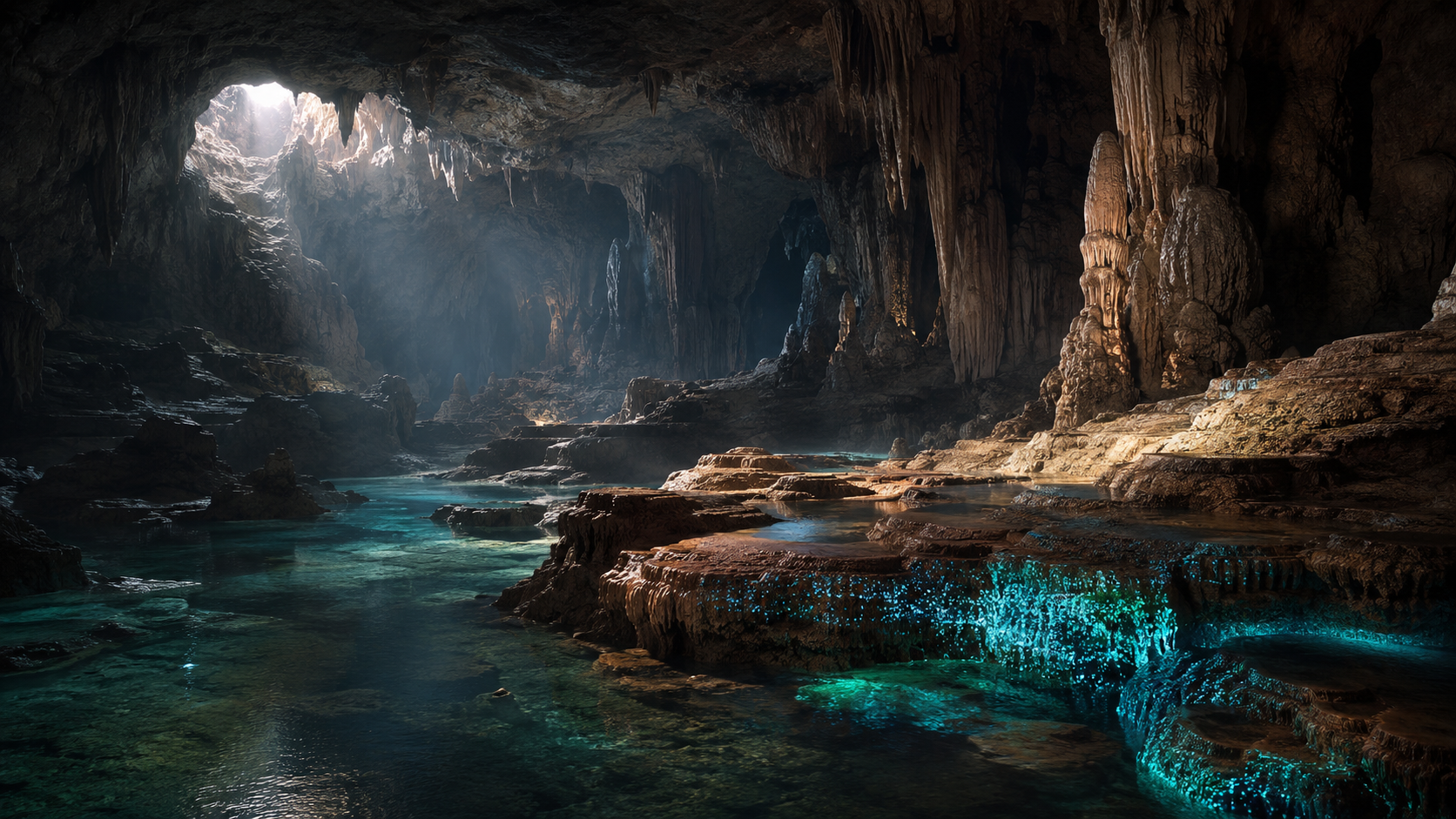
Humans assume caves are basements, with some stalactites, bats and tourist lights. This is a very anthropocentric misunderstanding. Caves are not empty rooms of Earth but another kind of time. There is no sunlight, no calendar, no Wi-Fi, yet there may be microbes that have evolved for millions of years. More bluntly speaking, when humans were still holding review meetings about antibiotic overuse, some cave microbes had already turned antibiotic resistance into classical music.
The most attractive aspect of cave science is that it turns "darkness" into knowledge. Most surface life depends on solar energy; plants perform photosynthesis, animals eat plants or other animals that eat plants, and the food web extends outward. But deep cave life sometimes must rely on completely different chemical sources to survive. Sulfur, iron, manganese, mineral surfaces, trace nutrients in seepage water may all become clues for the microbial world. These lives do not need us to romanticize them; they are already sufficiently strange.
No Sunlight, Life Still Meets
Microbes in caves often form films, sediments, mineral structures or seemingly insignificant spots. To tourists these might just be colors on rock walls; to microbiologists they could be an entire city. Bacteria, archaea, fungi and other tiny life forms exchange energy, compete for resources, produce chemical weapons, and evolve methods of resisting each other's attacks in the dark. Antibiotics and antibiotic resistance are not scripts invented by modern hospitals but ancient languages of microbial competition.
This matters greatly for public health. Modern society often understands the antibiotic resistance crisis as a consequence of overuse; this is certainly correct: improper use of antibiotics, agricultural and livestock practices, insufficient infection control in medical environments all drive the spread of resistance. But natural antibiotic resistance in caves and other ancient environments reminds us that resistance has always existed in the microbial world. What humans have actually done is to push these abilities, originally scattered across nature, into medical systems and global circulation networks through large-scale drug use and poor governance. Microbes did not suddenly go bad; we moved their battlefield into hospitals.
Caves Are Not Sampling Buffets
But cave research cannot become scientific colonialism. Cave environments are often fragile: air, humidity, microbial communities and mineral deposits may all be affected by human entry. Shoes, clothing, lighting, touching, sampling, even breathing and skin flakes can alter the microenvironment. When humans enter caves they easily act like a self-proclaimed polite giant: every step is careful, but for the underground microbial cities it still feels like an earthquake.
Therefore cave science requires strict sampling ethics and protection standards. Not every cave should be opened; not every strange microbe should be sampled immediately; not every discovery should have its precise location published. If a cave site lies within Indigenous Peoples traditional territory or local community living range, respect for field knowledge, taboos, landscape memory and community decision-making is even more necessary. Caves are not ownerless laboratories nor scientists' underground playgrounds.
Looking at the Medical Crisis from the Underground World
The story of cave microbes also suits us to re-educate our imagination about medical technology. Humans always think that if we invent drugs, we can control life; microbes constantly remind us with evolution: sorry, we've been meeting for much longer than you. Every new antibiotic may encounter a new resistance in time. This is not pessimism but reality. Public health cannot rely solely on new drugs; it must also depend on antibiotic governance, infection control, environmental monitoring, agricultural and livestock policies and international cooperation.
Caves tell us that life does not remain silent in darkness. It simply speaks in ways humans only learned to understand later. Those tiny lives on rock walls may not solve our antibiotic resistance crisis for us, but they will make us see more clearly that this crisis is not a simple "humans versus bacteria" battle. It is a long-term negotiation about evolution, environment, medical systems and civilizational habits.
Humility in the Dark
Caves are not Earth's basement. They are Earth's memory chambers, a long sentence written jointly by chemistry, time and life. When light falls from the cave mouth onto stalactites, groundwater and faintly glowing mineral surfaces, we see not just scenery but a correction of human confidence.
We thought sunlight was the stage for life; caves say maybe not. We thought hospitals were the front line of antibiotic resistance; microbes say you only joined the battle late. We thought darkness meant emptiness; Earth says that is simply because you have not yet learned to see.
AI use and content-safety disclosure
This article was collaboratively organized through Yuan Media AI editorial workflow and manually reviewed before publication.