Fermentation Is Not Spoilage: That's a Love Letter from Microbes to Civilization
Original Chinese title: 發酵不是食物壞掉:那是微生物替文明寫的情書
The most grievous thing about fermentation is that it is often misunderstood by modern people as being just one step away from spoilage. In fact, fermentation is not the neighbor of decay but civilization's secret engineer. Without fermentation, human tables would be missing wine, soy sauce, miso, pickles, cheese, bread, fish sauce and a host of flavors that make us willing to keep living. It is also a cultural technology of long-term negotiation between humans and microbes.
李雪華
Atayal | Head of the Multicultural Group / Community Development, long-term focus on local culture, dietary memory, community action and multicultural education.
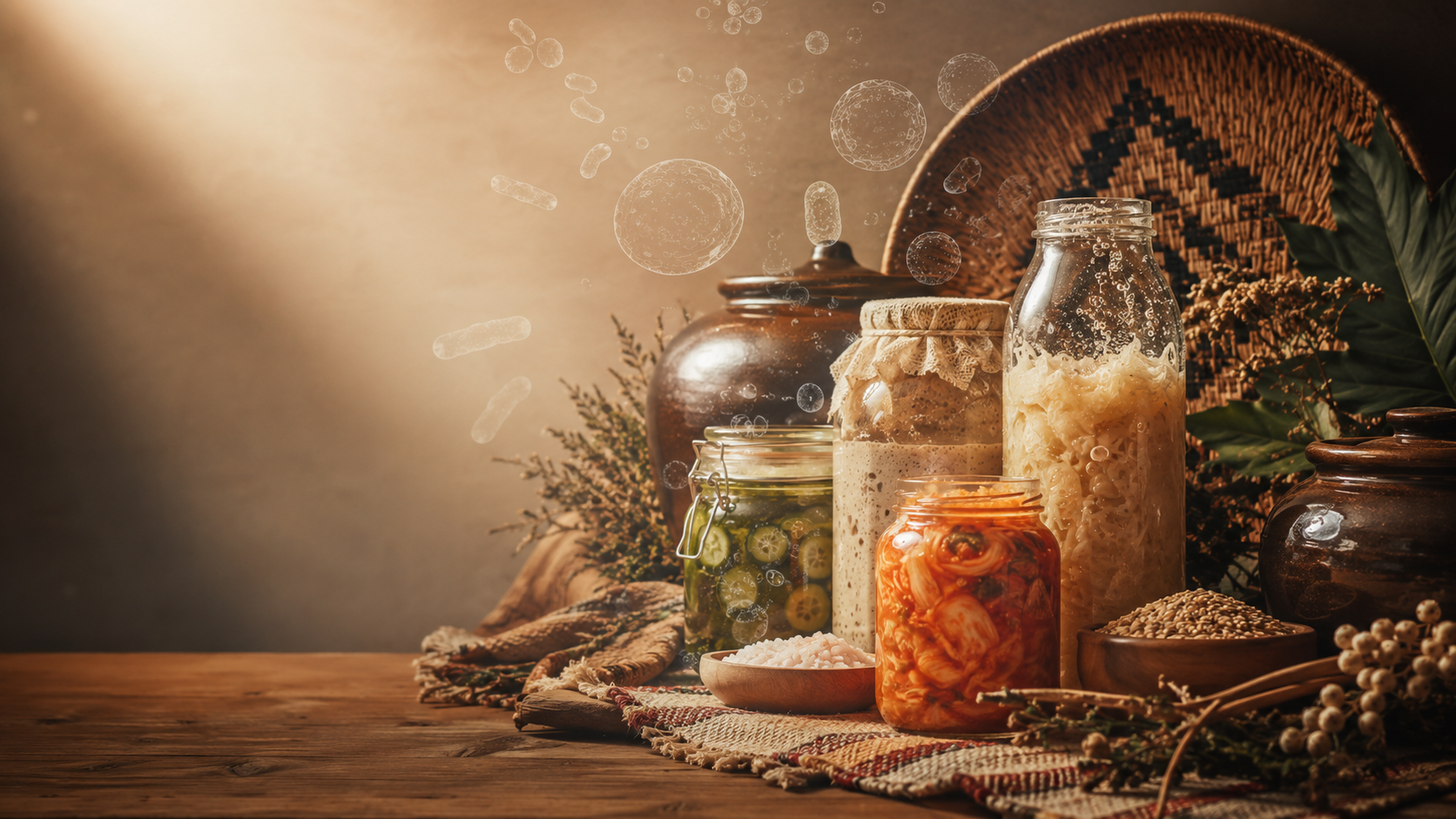
The most grievous thing about fermentation is that it is often misunderstood by modern people as being just one step away from spoilage. In fact, fermentation is not the neighbor of decay but civilization's secret engineer. Without fermentation, human tables would be missing wine, soy sauce, miso, pickles, cheese, bread, fish sauce and a host of flavors that make us willing to keep living. It is also a cultural technology of long-term negotiation between humans and microbes.
This negotiation is very ancient and very refined. Fermentation does not mean leaving food unattended; it means managing an invisible ecosystem. A little more salt causes certain microbes to withdraw; a slightly higher temperature activates another group; a bit more or less air changes the flavor, acidity, aroma and preservation time. Fermentation appears simple but is actually a home version of microbial engineering. Grandmothers usually do not write papers about it; they say: "This will smell better."
Taste Is a Method for Preserving Time
In eras without cold-chain logistics, food preservation was not a life hack but a survival system. Pickling, smoking, drying and fermentation were all methods of negotiating with the seasons. Harvests do not happen year-round; hunting and gathering are not always smooth; fish catches, grains, vegetables and meats must cross time to reach future tables. Fermentation makes food sour, fragrant, thick and complex, giving time a taste.
This takes different forms across cultures. East Asia has koji, soy sauce, miso, kimchi and various pickles; Europe has cheese, sauerkraut, beer and sourdough bread; Southeast Asia has fish sauce, shrimp paste and fermented rice foods; many Indigenous Peoples and local communities have their own grain, vegetable, meat and alcohol preservation techniques. These are not just recipes but knowledge systems formed jointly by climate, materials, vessels, social relations and taste memory.
Preservation Wisdom in Atayal Dietary Culture
From the perspective of the Atayal and mountain communities, food has never been only nutrition. It also relates to hunting, farming, sharing, seasons, family and forests. Traditional preservation techniques are closely tied to environmental conditions: when to harvest, how to process, how to extend shelf life, how to maintain living through cold, high humidity, poor transport or seasonal change. These techniques cannot be reduced to "old-fashioned taste" because the phrase is too convenient; it turns knowledge into nostalgia and technique into sentiment.
What truly matters is the judgment behind preserving food. Fermentation requires knowing when something can be eaten and when it cannot; which smell indicates maturity and which signals danger; which batch of material can be stored long-term and which must be consumed quickly. These judgments are not learned by machines at first, nor fully conveyed by recipes. They require touch, nose, tongue and experience—many successful observations and a few failures. Civilization grows from these tiny judgments, not suddenly spliced into food shows.
Microbes Are Not Enemies; They Are Co-authors
Modern hygiene concepts are important but sometimes train humans to fear microbes excessively. Disinfection, sterilization, aseptic, antibacterial—these terms can save lives in necessary contexts; but if they become worldviews, humans forget that we actually live with microbes. The gut has microbes, the skin has microbes, soil, plants, vessels and air also have microbes. Fermentation reminds us that not all microbes should be eliminated; some are co-authors of civilization.
Of course this does not mean bringing spoiled food to serve as a philosophy textbook. There is indeed a boundary between fermentation and spoilage; safety and hygiene remain basic requirements. A truly mature fermentation culture does not romanticize "nature" but knows how to control certain natural conditions, letting good microbes work while reducing dangerous risks. This is very realistic wisdom: respect life and also respect that the stomach should not go wrong.
Fermentation's New Meaning in the AI Era
Interestingly, the AI era makes fermentation important again. When we talk about databases, models, standardization, food tech and local brands, fermentation offers a reminder against speed. It cannot be fully fast-forwarded. You can monitor temperature with sensors, read color with image recognition, analyze microbial shifts with data models—but you cannot command time to obey completely. Fermentation has its own rhythm; microbes will not mature early because investors rush to hold press conferences.
This is also a key way local culture can avoid commodification. Fermented foods are easily packaged as souvenirs, tourist products or cultural experiences, but if only the packaging remains, flavor quickly hollows out. A truly living fermentation narrative should include people, environment, materials, techniques, failure experience and sharing methods. It is not enough to slap a "tribal style" label on bottles; one must let people understand how this taste grows from land, season and life.
Before Food Spoils, Civilization Learns Cooperation
Fermentation is not food spoiling. Fermentation is humans admitting they cannot manage time alone, so inviting microbes to work together. This sounds romantic but is very practical. Without such cooperation many foods would not reach winter, many grains could not become wine, many vegetables would lose their sour fragrance, and many cultures would lack a method of memory.
When a jar slowly bubbles in the corner, inside is not chaotic decay but a tiny civilization meeting. Humans provide vessels and materials; microbes provide transformation; time provides depth. Finally we open the jar and smell not just sourness, wine aroma or saltiness, but some older reminder: civilization was not completed by humans alone. It was written for us point by point by invisible life.
AI use and content-safety disclosure
This article was collaboratively organized by Yuan Media AI editorial workflow, with human editing and verification before publication.