Cancer Vaccines Are Not Panaceas, They Are Tactical Training for the Immune System
Original Chinese title: 癌症疫苗不是仙丹,是免疫系統的戰術訓練
Cancer vaccines should least of all be understood as panaceas. They are closer to a set of tactical training for the immune system: reading tumor mutations, screening neoantigens, and then handing the enemy’s outline to immune cells to learn.
Yuan Media AI Biomedical Data Desk
Yuan Media AI Biomedical Data Desk, organizing molecular medicine, tumor immunology, clinical trials and international medical news; this article is a public science report and does not constitute individual medical advice.
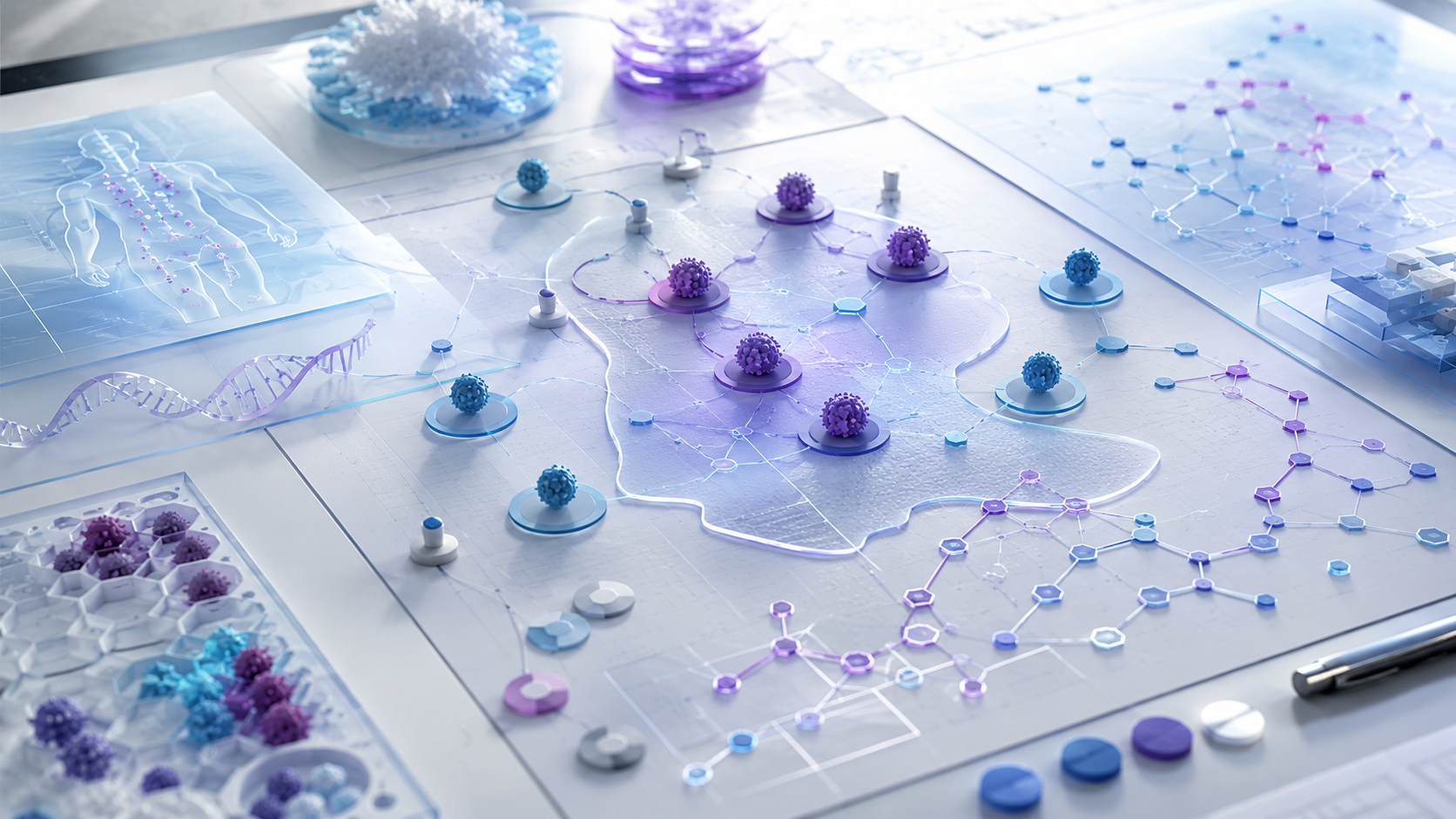
"Cancer vaccine" is a term that easily opens rationality to the sky. It looks like hope, yet also like an advertisement; it looks like a medical breakthrough, yet also like the keyword most fraud groups would want to register. As long as four characters sit in the title, readers' hearts will automatically run to two extremes: either "cancer is finally going to be ended" or "another fireworks display of the capital market." Reality is usually less dramatic and more worthy of respect.
First, therapeutic cancer vaccines are not the familiar childhood preventive vaccines. They typically do not let healthy people get a shot and stay away from all cancers; instead they are used for patients who already have cancer, with the goal of helping the immune system recognize cancer cells. The trouble with cancer cells is that they are not foreign enemy troops but cells that have rebelled within the body. For the immune system to attack them it cannot rely on hot blood alone; it also needs identifying marks. The core of cancer vaccines is to organize these marks into a clearer wanted poster.
Personalized mRNA cancer vaccines push this further. Medical teams need to analyze gene differences between patient tumors and normal tissue, find neoantigens that might be recognized by the immune system, then design mRNA messages so the body briefly manufactures related antigen fragments, training immune cells to recognize the enemy. It sounds like science fiction, but behind it is actually sequencing, bioinformatics, HLA typing, immunology, manufacturing processes, cold-chain logistics and clinical monitoring. Science fiction novels are only responsible for making you feel moved; laboratories also have to handle quality control and adverse event reporting. Life is just not romantic.
Recent research has indeed shown hope. Therapeutic cancer vaccines, immune checkpoint inhibitors and personalized neoantigen design are moving closer together; some melanoma trials also show that combining immunotherapy may reduce recurrence or metastasis risk. However, mid-stage trials are not guarantees for all patients, and five-year follow-up is not the end of medical stories. Large late-stage trials, different cancer types, different mutation profiles, different populations, long-term safety and accessibility are what move hope from news headlines into clinical practice.
Medical communication most fears turning developing technology into emotional commodities. Patients and families need clear information, not pretty myths. Cancer vaccines may be effective or they may only work for certain cancers, certain mutations, certain treatment timings; they may produce immune responses or they may cause fever, fatigue, local reactions or more complex side effects; they may require expensive processes or create medical inequality. If we talk only about miracles and ignore conditions, that is not science popularization but packaging anxiety as hope to sell back to patients.
For Taiwan and global health systems, the real question cancer vaccines raise is not just "does the technology work" but "who can access it." Personalized medicine requires data, sequencing capability, tumor sample handling, clinical trial networks and medical payment design. If it becomes part of standard treatment in the future, will rural areas, Indigenous townships, low-income patients and rare mutation patients be included? How are biological samples obtained with consent? How is genetic data governed? Can patients understand whether they are participating in therapy, research or a complex border between both? These questions do not shine like experimental data but determine whether medical breakthroughs become another kind of class gatekeeping.
So we can expect cancer vaccines, but we should not hand over expectations to magic. They are not panaceas; they are a set of tactical training that lets the immune system relearn how to recognize enemies. They are not death-proof golden tickets; they are a road being laid between clinical trials, regulation and public ethics. Medicine is most beautiful when it does not promise immortality but admits uncertainty and still moves forward. This hope will not shine so brightly as to blind us, yet it will be less likely to trick people into darkness.
Looking more closely, personalized cancer vaccines are actually a "translation" problem. Tumor cells carry mutations, but not every mutation becomes a target the immune system can read; not every target triggers a strong enough T-cell response; not every immune response penetrates the complex inhibitory environment around tumors. Thus bioinformatics is not just pretty charts but extracting possible meaningful sentences from chaotic mutations and handing them to the immune system to practice reading. This is why it is called "personalized": each patient's tumor may have different grammar.
This method also changes doctor-patient communication. Many past treatment plans were like doctors choosing weapons from a cabinet; future cancer treatments may instead be like designing a training schedule tailored for patients. But "tailored" does not equal "guaranteed effective," and "high-tech" does not mean "no risk." Trial participants need to know they face a therapy being validated, not a victory story with the ending already written. The most basic respect in medical ethics is not treating patients' fears as promotional fuel.
Another problem we must face honestly is time. Personalized cancer vaccine processes often require sampling, sequencing, analysis, design, manufacturing and quality confirmation; for rapidly deteriorating patients, waiting itself may be a risk. This is why future breakthroughs lie not only in vaccine design but also in hospital workflows, data exchange, manufacturing platforms and review systems. True medical innovation is not one successful photo from the lab but every link between diagnosis and receiving appropriate treatment having less delay and less opacity.
Therefore public discussion of cancer vaccines should keep both enthusiasm and brakes. Enthusiasm lets us support research, clinical trials and international cooperation; brakes let us avoid packaging unfinished science as miracles already in stock. For patients hope is not exaggerated promises but better information, clearer choices, fairer access opportunities, and dignity when therapies are still unsuitable for them.
This is also where media must be especially careful. Titles can attract attention but should not push patients toward wrong expectations; rather than slogans like "ending cancer," we should clearly state which cancers the evidence comes from, which trial phase, which combination therapies, and what primary outcome measures are observed. Stating limits clearly will not kill hope; on the contrary only hopes that do not fear being tested deserve patient trust.
References: U.S. National Cancer Institute "Cancer Treatment Vaccines", NCI mRNA cancer vaccine overview, NHS England Cancer Vaccine Launch Pad, Nature / Signal Transduction and Targeted Therapy 2023 review of therapeutic cancer vaccines, and recent reports on personalized neoantigen vaccines and immunotherapy clinical trials.
AI use and content-safety disclosure
This article was compiled and edited by the Yuan Media AI editorial process.