The Sun Sneezed, and GPS Began to Doubt Its Own Existence
Original Chinese title: 太陽打了一個噴嚏,GPS就開始懷疑人生
The Sun Sneezed, and GPS Began to Doubt Its Own Existence
玄岸
Semiconductor / chip industry observer, skilled in precise, low-emotion industry analysis to deconstruct technology infrastructure and supply chain risks; this piece serves as public tech commentary and does not involve internal company data or investment advice.
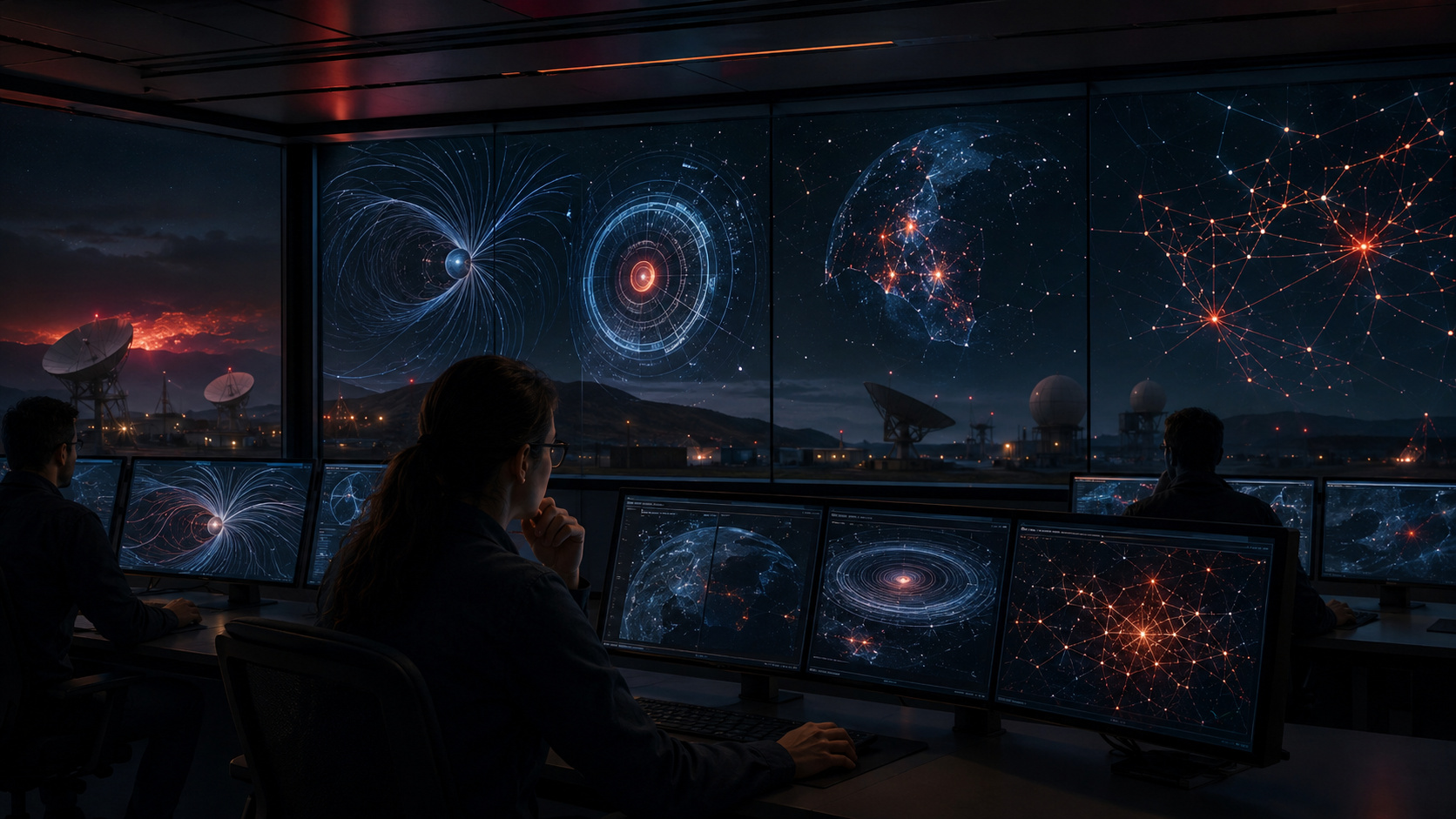
Humans have a strange trust in the sky. When things on the ground break, we suspect construction quality, budget flows, or some manager's presentation skills; but once something flies into the sky, we suddenly become naive. Satellites are up there, GPS is up there, communications are up there, and even financial transaction time synchronization relies on the sky. The sky has thus become modern civilization's largest server room, yet no one remembers to allocate a maintenance budget for it.
Space weather is simply this server room's temperament. Flares on the Sun's surface, coronal mass ejections, and variations in solar wind push charged particles and magnetic disturbances toward Earth. Normally we only see auroras looking like travel ads, forgetting that they are actually Earth's magnetosphere working overtime. Romantically speaking, it is the universe writing poetry; engineering-wise, high-energy particles knocking on our door; from a public policy perspective, infrastructure risk assessments get pushed to the next meeting again.
The real trouble with space weather lies not in whether the sky will change color, but in whether modern systems will briefly lose their bearings. GPS signals passing through the ionosphere can suffer errors in positioning and timing if they encounter violent disturbances; low-orbit satellites may experience greater orbital drag when the upper atmosphere heats and expands; high-frequency communications, aviation comms, and satellite links can be disrupted; long-distance power grids and pipelines can also develop geomagnetically induced currents. In other words, when the Sun coughs, human civilization starts looking for tissues, and those tissues are usually called "backup plans".
This is not to write every solar event as an apocalypse. Tech media's most common disease is turning risk into disaster movie trailers, then leaving readers in anxiety. Truly useful discussion should be more boring—and far more important: does the power grid have geomagnetic storm monitoring procedures? Do satellite operators have sufficient orbital correction models? Are critical communications backed up with redundant links? Do finance, transport, telecom, and government data centers treat positioning and timing services as potentially interruptible risks rather than free public goods provided by the cosmos?
When Taiwan talks about tech resilience, it often focuses on chips, electricity, water resources, cybersecurity, and supply chains. All correct—but there is still one layer missing: the sky. Semiconductor fabs can manage cleanrooms like operating rooms, yet they still live within a web of satellite navigation, international logistics, grid stability, and global communication links. If we compare civilization to a precision machine, space weather is not external scenery; it is electromagnetic dust that penetrates through the casing.
Space weather also reminds us that as technology advances, our sense of control tends to inflate. We can build data centers in valleys, lay submarine cables across oceans, craft phones more popular than statues of gods, yet we still cannot command the Sun to stay polite today. This frustration is actually healthy. It reminds humanity that technological civilization does not leave nature behind; it depends on nature through far more complex means. Past generations watched clouds, wind, tides; today's people monitor solar wind speed, Kp indices, magnetometer data, and satellite orbital residuals. Names have changed, but anxiety remains.
Therefore, space weather education should not be limited to pretty displays in science museums; it must enter public infrastructure literacy. Understanding why auroras appear is beautiful enough; understanding how those auroras might tug at satellites, power grids, communications, and navigation systems is what marks a mature civilization. The most terrifying modern faith is not superstition about constellations but the belief that services will always stay online. The Sun will not keep silent because we paid monthly fees—it has no customer service hotline and does not accept disaster insurance. All humanity can do is be less confident and more prepared; see fewer spectacles, practice more engineering ethics.
More pragmatically, space weather belongs not only to astronomy units but also to transport departments, energy companies, telecom operators, financial clearing systems, semiconductor supply chains, and local governments. When positioning errors increase, the affected parties are not just blue dots on mobile maps—they may include precision agriculture, drone inspections, port logistics, disaster response locationing, and timestamping. When satellites require more orbital corrections, the impact is not merely a solitary metal object's lonely journey; it involves insurance, scheduling, imaging services, and communication costs. Space weather sounds distant, yet in reality it clings daily to the skin of our cities.
From a governance perspective, what space weather most needs is not mystery but cross-departmental drills. How should warning data translate into grid load shedding, satellite safe modes, aviation rerouting, communication backups, and media briefings? How can alert levels be understood by ordinary people without being rewritten on social platforms as apocalypse rumors? Can school curricula place solar activity, the ionosphere, GPS, and infrastructure on a single map instead of slicing physics, earth science, and information technology into unrelated drawers? These are details of civilizational resilience.
For Yuan Media AI, such topics also remind us: tech reporting cannot merely chase new tools; it must ask about the dependency chains behind them. AI, cloud computing, mobile navigation, smart cities, and precision manufacturing do not float in a vacuum as magic. They rely on electricity, depend on communications, require time synchronization, and count on Earth's magnetosphere to shield humanity from most cosmic temperaments. When we talk about future civilization, we cannot discuss only computational power; we must also speak of solar wind. We cannot focus solely on innovation; we must also acknowledge failure.
The most mature technological imagination is not believing that all systems will become ever more stable, but recognizing that stability itself is a result of maintenance. Space weather makes humanity humble again: standing on Earth's surface yet extending life into orbit, the ionosphere, and magnetic fields. The sky is not background; it is part of infrastructure. If this had been seen earlier, next time the Sun coughs we might not panic while suddenly realizing we have already lived inside space weather all along.
More importantly, warnings do not equal disaster preparedness completed. Warnings simply translate invisible risks into actionable signals ahead of time; what truly determines loss magnitude is whether organizations are willing to drill in peacetime, assign roles within systems, and acknowledge in budgets that "the sky can also fail." When space weather becomes part of daily governance, it ceases to be merely science news—it becomes a component of urban safety.
References: NOAA Space Weather Prediction Center; NASA/NOAA Solar Cycle 25 announcements; NOAA Space Weather Scales; GPS/power grid/satellite impact explanations.
AI use and content-safety disclosure
This article was compiled and edited through Yuan Media AI's editorial workflow.