Earthquake Early Warning Is Not Fortune-Telling; It's Pulling a Few Seconds Back from Death
Original Chinese title: 地震預警不是算命,是把幾秒鐘從死神口袋裡摸回來
Earthquake early warning does not predict earthquakes; after an earthquake has occurred, it uses faster-arriving P waves to issue alerts before stronger shaking arrives. Its value lies not in perfect accuracy but in turning a few seconds into action.
Yuan Media AI Editorial Desk
Focuses on public technology, disaster-risk governance, landscape risk, agriculture and forestry, fisheries and livestock, and data classification; skilled at translating complex technical concepts into public knowledge understandable by general readers.
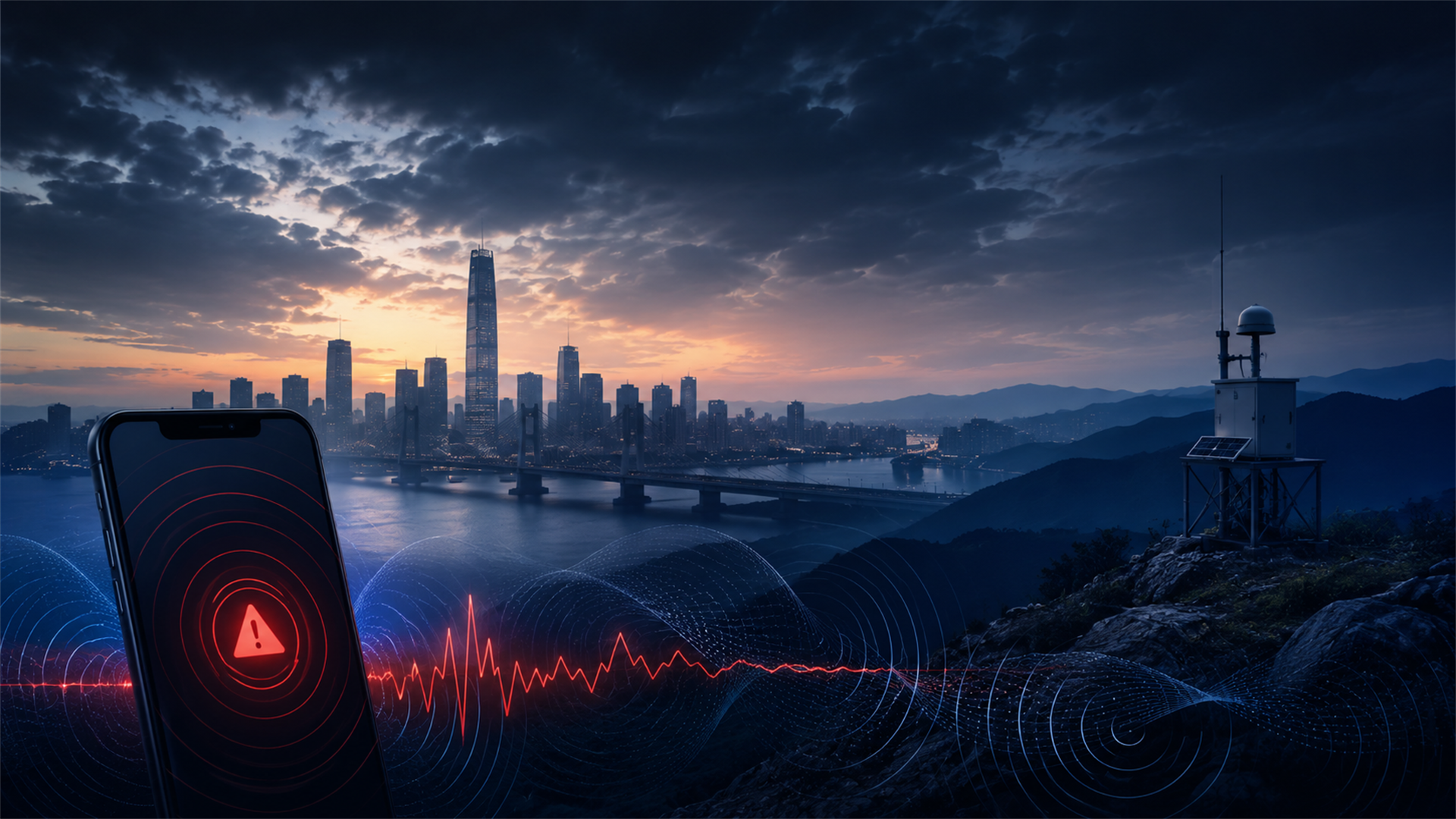
# Earthquake Early Warning Is Not Fortune-Telling; It's Pulling a Few Seconds Back from Death
Every time an earthquake early warning sounds, someone complains: "It's already shaking now—what use is this notice?" This complaint is understandable, but it also reveals many people's misunderstanding of earthquake early warning. Earthquake early warning is not fortune-telling; it cannot accurately tell you which fault will slip and when days before the earthquake occurs. What it actually does is more modest and realistic: the earthquake has already happened, and the system tries to grab a few seconds back from death by alerting you before stronger destructive shaking arrives.
Where Do Those Few Seconds Come From?
When an earthquake occurs, different types of seismic waves are generated. The faster P waves usually arrive first and cause relatively less damage; slower S waves and surface waves often bring more noticeable—and dangerous—shaking. Earthquake early warning systems exploit this time difference: they detect the P wave with sensors, quickly estimate the epicenter location, magnitude, and potentially affected areas, then send alerts via mobile phones, broadcasts, transportation systems, or device control mechanisms. In other words, this is not prediction; it's a head start.
The "head start" can sometimes be very short—just enough time to stand firm, crouch down, move away from glass, or stop dangerous operations in hand. People near the epicenter may even feel intense shaking before receiving any notification. This is not system failure; physics will not slow S waves just because we hope to know earlier. A truly mature disaster-preparedness culture must first understand this reality: earthquake early warning is never a guarantee, but a limited yet precious risk-reduction tool.
The Real Value of Early Warning Is Not Just Your Phone Ringing
Many people imagine earthquake early warning as merely a mobile phone notification, but its real power lies in whether society can turn those few seconds into procedures. Trains can slow down first; factory machines can enter protective modes; medical teams can stabilize critical operations; elevators can prioritize stops; schools and public institutions can more quickly activate standard evacuation responses. In other words, earthquake early warning is not just "telling you an earthquake has come"—it turns a very short time window into a series of actions that may reduce secondary injuries.
The value of such systems often lies not in dramatic escape scenes but in details outsiders rarely notice: a train didn't enter a dangerous section at full speed, a factory's hazardous equipment stopped in time, a person who received the alert did not rush outward but immediately dropped and covered. Whether earthquake early warning works depends not only on how many sensors exist but also on whether society has habitually linked "receiving an alert" with "immediately taking the correct response."
Japan and the United States Offer Two Models Worth Emulating
Japan's Emergency Earthquake Early Warning is often seen as a mature system, not just because of its dense sensor network, but because it has long been embedded in daily life. People know what to do when an alert sounds; railways, schools, media, and administrative bodies have relatively clear response mechanisms. This means early warning is not a single app but an institutionalized public habit. The U.S. ShakeAlert system constantly emphasizes: it does not predict earthquakes, but quickly provides possible lead times after an earthquake has occurred. This wording matters because disaster-preparedness technology, once mythologized, loses trust rapidly after the first failure or delay.
Of course, early warning systems can produce false alarms and have limitations due to detection conditions, communication delays, or data noise. The problem is not that they are imperfect; it's whether society can accept them: public technology does not need to be omniscient like a god; as long as it reduces risk more than having no warning at all, it deserves continued improvement and investment. What is truly dangerous is promoting early warning systems as "earthquake prophets," which ultimately leaves the public disappointed by the gap between reality and myth.
Disaster Preparedness Education Determines Whether Those Few Seconds Are Wasted
The blackest humor of earthquake early warning lies in this: it gives you very little time, yet demands that you have practiced a lot beforehand. Because those few seconds when the alarm sounds leave no room to relearn. What you will do is usually what you've already practiced, been reminded about, and thought through in daily life. This is why actions like drop, cover, hold on seem simple but must be repeatedly emphasized. Schools, hospitals, factories, long-term care facilities, mountain villages, Indigenous communities, coastal settlements each need to translate those few seconds into their own procedures rather than expecting everyone to follow the same poster.
For Taiwan, this point is especially important. We live on an earthquake belt; we are familiar with shaking and also with the absurd resilience of phones screaming in the middle of the night followed by normal work the next day. But familiarity does not equal preparedness. Many people treat alerts as reminders without truly anchoring furniture, evacuation routes, assembly points, care for elderly and children, and equipment safety into daily planning. If disaster-preparedness education remains only drill days and slogans, then even the best early warning systems will easily become just another anxiety-inducing notification.
Earthquake Early Warning Won't Make the Earth More Polite Just Because We Have an App
The value of earthquake early warning does not lie in humanity beating the crust; it lies in us losing less. It cannot stop plate movements, nor guarantee that every time we gain the ideal number of seconds. But at truly dangerous moments, a few seconds can sometimes change outcomes. Those few seconds may keep you away from glass, slow trains, stop machines, let children not stand dazed, and allow elders to grab supports in time.
If I had to summarize earthquake early warning in one sentence: it is neither prophecy nor magic. It is civilization's restrained response to reality: we know we cannot stop the Earth shaking, so we must try to connect limited time, limited technology, and limited education into a defense line that is less fragile. What is truly terrifying is never short warnings; it is when society receives an alert but still doesn't know what to do next. The Earth will not become more polite just because we downloaded an app, but with preparation we can make those few seconds no longer merely the prelude to panic.
AI use and content-safety disclosure
This article was co-authored with AI assistance, organized and commented on using publicly available information. Before publication, it must undergo human fact-checking and editorial review.