An Unassuming Tunicate Makes the Lab Quiet: Molecular Medicine, Cancer News Verification, Natural Product Development and Ecological Ethics
Original Chinese title: 海鞘不是抗癌神藥,但它讓醫學重新低頭看海
Antarctic tunicate research has attracted attention, but the important point is not the fantasy of a miracle cure; it is natural chemistry, evidence grading, synthetic pathways and ecological responsibility.
鄭淑禎
Full-time Assistant Professor, Shih Chien University
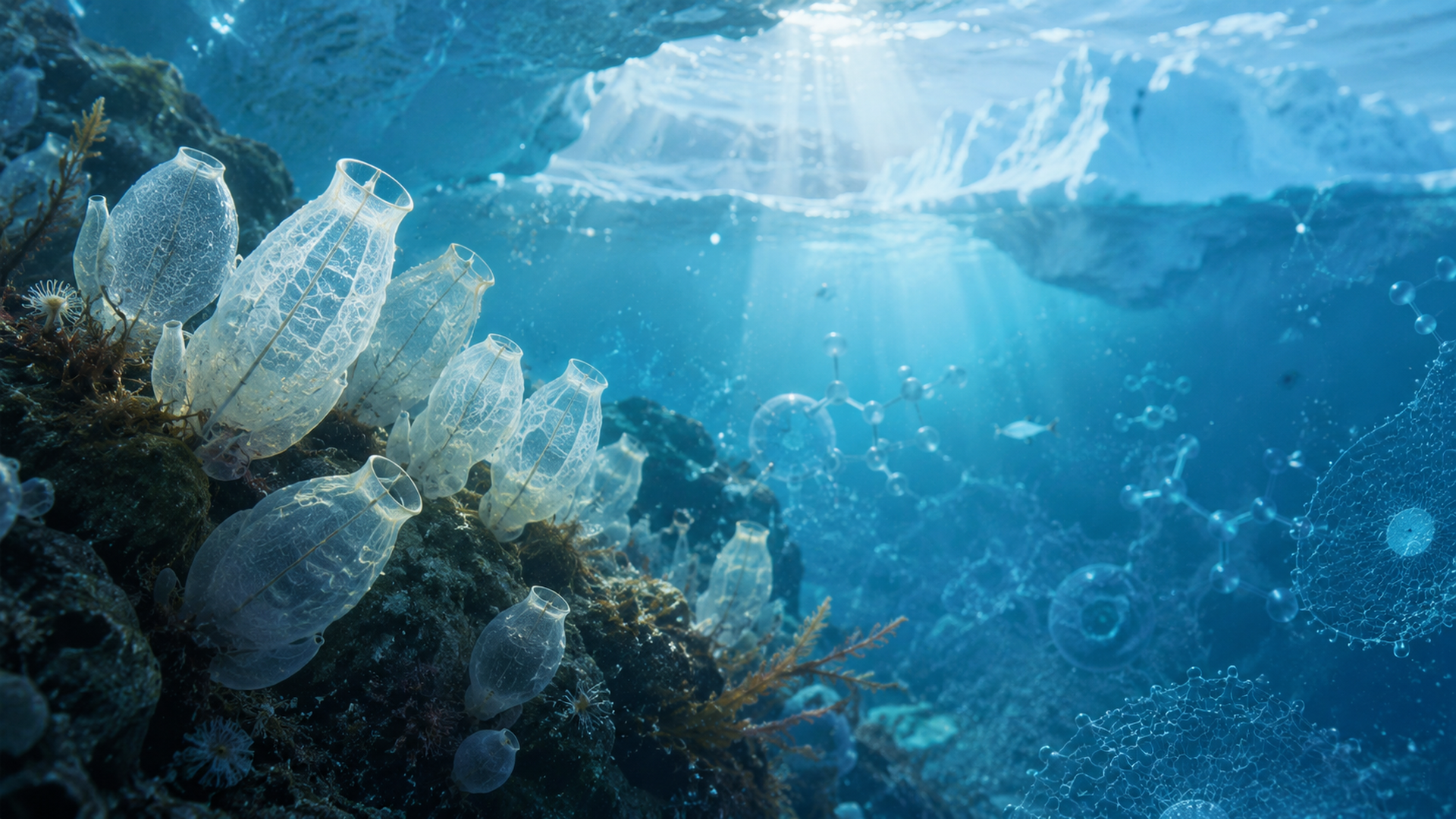
An Unassuming Tunicate Makes the Lab Quiet
Molecular medicine is most often told as a hero story: some scientist finds a magical substance, cancer surrenders. This script is convenient and dangerous. Real drug development has never been a miracle; it is long, expensive, with failure rates almost ruthless. The recent Antarctic tunicate research is well suited to dismantle the illusion of "finding a cure in the sea."
The team collected tunicate samples in Antarctica, focusing on toxins produced by symbiotic bacteria and their effects on melanoma cells. Reports indicate that related substances showed promise in animal experiments; the next steps still require synthesis, mechanism confirmation, safety assessment, preclinical studies and human trials. What is most worth seeing here is not the oversimplified headline "tunicate cures cancer" but how natural chemical diversity becomes a starting point for medical imagination.
The tunicate does not owe humanity a new drug. It lives in its own ecological relationships, using microbes, chemicals and environmental stress to compose a language of defense and symbiosis. If humans wish to borrow this language, they must also understand its ecological cost. Medicine that treats nature as an open pharmacy, reaching for effective molecules whenever it sees them, easily turns "saving lives" into another form of advanced plunder.
Drugs Do Not Fall Free from Nature
Marine organisms often contain special compounds because they cannot flee quickly like animals; they must defend, compete or coordinate symbiotic relationships chemically. These compounds may show activity against cancer cells, bacteria or inflammatory responses in the lab, making them candidates for drug development. Yet "active" is far from "drug-ready." It requires dose, toxicity, metabolism, stability, manufacturing processes and human trials at every layer. Many candidates are protagonists in test tubes but become temporary actors—or drop out entirely—once they enter the human body.
This is why research teams emphasize synthesis. If a compound can only be obtained by harvesting large quantities of tunicates, it is not a medical breakthrough; it is ecological pressure packaged as therapy. The responsible route is to understand how symbiotic bacteria produce molecules and then attempt to reconstruct them via synthetic biology or chemical methods. In other words, medicine cannot treat Antarctica as a natural warehouse. Nature provides clues, not an ATM card.
Public discussion must especially beware one trap: whenever research relates to cancer, media tend to write "possible" as if it were "imminent." Cancer patients and families certainly need hope, but hope should not be cheaply consumed. The most hurtful science news is often not completely false; it exaggerates the brightness of early-stage research so readers mistakenly believe a new therapy will arrive tomorrow. Such sensationalism may gain traffic in the short term but erodes public trust in medical research over time.
Melanoma News Must Keep Several Brakes
Melanoma is a serious skin cancer type; immunotherapy and targeted therapies have changed treatment landscapes for some patients, yet not all benefit, nor can every case be controlled long-term. When new natural product studies emerge, the mature reading approach is neither immediate cheering nor cynical dismissal but asking basic questions: at what stage is the research—cellular, animal or human? How many samples? Is the mechanism clear? What about toxicity? Can it be stably synthesized? Could it complement existing therapies?
These questions sound unromantic yet they protect hope. Medicine advances not through pretty headlines but through a stack of dull questions that block errors. Many dislike the phrase "still more research needed," viewing it as scientific jargon, but in drug development this phrase is actually the minimum respect owed to patients. Before sufficient evidence exists, scientists should not package wishes as promises.
At the same time, caution should not diminish the value of natural product studies. Many important drugs have been inspired by natural molecules; marine microbes and invertebrates remain highly worth exploring chemically. What truly needs opposition is mythologizing. Calling a tunicate an "anti-cancer miracle drug" is easy; placing it within the full chain of ecology, chemistry, clinical trials, ethics and public communication is harder but more responsible scientific reporting.
Nature Is Not a Pharmacy, It Is a Network
The most interesting aspect of tunicate research lies in its reminder: medicinal properties often arise not from a single species but from chemical relationships co-authored by species, bacteria, environment and stress. This resonates with certain ethics in Indigenous traditional knowledge. Many traditional medicines never treat plants or animals as isolated materials; they understand efficacy within seasons, locations, taboos, harvesting methods and care responsibilities. Modern medicine has different verification methods, yet if it forgets relationships and reduces everything to molecular plunder, it appears clever but also rude.
Antarctica is a special field. In public imagination it is often described as pure, remote and uninhabited—a description that itself requires caution. Scientific sampling certainly follows institutions and regulations, but any natural product study must ask: is the sample size necessary? Will it disturb habitats? Could research results create pressure for future commercial harvesting? If molecules can be synthesized, can we avoid expanded collection? These questions should not wait until a drug has market value; they belong in early research design.
AI Drug Exploration Cannot Overtake Evidence
Today discussing molecular medicine makes it hard to avoid AI. AI can assist with molecule screening, protein structure prediction, toxicity forecasting and literature organization, helping researchers find promising directions faster. Yet AI does not make clinical evidence grow automatically. Models may shorten certain exploration processes but cannot cancel ethical thresholds for human safety and efficacy. Marketing ancient oceans plus the latest AI creates a more splendid myth: old seas combined with newest technology sound as if the future has arrived. Unfortunately, human trials do not eat copywriting.
What truly deserves expectation is AI helping research be more efficient, waste fewer natural samples and judge faster which molecules merit synthesis and testing—not packaging every preliminary finding as tomorrow's therapy. For patients, scientific speed matters; but wrong direction only makes errors run faster.
Conclusion: Protect Hope, Also Protect the Sea
The Antarctic tunicate will not write a cancer cure guarantee for humanity. It offers a humbler prompt: natural knowledge must be studied and used with restraint. Science at its best does not dismantle the world into sellable parts; after deconstruction it remembers to take responsibility back.
Thus the most mature reading of this news is not "tunicate cures cancer" but "marine natural product research provides a molecular clue worth following, still requiring strict verification and avoiding ecological extraction." This sentence lacks sensationalism yet sounds more true. The task of public science communication is not to blow every hope into fireworks but to let hope stand firm within evidence. Cancer research needs imagination; it also needs brakes; medicine needs the sea, and must know it should not squeeze the sea dry.
Further Reading and Sources
AI use and content-safety disclosure
This article was assisted by AI for data organization, structure drafting and sentence polishing; human editors set the viewpoint and fact-checking direction