The Real Technology of Ultra-Processed Foods: Not Chips Getting Smarter, but Supply Chains Turning Your Mouth into a Data Endpoint
Original Chinese title: 超加工食品的真正科技:不是薯片變聰明,而是供應鏈把你的嘴變成資料端點
Ultra-processed foods are not just about ingredients—they form a technology system of R&D, packaging, logistics, advertising, platforms and pricing. Public health cannot rely on self-discipline alone.
鄭淑禎
Full-time Assistant Professor, Shih Chien University; focuses on commercial public policy, urban governance, platform economy, AI product governance and organizational management.
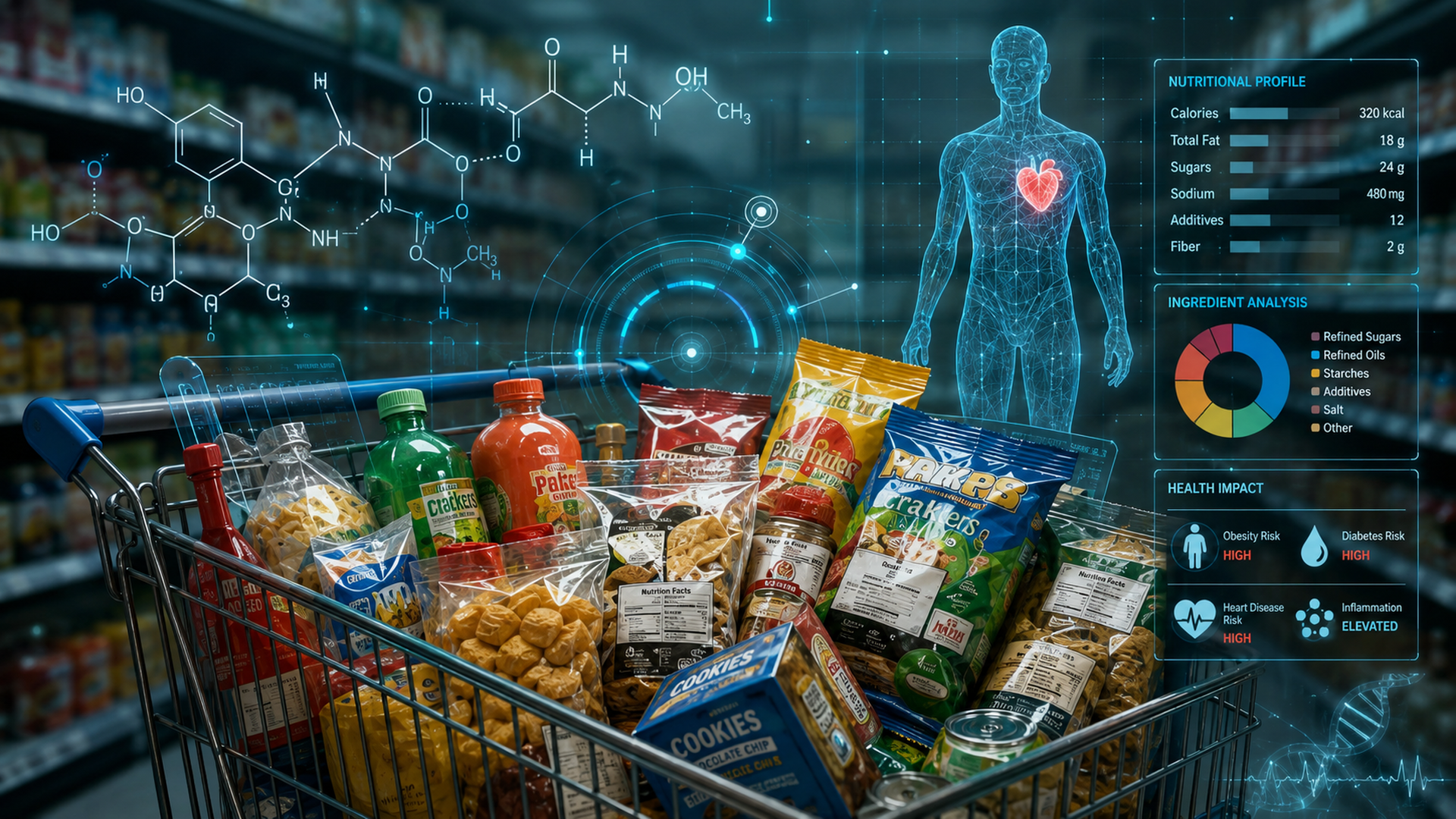
The Real Technology of Ultra-Processed Foods: Not Chips Getting Smarter, but Supply Chains Turning Your Mouth into a Data Endpoint
"Ultra-processed foods" sounds like a moral accusation—as if saying it out loud could turn a snack pack into a villain. But what truly deserves discussion is not looking down on consumers with contemptuous language, but understanding how a food technology system forms. Ultra-processed foods are usually not natural extensions from the kitchen; they are products crafted by formulas, additives, texture engineering, preservation techniques, packaging, logistics, display, pricing strategies and advertising. They are not simply "unhealthy"—they are very cleverly designed to be convenient, cheap, stable, tasty and easy to repurchase.
This is where the problem becomes tricky. Modern people do know vegetables are better; nor does everyone love handing dinner over to potato chips. The real life scenario is: time is short, stress is high, healthy food costs more, convenience stores are closer, delivery platforms push notifications just in time, and health claims on packaging look less guilty. So choices don't happen in a vacuum—they occur within a designed consumption environment. Telling people to rely only on self-discipline is like asking one person to fight supply chains, advertising budgets and algorithms with bare hands. Noble spirit, low odds.
Appetite Can Be Engineered
The food industry's greatest strength isn't just making food tasty—it's turning "wanting another bite" into a measurable R&D target. Sweetness, saltiness, fat content, crunch, aroma, melt-in-the-mouth texture, package size, opening sound, color contrast—all can be tested and optimized. This is not conspiracy theory; it's mature industry daily research. The problem arises when product success metrics are to make consumers buy more often, finish faster, and stop less—public health cannot pretend this is merely personal weakness.
Of course, not all processing is bad. Freezing, canning, fermenting, pasteurizing, drying, nutrient fortification may make food safer, more preservable and easier to deliver. What truly matters is distinguishing: does processing improve nutrition and safety, or does it use engineering means to amplify overconsumption? Food technology isn't inherently evil; using tech to bypass human satiety, time perception and judgment is the problem. In black humor terms, when a food pack knows better than you when you'll collapse from craving, it's no longer just food—it's your emotional product manager.
Health Language on Packaging Is Very Good at Playing Tai Chi
Modern food packaging's greatest trick isn't printing big words—it's printing small responsibilities. Low-fat, reduced sugar, high fiber, added vitamins, natural flavor, plant-based, free of certain additives—these terms aren't necessarily false, but they often tell only part of the truth. Reducing one ingredient doesn't mean overall dietary risk drops; adding back a nutrient doesn't make the product equal to healthy food. Consumers face a designed language maze: every exit seems to lead to health, ultimately possibly just to the checkout counter.
Thus public health discussions can't stop at nutrition label education. Labels matter, but they require time, knowledge and attention; advertising works through emotion, speed and habit. When people are tired, busy or hungry, they won't stand before shelves conducting a mini doctoral thesis review. Policies that place all responsibility on consumers reading labels pretend everyone has the same time, education, income and life conditions. This pretense is civilized yet cruel.
Platforms Let Food Move from Shelves into Notification Bars
Past food marketing relied on TV, shelves and promotions. Now food can enter platforms, social media, short videos, delivery apps and membership databases. It knows when you usually order, which discounts you're sensitive to, that rainy days make you less inclined to go out, and what images push at midnight work best. When food tech meets data tech, the problem isn't just "what's in the product"—it includes "how it finds you."
Public policy challenges here are escalating. Are children overexposed to high-sugar, high-salt, high-fat product ads? Do platform discounts encourage overbuying? Are healthy foods and fresh ingredients disadvantaged on price and accessibility? Do algorithms push vulnerable groups into higher-risk dietary environments? These issues can't be handled with traditional food safety frameworks alone; they miss a large piece. Future food governance must simultaneously examine ingredients, packaging, advertising, platforms and data use—because one person's mouth has been placed inside a larger commercial system.
Don't Turn Public Health Into Shame Education
The easiest trap when discussing ultra-processed foods is turning the problem into class shame—as if eating unhealthily means lacking effort, taste or self-love. This approach isn't just ineffective; it's unfair. Many families don't know fresh ingredients are better—they lack time to cook, sufficient budget, nearby options, fragmented work hours and heavy caregiving responsibilities. If healthy eating becomes middle-class virtue performance, public health loses half the battle.
True policy should ask: Can healthier choices be cheaper? Can schools and communities provide better meals? Can children's advertising be stricter? Can food labels be clearer? Can convenience stores and delivery platforms be included in healthy environment design? Can local markets, agricultural production, cold chains, community kitchens and long-term care meals connect? When choice environments change, personal self-discipline can become fair. Otherwise we package structural problems as individual failures and ask victims to pay the bill.
Food Technology Can Also Move Toward Resilience
Critiquing ultra-processed foods doesn't mean nostalgic belief only in handmade products. Facing climate change, aging populations, urbanization, disasters and supply chain volatility, food technology remains important. Better preservation, lower-energy cold chains, more transparent supply chains, less waste, foods suitable for elderly swallowing and nutritional needs, processing technologies supporting local agriculture—all may be part of public interest. The problem isn't processing itself; it's who the processing serves.
Taiwan especially needs to connect food technology with agricultural resilience, local industries, long-term care nutrition, school meals and public health. If processing just makes sugar-oil-salt packages prettier, that only gives chronic diseases better packaging design; if processing extends local ingredient supply, reduces waste and improves nutritional accessibility, it can become a resilience tool. Technology has no natural stance—business models choose sides for it. Public policy's task is to prevent the most profitable formulas from automatically becoming society's dietary direction.
Regulation Isn't Anti-Business; It's Clarifying the Rules of the Game
Food industries often worry regulation will stifle innovation. This concern isn't entirely baseless—rigid rules may make small operators harder off than large enterprises. But markets without rules aren't free—they let resource-rich companies design dietary environments for everyone. A better direction isn't demonizing all processed foods, but establishing clearer grading, labeling, children's advertising limits, school and hospital procurement norms, platform promotion transparency, and public health monitoring of high-risk products.
Enterprises need not view public health as an enemy. As consumers increasingly value health, transparency and sustainability, companies that can clearly state formulas, supply chains and marketing responsibilities may build long-term trust. True innovation isn't tuning sugar, oil, salt and psychological stimuli to just stop—you're not stopping; it's making tasty, affordable, nutritious foods coexist with local supply chains. That's hard—hence called innovation; if it just makes people buy more packs, that's merely sales technique.
Take Your Mouth Back from the Data Endpoint
The real technology of ultra-processed foods isn't just factory formulas—it includes shelves, discounts, advertising, platforms, logistics and data analysis. It turns human mouths into supply chain terminals, human stress into consumption timing, human fatigue into sales conversion rates. To face this system, personal willpower alone won't suffice; moral preaching won't work either. We need clearer labeling, more responsible marketing, fairer food environments, smarter local supply chains, and less shaming public health language.
We can still eat snacks, still enjoy convenience, still admit life is tiring. But society cannot pretend all choices are free—especially when freedom is precisely designed, pushed by discounts, beautified by packaging, hypnotized by stress. Truly mature food technology shouldn't just make it easier to stop; it should make healthy choices more likely. After all, a civilized society shouldn't only ask how much product can sell—it must also ask where it takes human bodies, time and attention.
Sources retained from the Chinese original
AI use and content-safety disclosure
This article was assisted by AI for data organization, structural drafting and sentence polishing; human editors set the viewpoint and fact-checking direction