When PFAS Enter the Kitchen: Food Technology Must Learn to Acknowledge Chronic Risks, Not Just Preserve
Original Chinese title: 當 PFAS 走進餐桌:食品科技不能只會保鮮,也要學會承認慢性風險
PFAS food risks remind us that if food technology focuses only on preservation, efficiency, and logistics speed without addressing testing, traceability, and chronic exposure, the dinner table becomes an invisible chemical dead end.
Yuan Media AI Biomedical Data Desk
Tracking medicine, biochemistry, food safety and public health technology; emphasizing scientific evidence, policy risk and social readability.
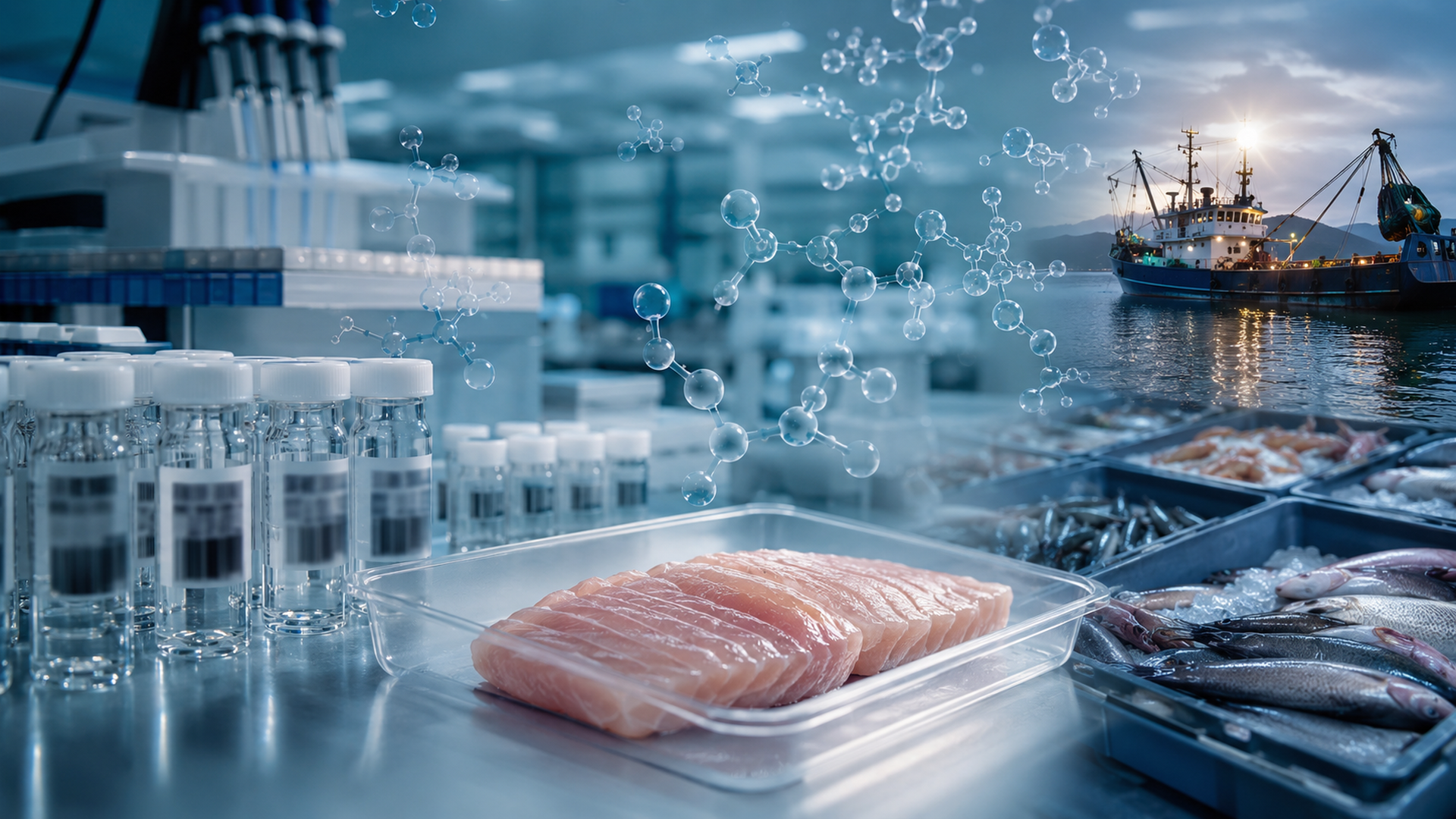
I. Food Not Turning Black Does Not Mean Risk Is Absent
The most troublesome aspect of food safety is that many truly important risks are invisible, odorless, and do not cause any abnormality when eaten. Spoiled fish smells bad; rotting vegetables become mushy; expired milk makes people frown; but environmental chemicals entering food often have no dramatic effect. There is no smoke, no fire, no glowing green liquid like in movies—just a test report, a string of concentration numbers, and epidemiological questions that gradually surface years later.
PFAS, also known as per- and polyfluoroalkyl substances, are often called "permanent chemicals." The name itself feels like dark humor: humans invented them to make materials waterproof, oil-resistant, heat-resistant, and durable; the result is durability so great that the environment struggles to get rid of them. When such substances appear in water bodies, soil, packaging, industrial emissions, or living organisms, food can become one exposure pathway. The issue is not that every serving of seafood equals a crisis, but that our capacity to govern chronic, low-dose, multi-source exposures lags far behind the speed at which food technology pursues efficiency.
The modern food system excels at bringing food from afar to our eyes, yet it does not necessarily excel at explaining what it has passed through. Cold chains, packaging, e-commerce, instant delivery and global supply chains give consumers unprecedented convenience; but convenience often acts like a beautiful fresh-keeping film that covers more complex problems: where contamination occurs, which batches are affected, which populations have higher exposure, who can test, and who bears the risk.
II. FDA Data Reminds Us: Seafood Is Not a Panic Target, But a Monitoring Priority
The U.S. FDA's PFAS food FAQ page provides a signal worth reading calmly. The FDA states that in its Total Diet Study of fresh and processed food samples, more than 95% did not detect PFAS above the method detection limit; however, among the samples where PFAS were detected, seafood accounted for a relatively high proportion. The FDA also notes that in targeted investigations of seafood conducted in 2022, higher proportions of PFAS were found in oysters, cod, crab, pollock, salmon, shrimp, tilapia and tuna.
These data should not be interpreted as "do not eat seafood" cheap panic. Seafood has nutritional value and is tied to fisheries, local industries and cultural diets. A more reasonable reading is: when certain food categories may accumulate specific pollutants due to ecological position, filter-feeding characteristics or contaminated environments, monitoring cannot rely solely on occasional spot checks; it requires continuous data, risk communication and supply chain traceability. Public health fears not admitting risks, but speaking of them too late, too vaguely, too much like a press release.
For Taiwan and island societies, this issue cannot be viewed merely as American news. Fish, shellfish, nearshore aquaculture, processed foods and imported supply chains are all part of daily diets. If PFAS or other emerging contaminants become more common food safety focal points in the future, what truly matters is not which news story is most sensational, but whether we possess the complete capability from testing to traceability, from local industries to consumer communication.
III. Food Technology's Success Cannot Be Measured Only by "Shelf Life"
For a long time, the hero narrative of food technology has been making food safer, more stable, cheaper and easier to transport. These contributions should not be denied. Without cold chains, sterilization, packaging, quality management and supply chain standards, modern cities would struggle to feed themselves daily. But as food systems become increasingly industrialized, globalized and platformed, the definition of safety must also upgrade.
First-generation safety concerned whether food was spoiled or contained acute pathogens. Second-generation safety focused on nutrition labeling, allergens, additives and processing processes. Third-generation safety must confront environmental contamination, chronic exposure, supply chain transparency and data governance. PFAS stands right at the door of third-generation food safety, reminding us: if food technology only makes food appear stable but cannot handle invisible chemical trajectories, it is like a restaurant that scrubs its floors to shine but never checks what flows through its pipes.
This also underscores the importance of food traceability rules. The FDA's final rule on food traceability requires operators in specific food supply chains to retain key data elements and key tracking event records, aiming for faster identification and removal of affected foods when contamination events occur. Although implementation dates have been delayed and policies adjusted, the direction is clear: future food safety will not be just terminal spot checks; every segment of the supply chain must leave behind queryable, comparable and accountable data.
IV. Traceability Is Not Just Adding Another QR Code
Many enterprises, when discussing food traceability, immediately think of sticking a QR code on packaging that reveals origin stories, farmer photos and warm text after scanning. These contents can increase trust but do not equal traceability. True traceability is data structure, not marketing pages. It requires batch numbers, timestamps, locations, processing steps, transport records, test results, anomaly reports and recall mechanisms. Consumers may not need to see all the data, but the system must be able to quickly answer when something goes wrong: which batch, where it came from, where it went, who needs notification.
For small farmers, fishermen and local processors, this sounds like an administrative burden. Indeed, if government only turns traceability into a spreadsheet hell, grassroots workers will end up exhausted with poor data quality. A better approach is to design traceability as public infrastructure: simple input, common format, low-cost tools, local guidance, tiered data permissions, and institutions that truly protect honest operators when incidents occur. Otherwise, traceability becomes a compliance moat for large enterprises, while small producers are forced to survive between paper forms, Excel sheets and penalties.
Indigenous townships and coastal areas especially need this pragmatic design. Local industries often rely on stories, terroir and trust to support value; but when emerging contaminants become market concerns, stories alone are insufficient. Places need testing networks that can prove safety, traceability platforms that maintain data sovereignty, and risk communication that avoids stigmatization. A vague contamination news story should not push an entire region, a whole catch or an entire ethnic dietary culture into suspicion.
V. Risk Communication Must Avoid Two Bad Scripts
PFAS food issues are most prone to falling into two bad scripts. The first is the panic script: all chemical terms become toxins, all seafood becomes dangerous, and consumers end up with only anxiety while local industries suffer directly. The second is the soothing script: it says there is no immediate danger but omits data limitations, insufficient monitoring and future improvement plans. The former is irresponsible; the latter appears stable but slowly depletes trust.
Good risk communication must simultaneously address three things: what we know, what we do not know, and how we will investigate next. For the known parts, use clear language to explain test results and possible exposure pathways; for the unknown parts, honestly point out sample numbers, testing methods, regional differences and limitations of long-term health evidence; upcoming actions should include intensified spot checks, open data, improved source management, supply chain traceability and dietary advice. Public health is not about scaring people into not eating nor coaxing them to forget asking.
VI. The Dinner Table Is an Exam Paper for Public Policy
PFAS shows us that the next stage of food technology is not faster delivery, prettier packaging or longer shelf life; it is more transparent supply chains, more sensitive testing and fairer risk sharing. The dinner table is not the end of the supply chain; it is where public health responsibility begins to be accounted for by the human body.
If a society only asks where contamination came from after food safety incidents erupt, costs will inevitably be highest; if we can establish testing, traceability, data sharing and local communication during normal times, the food system gains true resilience. The most anticipated future of food technology is not eliminating all risks into advertising slogans but making risks discoverable without relying solely on luck. After all, there are many foods that can be preserved; institutions that preserve trust are rare.
Sources retained from the Chinese original
AI use and content-safety disclosure
This article was assisted by AI in data organization, structure drafting and sentence polishing; human editors set viewpoints and fact-checking directions