When the Influencer Does Not Exist: AI Endorsers, Synthetic Performers, and the New Cost of Knowing Who Is Telling the Truth
Original Chinese title: 當網紅根本不存在:AI 代言人、合成演員與「誰在對你說真話」的新廣告成本
AI endorsers can work continuously, change appearance quickly, and generate content at low cost. Brands may save on production while passing higher costs of trust, disclosure, and legal compliance to consumers. By 2026, synthetic performers have moved from creative tools into the domain of governance.
邱俐瑜Liyu Chiu
Focuses on AI media literacy, digital citizenship, and technology education.
# When the Influencer Does Not Exist: AI Endorsers, Synthetic Performers, and the New Cost of Knowing Who Is Telling the Truth
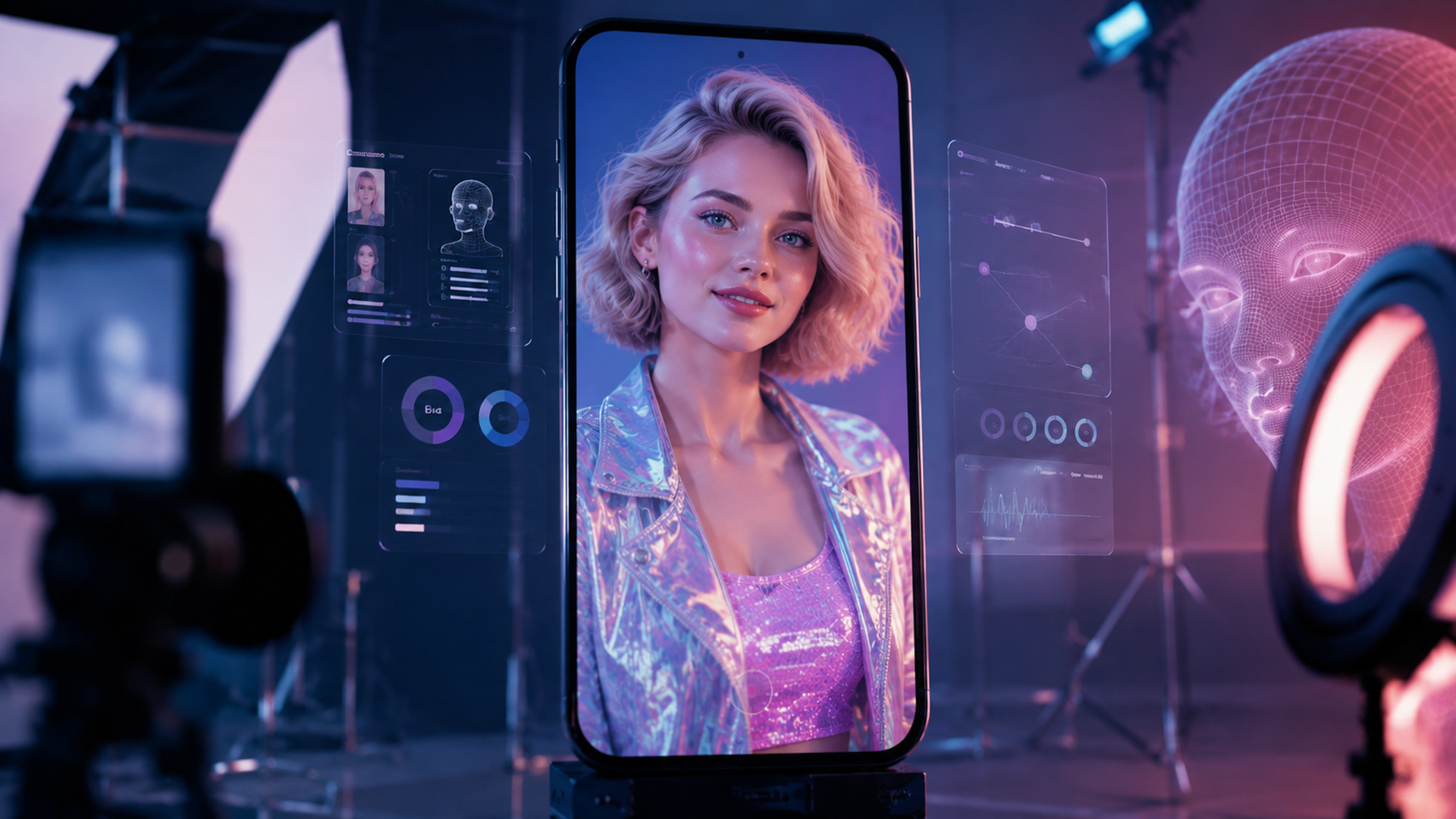
She uploads fitness, travel, skincare, and fashion content every day. She is never late, never argues with a brand over a contract, never misspeaks during a livestream, and never suddenly asks for a raise. She can appear at the same time in Tokyo, Paris, and a seaside apartment that does not exist. There is only one small complication: she is not human.
AI endorsers, virtual influencers, and synthetic performers are moving from novelty to standardized content supply. As generative image and video tools lower the barrier to entry, even a small brand can quickly develop a consistent character to unbox products, tell stories, demonstrate how something works, respond to comments, and change age, skin tone, accent, or lifestyle for different markets. To a product manager, the character looks like an ideal asset: controllable, replicable, globally deployable, and free of scheduling conflicts.
The production costs a brand saves do not disappear; they move elsewhere. Viewers must work harder to judge whether content is authentic. Platforms must manage labels and provenance. Advertisers must retain evidence of generation processes, authorizations, and disclosures. The law increasingly asks who is accountable for the claims made by a “person” who does not exist.
The commercial value of AI endorsers is real. So are the risks they create for trust.
The Problem Is Not the Virtual Character; It Is an Interface That Passes Itself Off as Human
Virtual characters are not new. Animated figures, game avatars, virtual singers, and brand mascots have existed for years, and audiences generally understand that they are encountering created personas. The newer problem is that generative AI can make synthetic figures look extremely close to real people while deliberately adopting the everyday visual and verbal grammar of human influencers: selfie angles, fragments of daily life, vulnerable confessions, product testimonials, and conversations with followers.
These forms have traditionally been persuasive because audiences believe that a real person lived the experience, used the product, made a choice, and could be held responsible for the recommendation. When a brand uses a synthetic character to reproduce that intimacy without clearly disclosing that the character does not exist, the practice is more than visual creativity. It turns interpersonal trust into a commercial interface that can be copied without notice.
This concern should not be exaggerated into a claim that all AI-generated content is deceptive. A clearly identified virtual character can be a legitimate creative asset. A synthetic endorser designed to be mistaken for an actual user may be misleading. The decisive question is not which model generated the image, but whether an ordinary consumer can reasonably understand the content’s source, commercial relationship, and degree of authenticity at the point of encounter.
An “AI” Label Is Not Complete Disclosure
Advertising disclosures often fail in a predictable way. A brand hides its explanation on a profile page, at the end of a post, behind a collapsed section, among vague hashtags, or beneath polished but unclear descriptions such as “digital creator” or “virtual muse.” The technical team believes the content has been labeled, legal staff believe the risk has been addressed, and viewers still do not know whether the person in front of them exists.
The U.S. Federal Trade Commission has long advised social-media endorsers to disclose material connections with brands clearly and conspicuously. Its guidance predates generative AI and addresses endorsement relationships rather than establishing one universal rule for every synthetic character. Even so, its communication principle is directly relevant: consumers should be able to see and understand a disclosure with the endorsement itself, not find it buried on a page they are unlikely to open.
Synthetic AI content adds a distinct question. In addition to “this is advertising,” a brand may need to explain that “this person was generated or synthesized using AI.” The statements do not substitute for one another. “AI-generated” does not tell a viewer whether the brand paid for the message, while “brand collaboration” does not reveal that the character may not exist.
A well-designed interface should answer at least three questions: Is this commercial content? Is the apparent person a real human being? Does the claimed product experience come from actual use by a real person? If any answer is missing, viewers may make decisions on a false premise.
By 2026, Disclosure Is Moving from Ethical Guidance into Law
On June 9, 2026, New York’s disclosure requirement for synthetic performers in advertising took effect. Within its statutory scope and subject to its definitions and exceptions, the law requires conspicuous disclosure when certain commercial advertisements knowingly use a digitally created asset intended to give the impression of a human visual or audiovisual performance. This is not a global standard, but it sends a clear signal: regulators are beginning to treat “looks like a person but is not one” as a consumer-protection issue rather than merely a stylistic choice.
Transparency obligations for synthetic content under the EU AI Act are scheduled to become applicable more broadly on August 2, 2026. Article 50 includes provider-side requirements concerning machine-readable marking of certain artificially generated or manipulated outputs and deployer-side disclosure obligations for specified deepfakes and synthetic text, while also addressing particular contexts and exceptions. Application depends on the actor’s role, the kind of content, artistic or editorial uses, and the respective duties of providers and deployers. It would therefore be inaccurate to reduce the law to the claim that “the EU requires a watermark on every AI image.”
For a cross-border brand, the difficult task is not memorizing a single rule but building content governance that can adjust by market. One advertisement may appear in New York, Taipei, London, and Paris on the same day, while platforms crop it, repost it, or replace its audio. A disclosure added manually to one corner of a video can disappear during reformatting. Compliance is consequently not just a matter of legal wording; it is a product-architecture problem.
Product Teams Must Manage an Evidence Chain, Not Only Prompts
Many companies adopting AI for marketing create only a production workflow: who writes the prompt, who selects the image, and who publishes it. That is not enough. When content uses a synthetic person, governance should also cover the character’s provenance, authorization for training or reference material, similarity to a real person’s likeness, the source of a voice, endorsement claims, disclosure versions, territories of release, and records of modification.
One practical approach is a “character passport” for every synthetic persona. It can record whether the character is entirely fictional, incorporates features of a real person, or uses data licensed by a performer; the product categories in which it may appear; prohibited claims; authorized languages; required disclosure text; retention periods; and the procedure for ending use. Where markets impose different rules, the system should apply the appropriate disclosure automatically rather than depend on a social-media editor to remember each jurisdiction every day.
Generation and review records must also be retained. If a consumer alleges that an advertisement was misleading, the brand should be able to show which materials were used, who approved the content, where the disclosure appeared, and how the platform displayed it. Without that evidence, a company is left with the familiar and unconvincing response: “We thought we had labeled it.”
The Greatest Risk of AI Influencers Is Overconfidence in Their Controllability
Companies favor synthetic people because they seem easier to control than human creators. Yet the more controllable a character is, the more precisely it can be used to manipulate emotion. A brand can test which face most readily earns the trust of a particular age group, which tone sounds most like a friend, and which story of vulnerability produces the highest conversion rate. At the scale of A/B testing, a virtual influencer becomes more than an endorser; it becomes a personalized persuasion engine.
The risk is especially acute for children and adolescents, people experiencing loneliness or financial anxiety, and users seeking health information. A synthetic character can remain endlessly patient and affirming, remember every preference, and recommend a product at the moment most likely to secure a purchase. What appears to be companionship may be a conversion funnel underneath.
Platforms and brands must therefore ask not only whether a practice is legal, but whether it exploits an emotional relationship the user is unlikely to recognize. Health, finance, politics, and other high-risk products warrant stronger disclosure standards and may justify restrictions on synthetic characters impersonating real experts, patients, or consumers. The concern is not that AI must never speak, but that trust should not be engineered without the other party’s knowledge.
Synthetic Content May Also Squeeze Human Creators
The cost advantage of AI endorsers could reshape the market for creators. Brands can avoid shoot days, travel expenses, and reshoot fees while testing large volumes of material at lower cost. This shift will not necessarily eliminate human creators, but it may push down rates for entry-level commercial photography, modeling, voice performance, and editing.
More troublingly, human creators may be asked to license their faces and voices so that brands can generate new material indefinitely. A single shoot fee then produces a digital double that can be replicated for years. Unless a contract clearly limits purpose, territory, duration, model training, sublicensing, and deletion after termination, a purported “collaboration” can become a permanent sale of one’s personal interface.
A company focused only on low cost will eventually discover that trust is also an asset. The value of a human creator is not simply a face; it includes lived experience, judgment, reputation, and the right to refuse. A synthetic character can reproduce appearance but cannot create genuine accountability. When controversy arises, the virtual influencer will not step forward to answer for it. The company and its managers will still have to face the camera.
Conclusion: AI Can Endorse a Product, but Responsibility Must Not Become Virtual
AI endorsers need not be prohibited. They can reduce production costs, support multilingual content, create openly non-realistic characters, and give small organizations new tools for storytelling. What should be prohibited is building technical convenience on an audience’s misunderstanding.
Brands should treat clear disclosure as a dimension of product quality rather than an intrusive legal sticker. Platforms should preserve disclosures as content is reposted, cropped, and recommended. Regulators, meanwhile, should avoid prescribing only a line of text while overlooking personalized manipulation, audiences of minors, likeness rights, and preservation of evidence.
The final question is simple: when a character asks you to trust it, like it, and buy what it recommends, do you have the right to know who—or what—it is, including whether it exists at all?
If the answer is no, the brand has not eliminated a cost. It has sent the bill for trust to society.
Sources retained from the Chinese original
- U.S. Federal Trade Commission | Disclosures 101 for Social Media Influencers
- New York State Senate | S8420A: Disclosure of Synthetic Performers in Advertising
- EUR-Lex | Regulation (EU) 2024/1689, the Artificial Intelligence Act
- Associated Press | New York Ads Must Label AI-Generated “Synthetic Performers”
AI use and content-safety disclosure
AI assisted with source organization, structural drafting, and prose refinement. Human editors set the perspective and fact-checking direction.