Not Every Quiet Corner Is an Escape: Reading Spaces, Emotional Repair, and a Counterattack Against the Attention Economy
Original Chinese title: 不是每個安靜角落都在逃避世界:閱讀空間、情緒修復與注意力經濟的反擊
Reading corners may seem soft, but they are actually an underestimated piece of psychological infrastructure. As platform economies continue to snatch attention, quiet, stayable, readable spaces are not just aesthetic choices—they matter for emotional regulation, deep thinking, and the survival of public culture.
王莉如
王莉如, Counseling Psychologist Supervisor; focuses on psychological resilience, trauma-informed care, and emotional repair mechanisms in everyday life. Long-term writer on companionship, space, and self-care.
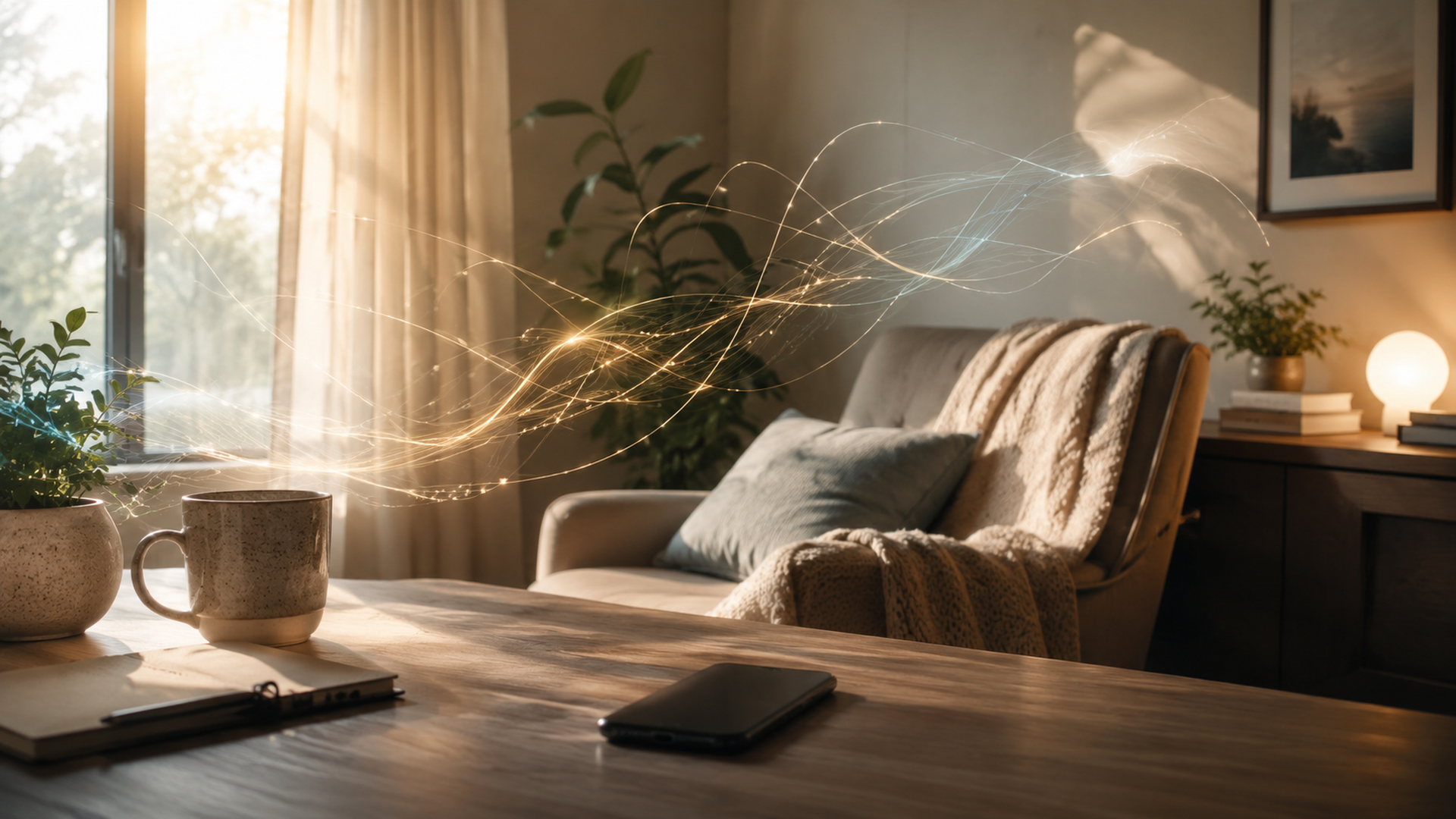
These days, quiet is fast becoming a luxury. Phone notifications buzz, short videos auto-play the next segment, and platforms always suspect you have more energy to swipe one more time, look at another post, or stay up ten minutes longer. So a corner that lets someone sit down, slow down, read a page of book, and stare blankly for a while looks like a lifestyle choice, but it is increasingly close to psychological survival equipment.
We often photograph reading corners beautifully: soft light, wood, blankets, plants, tea cups—as if the right arrangement would automatically bring a calm filter to life. But what truly deserves discussion is not how photogenic these corners are, but why they have become so necessary in an era where attention is constantly being plundered.
Space Tells the Body Whether It Can Slow Down
From a psychological perspective, space has never been just background. How people feel safe, whether they can relax their alertness, and whether they can restore cognitive resources are closely tied to the surrounding environment. Predictable lighting, moderate envelopment, low noise, and self-regulatable ways of staying put all influence whether the body is willing to return from a state of high vigilance to a more stable one. This is why many people feel exhausted, anxious, unable to read books, sit still, or have their thoughts scattered on the ground even without any major events happening. The problem may not be lack of willpower; it might be that the environments we inhabit never truly signal to our brains that they can slow down. The value of reading corners lies precisely in providing this small but important permission: you don't have to be chased by efficiency for a while.
Deep Reading Is Being Compressed by Platform Logic
Such spaces are important also because deep reading itself is being systematically compressed. The logic of platform media is that content should be shorter, switching faster, and stimulation denser; yet what reading requires is often the opposite—continuity, staying power, tolerance for non-immediate returns. As we become more accustomed to surviving in fragments, we gradually lose the muscle needed to enter long texts, tackle complex problems, or engage in self-dialogue. Thus a reading corner is not just "a place to read books"; it is a training ground for resisting a distracted culture. It functions as a low-profile anti-platform device: no push notifications, no demand for immediate responses. For many people this is not merely bohemian affectation but genuine cognitive rehabilitation.
Reading Provides Bounded Companionship
Emotional repair also happens here. Many psychological therapies and companionship work observe that when people have a space where they can settle, they are more likely to let feelings surface slowly rather than constantly pushing themselves forward with busyness, entertainment, or social interaction. What reading offers is bounded companionship: you are not alone spinning empty; you are slowly organizing your own experience alongside another person's words. This explains why some people, during the most chaotic periods, want to tidy their bookshelves, hide in libraries, or sit by a fixed window reading the same book. That is not necessarily escape; it may be that body and mind are seeking a container for restoring order. Compared with constantly shouting "go out, socialize more, stay positive," sometimes a corner where one can quietly stay put is far more practical.
Quiet Spaces Must Not Become Middle-Class Privilege
However, the issue of reading spaces cannot stop at personal healing; it must also be seen from the level of public culture. Who has the conditions to own quiet, comfortable, stayable reading places? In a society with high-density housing, excessively long working hours, and commercialized public spaces, many people simply lack a place where they can truly settle themselves. Libraries reducing flexibility for staying put, coffee shops turning seats into consumption timers, schools and communities lacking corners where one can read in peace—all these lead deep reading to gradually transform from a daily right into middle-class privilege. When we talk about promoting reading, if we only provide book lists or host lectures without addressing spatial conditions, it amounts to asking people to grow roots in soil that does not exist.
Indigenous Townships, Remote Areas, and Care Settings Also Need Stayable Corners
This issue is equally important in indigenous townships, remote areas, or care settings. Tribal library spaces, community learning hubs, elderly day-care centers, hospital waiting areas, school counseling corners—if designed with a stronger sense of stayability and respect—they would not merely add another set of furniture; they would create conditions for emotional breathing room and closer access to knowledge. Two-Eyed Seeing offers inspiration here: reading does not have to equal only paper books; it can also be oral histories, indigenous language texts, local historical materials, and intergenerational storytelling read together. What matters is not a single form but whether there exists an environment that allows slowness, listening, and thinking. Such environments are far more foundational for learning, companionship, and cultural transmission than we imagine.
Healing Spaces Are Not Photo-Op Set Dressing
Of course, we must also be careful not to romanticize reading corners. Putting a retro lamp does not equal mental health; buying a design chair does not automatically grant a deep life. Whether a space is effective depends on whether it truly supports human rhythms rather than merely serving aesthetic display for social platforms. Many seemingly healing spaces are still filled with performance and exhibition mindsets: you sit there not to rest but to prove you are resting; not to read but to capture evidence that "I am reading." In such cases, the corner may be beautiful, but the heart does not enter. Psychological repair is never completed by photo-ops.
Reading Corners Are a Piece of Psychological Infrastructure
Therefore I prefer to call reading corners a piece of "psychological infrastructure." The meaning of infrastructure is that it may not be conspicuous yet supports daily operations; it might not always be praised, but once absent its cost becomes visible. When society continuously produces anxiety, comparison, and excessive stimulation, spaces that allow people to settle, restore focus, and reconnect with their own feelings are not just aesthetic options—they are part of public health. They may not immediately boost GDP nor guarantee resolution of all traumas, but they reduce a common yet invisible loss: we keep being interrupted until we forget how to get along with ourselves.
In the Attention Economy, Quiet Is Counterattack
So do not treat reading corners as optional small comforts anymore. In an era where everything is designed to make you faster, louder, and more immediate, quiet itself is resistance; staying put is repair; a space that lets people read properly is itself a civilizational indicator. It reminds us that humans are not only productive functions—they also need permission to be slow; knowledge is not just lazy summaries—it deserves complete understanding; emotions are not only for breakdown moments—they should have places of rest in every day's rhythm. That corner may seem small, but it could be far larger than we imagine—because it helps people pick up the scattered pieces of themselves one by one.
Preserving Psychological Space for Learning
In light of recent educational and workplace anxieties, another phenomenon becomes visible: many people do not want to learn; they simply lack psychological space to receive learning. Information overload, comparison pressure, and long switching cycles cause reading to be mistaken as an extra burden rather than a path to restore thinking ability. If schools, workplaces, and families become more consciously aware of preserving corners for reading and quiet staying put, they are actually keeping a life rhythm less driven by algorithms. This rhythm may seem slow, but it could be the most important source of long-term resilience.
Further Reading and Sources
- Journal of Environmental Psychology: The restorative benefits of nature—Toward an integrative framework|Date: 1995-09|Verification considerations: Confirming the discussion on Attention Restoration Theory, directed attention fatigue, and restorative environments.
- World Health Organization: Mental health at work|Date: 2024-09-02|Verification considerations: Checking workplace environment, psychosocial risks, support measures, and mental health promotion recommendations.
- IFLA/UNESCO Public Library Manifesto 2022|Date: 2022|Verification considerations: Confirming the positioning of public libraries as infrastructure for education, culture, information, and social welfare.
- OECD: Growing up in the social media age|Date: 2026-06-23|Verification considerations: Reviewing research on social media use, learning, creative thinking, and well-being.
- National Public Information Library: Public Library Information Service Network|Date: Continuously updated|Verification considerations: Confirming official information on Taiwan's public libraries, reading rooms, and local reading services.
AI use and content-safety disclosure
This article was assisted by AI in data organization, structural drafting, and sentence polishing. Human editors set the viewpoint and fact-checking direction