Putting Collections Online Is Not the Same as Giving Culture Away: Openness and Boundaries in Digital Museums
Original Chinese title: 把館藏放上網,不等於把文化交出去:數位博物館的開放與邊界
Digital collections can expand educational and research use, but open licensing, cultural sensitivity, and community governance cannot be conflated; true digital repatriation must include naming, access, withdrawal, and reuse decision rights.
陳錦瑜
Professor at National Taiwan University of Science and Technology; teaches chatbot and cultural exploration courses; focuses on interpreting Taiwanese culture and international trends, appreciating cultural diversity, developing UN SDGs global citizenship awareness, and building sustainable global partnerships.
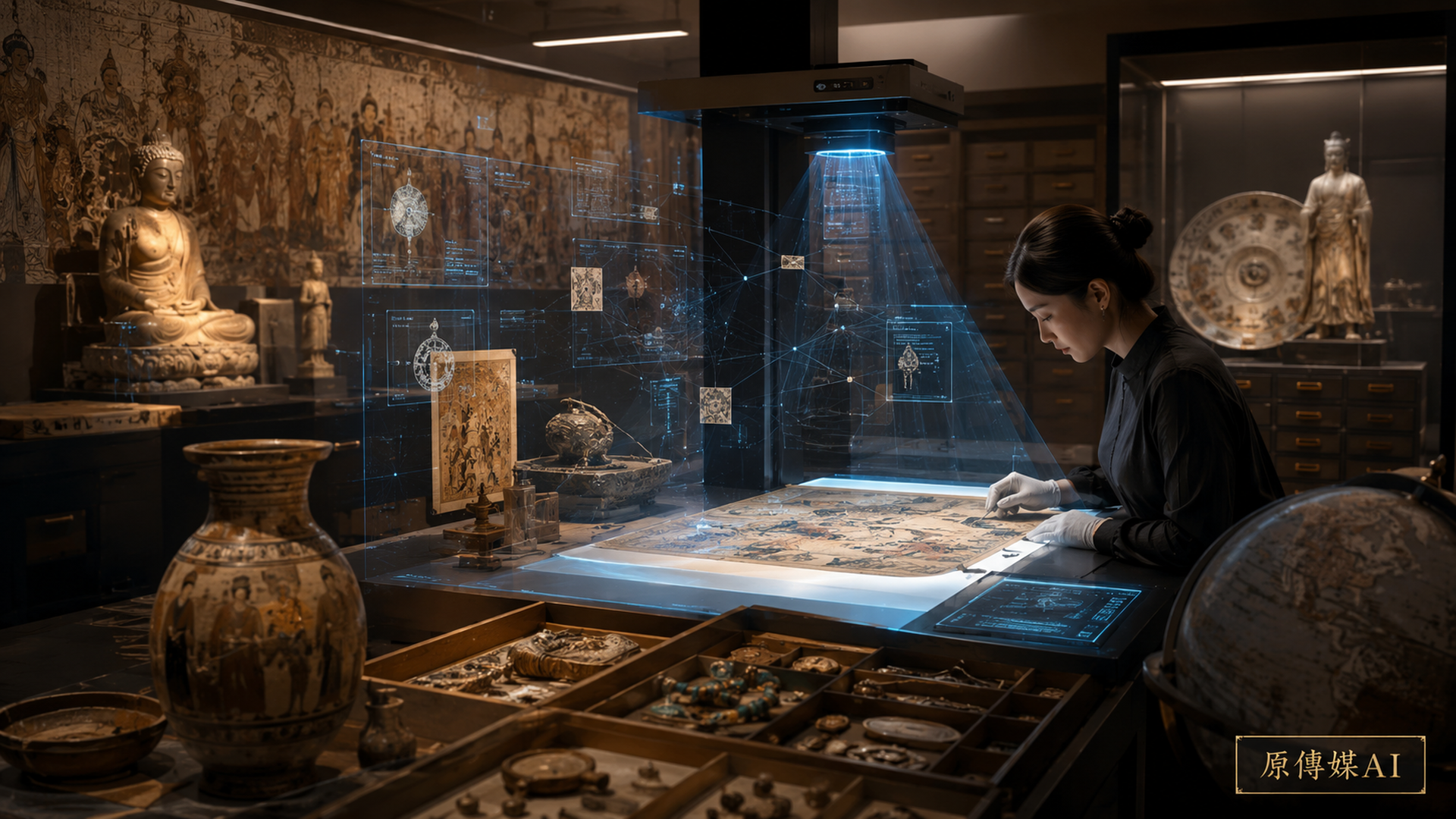
When museums put five million images online, the first reaction is usually cheers: knowledge democratization has finally arrived. Students don't need plane tickets, researchers don't have to write three official letters before accessing materials, and designers can download high-resolution assets. Digital collections do indeed break geographical and temporal limits, but "being able to see" and "being able to use arbitrarily" are not the same thing; "open licensing" and "culturally suitable for public release" are also not the same.
Putting Collections Online Is an Institutional Project, Not a Scanning Marathon
The Smithsonian Open Access program has made over five million two-dimensional and three-dimensional digital assets downloadable, shareable, and reusable in recent years. Europeana in Europe organizes data providers, Metadata, and user rights relationships through licensing frameworks. The importance of these initiatives lies not only in quantity but also in incorporating rights statements, APIs, Metadata, and long-term preservation into the institutional framework.
If museums simply scan photos and upload them to websites, users may still be unaware whether works are in the public domain, whether photographs have separate copyright, or whether Metadata can be reused. Without clear licensing, so-called openness is like a glass door: it appears transparent, but you don't know if you can push it.
Metadata Is Not Administrative Notes; It Is Power
Collection names, ethnic classifications, dates, uses, and collector fields determine how objects are understood in search systems. Colonial-era classifications may have written ritual and community-related objects as "primitive tools"; uncertain ethnic origins were fixed by databases with affirmative language; forced acquisition, trade, and plunder during collection processes remain reduced to a single line: "year of accession."
If digitization simply copies old Metadata, historical biases become machine-readable data. Search engines, recommendation systems, and generative AI then train on these fields, giving errors new scale. Museums are not just opening images; they are also opening a naming system for the world.
For Some Cultural Data, Public Access Is Not the Only Form of Justice
For Indigenous collections, full openness may conflict with community norms. Certain images, sounds, names, information about human remains, ritual objects, and taboo knowledge should not be open to everyone, at all times, or in all contexts. The expiration of copyright does not mean that cultural responsibility has expired.
Local Contexts' Traditional Knowledge and Biocultural Labels allow communities to express specific access, sharing, and reuse conditions. Labels do not replace law; they bring community norms into digital interfaces. They remind museums that objects in databases are not just museum property but may remain connected to living communities.
"All CC0" Is Convenient, But Also Too Crude
CC0 is extremely valuable for public domain works, scientific specimens, and general historical data, lowering thresholds for research and educational use. However, if collection origins are unclear, cultural sensitivity has not been assessed, or communities have not participated, a single open license may simplify complex problems into platform operations.
More mature digital collections require layering: which images can be downloaded at high resolution versus only browsed; which Metadata can be freely reused versus having location and person information blurred; which objects need community confirmation before public release; which data can be used for research but must not be used to train commercial models. This does not oppose openness; it gives openness defined audiences, purposes, and responsibilities.
AI Can Make Collections Visible Again—and Distort Them Anew
Generative AI can create preliminary labels for large numbers of images, identify similar patterns, assist restoration, and provide multilingual translation; it may also quickly replicate erroneous descriptions. Models may classify different ethnic patterns as the same category, treat ritual objects as decorative design, or “fill in” missing parts with forms that never existed—all potentially occurring within seemingly professional interfaces.
Therefore, AI-generated Metadata should be labeled with source and confidence level; important cultural descriptions must be reviewed by curators, researchers, and relevant communities. Models can propose candidate answers but cannot disguise speculation as collection facts.
Digital Repatriation Cannot Just Send a Website Link
Some museums call online access "digital repatriation," but what communities truly need may be downloadable files, original Metadata, scanning equipment training, control over language fields, and mechanisms to decide which data to withdraw. Sending a website link does not equal power returning to the community.
Digital repatriation should include co-governance: communities can correct names and context, set cultural access conditions, obtain high-quality copies, participate in exhibition narratives, and decide whether data can be reused by AI or commercial platforms. Without these, museums are merely moving glass cabinets to the cloud while the keys remain where they were.
Educational Use Also Requires Context, Not Just Materials
Teachers downloading images from open collections for instructional materials without object context, rights information, and cultural reminders easily reduce complex history to decoration. Digital teaching platforms should let students see an object's acquisition history, controversies, different names, and community perspectives rather than just providing drag-and-drop pretty pictures.
This is why reasoning about Metadata matters: students must not only read objects but also read how data fields were formed, who is absent, which descriptions are speculative. Museum databases thus become not only knowledge sources but also media literacy and data ethics teaching sites.
Openness and Protection Are Not Either/Or
Public museums have a responsibility to make cultural assets accessible to society and also a responsibility not to push fragile and sensitive content into unlimited circulation. Good systems do not choose all locked or all released, but establish transparent tiered principles, rights information, and appeal channels.
True progress in digital museums is not measured by how many items appear on the homepage, but whether users know what they can do, communities understand how data is used, and institutions can explain why certain content is open while other content is restricted. The further culture travels, the more responsibility must follow. Collection platforms should also retain modification histories so users know when names, ethnic attributions, and cultural explanations were corrected and by whom. This is not just version control; it acknowledges that knowledge changes with new research and community participation. If databases only ever show a single authoritative answer, they misrepresent ongoing cultural negotiation as static fact.
For Digital Platforms to Be Trusted, Corrections and Withdrawals Must Become Normal Mechanisms
What museums and cultural institutions fear most is that once data go online, the platform becomes frozen: incorrect names remain uncorrected, contested narratives continue to be reposted, and communities that request corrections can do nothing but wait in an email queue. Truly responsible digital collections should not treat corrections as trouble; they must be designed as institutional functions. This includes retaining version records, marking latest correction times, allowing different languages and community perspectives to stand side by side, establishing withdrawal or access restriction application processes, and clearly explaining how institutions respond to cultural sensitivity disputes.
In other words, digital collections are not "open once" projects that end; they are continuously negotiated public infrastructure. When platforms admit knowledge updates, names face challenges, descriptions get corrected, they can truly uphold culture as a public good. For Taiwan this is especially important: because multiple languages, peoples, and histories coexist, cultural data cannot be handled using a single central perspective. Good digital museums do not smooth out differences; they make differences visible, labeled, and respected.
Sources retained from the Chinese original
- Original source: Smithsonian|Open Access
- Original source: Europeana PRO|Europeana Licensing Framework
- Original source: Local Contexts|Traditional Knowledge and Biocultural Labels
- Original source: UNESCO|Recommendation concerning museums and collections
- Original source: UNESCO|Data governance in the digital age
AI use and content-safety disclosure
This article was assisted by AI for data organization, structural drafting, and sentence polishing. Human editors set the viewpoint and fact-checking direction, with verification considerations retained for item-by-item human review.