When Influencers Don't Exist: AI Spokespeople, Synthetic Actors, and the Media Literacy Question of 'Who Is Talking to You'
Original Chinese title: 當網紅根本不存在:AI 代言人、合成演員與「誰正在對你說話」的媒體識讀考題
AI influencers and synthetic actors have moved from creative tools to consumer protection and media literacy issues. This article analyzes character provenance, commercial relationship disclosure, synthetic actor regulations, content evidence chains, and new interpretive methods in the classroom.
邱俐瑜Liyu Chiu
Liyu Chiu is a winner of the Civics x AI and Information Technology Media Literacy Lesson Plan Award and a member of the AI Education Academy. She runs the Facebook page '快樂鯉魚秋老虎:運算思維與程式設計' (Computational Thinking and Programming) and focuses on AI media literacy, digital citizenship and technology education.
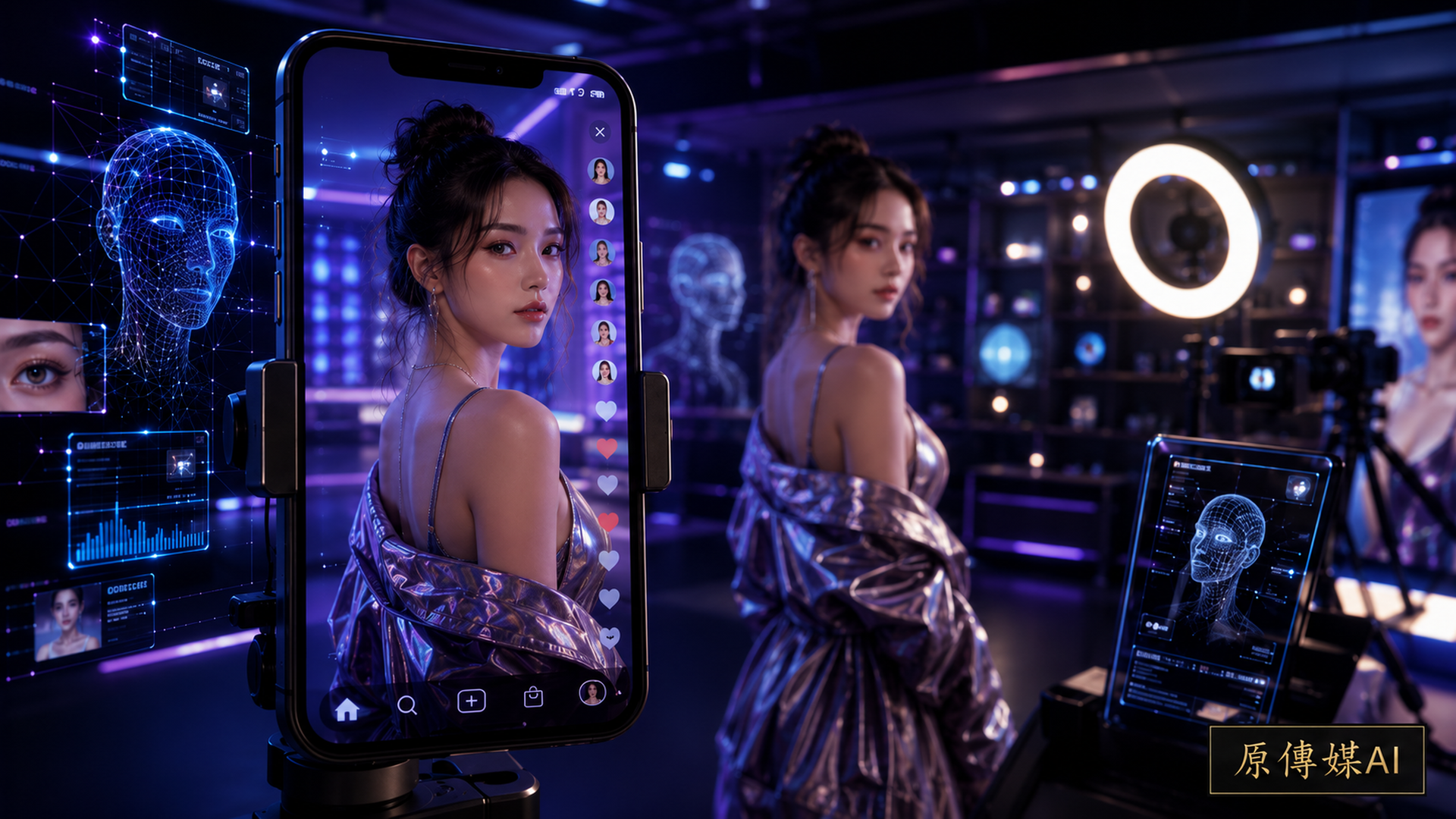
I. When Influencers Don't Exist
She posts daily about outfits, skincare, travel, and life content—never late, never slips up, never needs a holiday, and never suddenly announces during a livestream that she has ended her contract with a brand. She can change ten outfits in an hour, appear on the same day in Paris, Tokyo, and a non-existent seaside apartment.
The only small problem: she was never born.
AI influencers, virtual spokespeople, and synthetic actors are turning from visual spectacles into commercial tools. The issue is not whether virtual characters can exist, but when they imitate the intimate tone, life experiences and product testimonials of real influencers, do audiences clearly know that what they face is a character, an advertisement, an algorithm, or a real consumer.
Before generative AI, virtual characters mostly had clear creative boundaries; generative images and video let characters appear almost indistinguishable from real people and operate continuously as real social media accounts. This makes 'whether the character exists' no longer just an artistic question, but one of consumer awareness, platform responsibility, and media literacy.
II. Virtual Characters Are Not New; Pretending to Be Real Is the New Risk
Animated characters, game figures, virtual singers, and brand mascots have existed for a long time. Audiences usually know that is a created character, so they can appreciate it within an appropriate framework.
The change brought by generative AI is that characters can appear almost indistinguishable from real people and replicate the content grammar of real influencers: morning selfies, no-makeup posts, breakup confessions, before-and-after comparisons, live interaction, and 'I really like this product'.
These forms have commercial value because audiences believe there is a real person behind them living, using, choosing, and taking responsibility. When brands use synthetic characters to replicate that trust but do not clearly disclose the character does not exist, it is no longer just creative imagery; it turns interpersonal trust into an interface that can be mass-replicated.
The problem need not be exaggerated as all AI content being deceptive. A clearly marked virtual character can be a creative brand asset; a synthetic spokesperson intentionally made to seem like a real user may cross into misleading. The key has never been which model generated the image, but whether general consumers can reasonably understand the source, commercial relationship, and degree of reality at that moment.
III. 'AI Generated' Is Not Enough
AI influencer content involves at least two kinds of disclosure.
The first is character or content provenance: was the character AI-generated, a digital double, or a synthetic actor?
The second is commercial relationship: is this paid advertising, brand collaboration, free products, or other interest-based recommendation?
FTC Influencer Disclosure Guide requires that important relationships between influencers and brands be clear, easy to see, and placed with the recommended content—not hidden in personal intros, video descriptions, or a long string of tags.
But 'AI generated' does not tell audiences whether this is an advertisement; 'brand collaboration' does not tell audiences the character does not exist. Both pieces of information are indispensable.
The clearest approach is not to hide a small icon but to state directly: 'This is brand advertising; the person shown is an AI-generated virtual character, not a real user.' The more disclosure approaches the moment when audiences make judgments, the more substantive it becomes.
IV. New York State Has Treated Synthetic Actors as Consumer Protection Issues
On June 9, 2026, New York State's law requiring advertising disclosure of AI-generated synthetic actors went into effect. New York State Government Announcement states that advertisers or creators using AI synthetic actors who appear to be real people must provide clear disclosure.
The importance of this law lies not only in penalties, but in its formal recognition: when a non-existent person is used to build product trust, consumers have the right to know.
The law still has scope and exceptions; film, television, games, certain expressive works, and different media may be treated differently. It is also not a global uniform standard. But brands targeting cross-border markets cannot treat AI disclosure as voluntary virtue anymore.
For product teams, this means disclosure should not be added by editors on the fly but entered into content management systems. Character provenance, synthetic method, commercial relationship, and release region must all automatically carry appropriate tags.
V. The EU Requires More Than a Small Label in the Corner
EU AI Act Article 50 requires that some AI-generated or manipulated content have machine-readable markers and imposes transparency obligations on deepfake images, audio, video, and public information text. Related provisions will apply further from August 2026.
This means disclosure cannot rely solely on a single line of small text at the end of a video. When content is captured in screenshots, edited, re-uploaded, or cross-platform reposted, how source information is preserved becomes a product architecture issue.
Truly reliable systems need content credentials, generation records, model versions, source-asset licenses, human review, and disclosure logs. Transparency is not adding a sticker before release; it is the entire content supply chain being able to answer: where did this character come from? Who approved it? Which images, recordings or other materials from real people were used? Were licenses obtained?
If platforms remove markers during reposting, cropping, or recommendation, original disclosure loses effect. Therefore platform interfaces must also bear responsibility for maintaining source information rather than pushing all obligations onto the initial uploader.
VI. The Greatest Power of AI Influencers Is Not Beauty but Their Capacity for Unlimited Testing
Real creators have their own style and boundaries; synthetic characters can be quickly modified. Brands can test which face is most trusted by a certain age group, which tone sounds most like a friend, which story increases purchase rates.
When faces, voices, emotions, and recommendation content can be A/B tested in bulk, AI influencers are not just spokespeople but personalized persuasion systems.
This is especially sensitive for children, adolescents, the lonely, those with financial anxiety, and health information users. A virtual character can be endlessly patient, endlessly supportive, and recommend products at the most suitable moment. Users feel companionship; platforms calculate conversion rates.
Media literacy therefore cannot only teach 'images may be fake' but must further ask: why does this character appear before me? On what data did the platform judge I am easily persuaded by it? Is it sharing lived experience or delivering a pre-designed sales script? If content is wrong, who is responsible?
VII. The Classroom Cannot Only Teach Students to Find Flaws
Early deepfake education often taught students to observe fingers, eyes, mouth shape, lighting, and background. These techniques quickly become obsolete as model quality continuously improves.
New media literacy should turn toward source and responsibility interpretation. Students need to learn to check account history, commercial disclosure, content credentials, brand relationships, and provenance context—not fantasize that they can always catch AI flaws with the naked eye.
Civics and technology education should also let students actually compare: real influencer endorsement, clearly marked virtual characters, undisclosed synthetic figures, and digital doubles authorized by real people—what are the ethical and legal differences among these four?
The question is not whether AI is good or bad, but whether information lets people make informed judgments. Even if an image is fully AI-generated, as long as source, purpose, and responsibility are clear, audiences can still judge within a reasonable framework; conversely, even the most lifelike image of a real person, if commercial relationships are hidden, may constitute misleading.
VIII. Real Creators' Faces and Voices Cannot Become Permanent Leases
The AI spokesperson industry also involves creator labor. Actors, models, voice actors, and influencers may be asked to license faces, voices, and movement data so brands can generate infinite content later.
If contracts do not clearly limit duration, region, product type, model training, re-licensing, post-mortem use, and deletion mechanisms, a single shoot could become a permanent lease on one's identity.
Brands think they have bought controllable digital doubles; creators may lose the right to refuse. The most important contract clauses in the future may not be how many days of shooting but how long models can remember them.
The value of real creators is not just having a face, but possessing life experience, judgment, reputation, and refusal rights. Synthetic characters can replicate appearance but cannot automatically generate real accountability. When brands encounter controversy, virtual influencers will not step forward to take responsibility; ultimately it is the company and managers who stand before the lens.
Conclusion: Non-existent Influencers Must Still Have Real People Responsible
AI spokespeople are not inherently deceptive. Clearly marked virtual characters can be very creative, reduce production costs, support multilingual markets, and protect creators unwilling to show faces.
The real danger is that when a character does not exist, responsibility disappears too. Brands say it's a tool, platforms say it's just listing, model companies say it's just generation; in the end only consumers pay for being misled.
When a character asks you to believe it, like it, and buy what it recommends, you should at least have the right to know: does it exist? Who controls it behind the scenes? And who is accountable for what it says.
Sources retained from the Chinese original
AI use and content-safety disclosure
AI assisted with data organization, structural drafting and prose refinement. Human editors set the perspective and fact-checking direction.