Universities Do Not Become Indigenous by Moving Indigenous Students into Classrooms: How Wānanga, First Nations University, and UAIIN Let Cosmologies Reshape Higher Education
Original Chinese title: 大學不是把原住民搬進教室:從 Wānanga、First Nations University 到 UAIIN,看宇宙觀如何改寫高等教育
A comparison of Te Wānanga o Aotearoa, First Nations University of Canada, and Colombia’s UAIIN shows how Indigenous higher education can redefine teachers, knowledge, community, time, and learning outcomes.
陳錦瑜
Professor at National Taiwan University of Science and Technology, where she teaches courses on chatbots and cultural exploration. Her work connects interpretations of Taiwanese culture with international trends, cultural diversity, global citizenship grounded in the UN Sustainable Development Goals, and sustainable global partnerships.
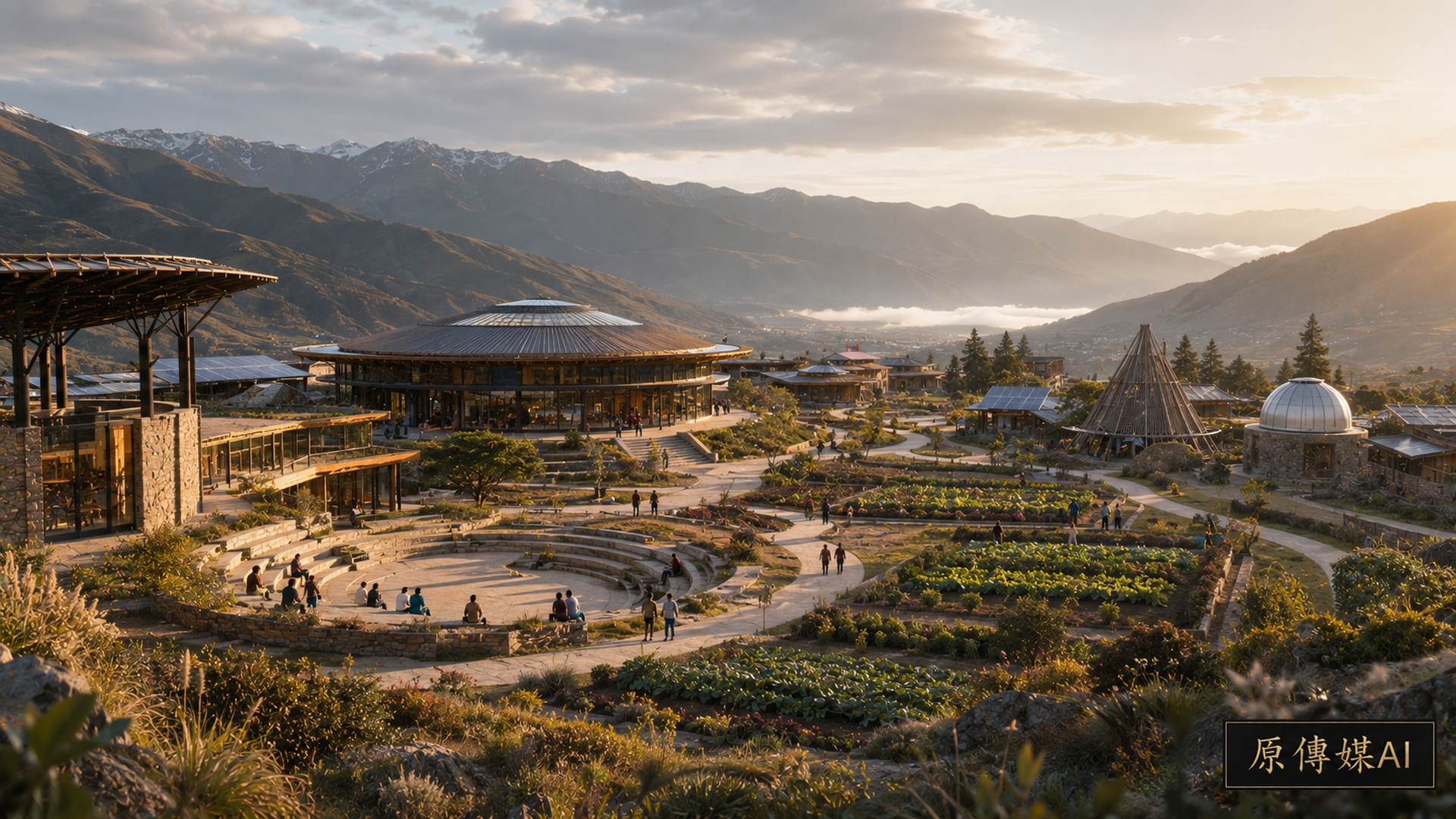
When universities discuss Indigenous education, their first response is often to expand admission quotas, establish dedicated programs, or add a cultural course. These measures matter, but they may still do little more than bring Indigenous students into existing institutions and ask them to adapt to the timelines, languages, authorities, and assessment methods of mainstream knowledge.
The deepest challenge in Indigenous higher education internationally is not “how to get Indigenous people into universities,” but whether universities are willing to redefine knowledge itself.
Wānanga Is Not Simply the Māori Word for “University”
The Te Wānanga o Aotearoa overview describes a learning environment guided by kaupapa Māori values and grounded in whānau, identity, and connection. This is not a conventional university structure decorated with Māori elements. It begins by changing educational purpose, relationships between learners and teachers, responsibilities to community, and definitions of success.
Mainstream universities generally treat a degree as an individual achievement. Wānanga place greater emphasis on transformation shared among learners, families, and communities. Learning serves not only employment, but also language, identity, relationships, and collective futures.
Te Wānanga o Aotearoa’s history also shows that its development is inseparable from the preservation of te reo, tikanga Māori, and locally defined educational needs. It did not emerge from a mainstream university’s diversity initiative; communities created the educational institution themselves.
First Nations University Places Knowledge Keepers at the Institutional Core
The mission of First Nations University of Canada states that the institution bridges ceremony, Knowledge Keepers, languages, traditions, and high-quality education, offering bilingual and bicultural education under First Nations control.
This model challenges the assumption that professors are a university’s only recognized knowledge authorities. Knowledge Keepers, Elders, language holders, and people grounded in community experience are not confined to guest lectures; they can contribute to courses, research, and student support.
The FNUniv overview further emphasizes that it is an Indigenous-owned and Indigenous-governed higher education institution. Governance is itself part of the educational substance: students encounter not only discussion of Indigenous knowledge, but Indigenous Peoples exercising leadership over a knowledge institution.
UAIIN Redefines Time and Learning
Colombia’s Universidad Autónoma Indígena Intercultural (UAIIN) draws its educational principles from multiple Indigenous cosmologies, emphasizing unity, culture, autonomy, communal life, and the “cultivation of wisdom and knowledge.”
UAIIN does not describe time only through semesters, credits, and year levels. It also understands time through the organized rhythms, vibrations, and movements of the earth. The difference is consequential: while mainstream universities divide learning into schedules and deadlines, UAIIN situates it within community life, local rhythms, and collective plans.
This is not opposition to modern science but a refusal to let modern universities become the only format for knowledge.
Epistemic Differences Are More Than “Different Perspectives”
Epistemic differences in education are often reduced to a matter of multicultural perspective. In reality, they can run much deeper:
Mainstream science often privileges knowledge that is repeatable and detachable from context; Indigenous knowledge may place greater weight on relationships, responsibilities, place, history, and practice. Mainstream education often separates knowledge from the knower, while Indigenous cosmologies may understand knowledge as inseparable from land, ancestors, plants, animals, and ethics.
A mainstream course may ask, “What do you know?” Indigenous education may also ask, “How did you come to know it? To whom are you accountable? What consequences will follow from its use?”
These are not merely differences in textbook content; they are differences in epistemological and ethical structure.
“Inclusion” at Mainstream Universities Can Leave Existing Power Intact
Research in the UNESCO IESALC journal on higher education in Colombia argues that Indigenous students face barriers not only to admission, but also through the exclusion of their knowledge, curricular structures, and institutional epistemic injustice. If universities expand quotas without changing curricula or structures of authority, “inclusion” may simply demand that students work harder to adapt.
This is what gives Indigenous universities a different significance. They are not remedial programs within a mainstream system, but experiments in building different institutions of higher education.
Teacher Qualifications Also Need Rethinking
Mainstream universities recognize teachers through degrees, publications, and academic rank. Indigenous education may also value cultural responsibility, language proficiency, long practice, community trust, and a demonstrated responsibility for transmitting knowledge.
This does not mean that every Elder automatically becomes a professor, or that academic standards do not matter. The question is whether current standards recognize only one kind of intellectual formation. If a knowledge holder spends fifty years learning about medicinal plants, ceremony, the stars, or traditional law, but can be credited only as an “interviewee” because they do not hold a PhD, the institution itself is epistemically biased.
The challenge for Indigenous universities is to build systems capable of recognizing both academic research credentials and qualifications grounded in community knowledge.
Curriculum Should Not Just Place Culture in Humanities Colleges
Indigenous cosmologies do not necessarily divide culture, nature, medicine, agriculture, law, and astronomy into such sharply separated fields. If universities discuss Indigenous Peoples only in literature, history, or art courses, they continue to exclude traditional knowledge from science and professional education.
A genuinely comprehensive university should make room for Indigenous knowledge in agriculture, forestry, fisheries, medicine, psychology, architecture, engineering, astronomy, law, public governance, and AI, instead of repeatedly reducing it to motifs, dress, and festivals.
This is precisely the kind of institutional space that Two-Eyed Seeing requires.
Assessment Should Not Only Test Individual Memory
Mainstream universities tend to favor individual examinations, essays, and standardized answers. Indigenous courses may place greater value on collaborative work, oral presentation, practice, local service, sustaining relationships, and long-term responsibility.
If students acquire a body of knowledge but cannot explain it to their community, observe the rules governing its use, or help address local problems, high marks do not necessarily demonstrate meaningful learning.
Indigenous universities do not lower standards; they change what counts as successful completion.
Does Taiwan Need a Comprehensive Indigenous University?
Taiwan already has Indigenous-focused departments, research centers, and dedicated programs, but it still lacks a comprehensive institution of higher education governed by Indigenous epistemologies. Any future discussion of an Indigenous university should ask not only about location, enrollment, and budget, but also:
Who will govern it? Which knowledge holders will be recognized as teachers? How will Indigenous languages enter professional curricula? How will agriculture, forestry, fisheries, medicine, astronomy, psychology, and engineering be brought together in course design? How will restricted knowledge be protected? How will students’ learning benefit communities?
These questions are far more difficult than hanging up a sign that reads “Indigenous University.”
If Universities Do Not Change, Difference Merely Enters the Same Machine
The value of Indigenous higher education lies not in building a campus as a cultural showcase, but in compelling higher education to rethink knowledge, time, teachers, students, community, and their relationships with the world.
Wānanga, FNUniv, and UAIIN take different institutional forms and cannot simply be replicated in Taiwan. Together, however, they remind us that Indigenous education is not about moving another culture into a classroom. It begins by recognizing that classrooms themselves carry a culture, and that the timelines, assessments, and authorities of mainstream universities are not laws of nature.
When universities are willing to change themselves, epistemic differences cease to be merely “perspectives” accorded polite respect in textbooks. They become forces capable of reshaping institutions.
A Comprehensive University Must Allow Knowledge to Cross Disciplinary Boundaries
If Taiwan establishes a comprehensive Indigenous university, the easiest path to failure would be to reproduce existing departmental structures and confine Indigenous content to a college of culture. Genuine institutional innovation would bring agriculture, forestry, fisheries, traditional medicine, psychology, law, engineering, astronomy, digital technology, and languages into shared curriculum design. A mountain-health course, for example, could address plant classification, soil, ecology, family knowledge, harvesting ethics, and chemical analysis together. A course on dreams and psychology could place neuroscience, narrative, care, and cultural interpretation alongside one another.
Faculty appointments should use parallel tracks rather than treating one form of qualification as inherently superior. Academic researchers should receive training in local context and preparation for co-teaching. Knowledge holders should receive formal posts, compensation, and decision-making authority on the strength of long practice, language, community trust, and responsibilities of transmission—not remain unpaid guests indefinitely. Quality assurance can examine academic method, language use, community feedback, local service, and whether knowledge is used appropriately. Only such an institution can avoid feeding Indigenous students into another mainstream machine. It can instead create an educational system in which different cosmologies jointly shape professional fields and remain accountable to communities and the wider public.
AI use and content-safety disclosure
This article was assisted by AI for data organization, structural drafting, and sentence polishing. Human editors set the viewpoint and fact-checking direction