Forests Are Not Safe Just Because They're Banned From Burning: How Indigenous Cultural Fire Use Rewrites Wildfire Science
Original Chinese title: 森林不是「不准燒」就安全:原住民族文化用火如何改寫野火科學
Drawing on Indigenous cultural fire practices from Karuk and Noongar peoples, this article discusses low-intensity fire, landscape mosaics, biodiversity, and blind spots in modern wildfire management.
Two-Eyed Seeing Lab
Consultant: 高德生|Tsou ceremonial ecology.
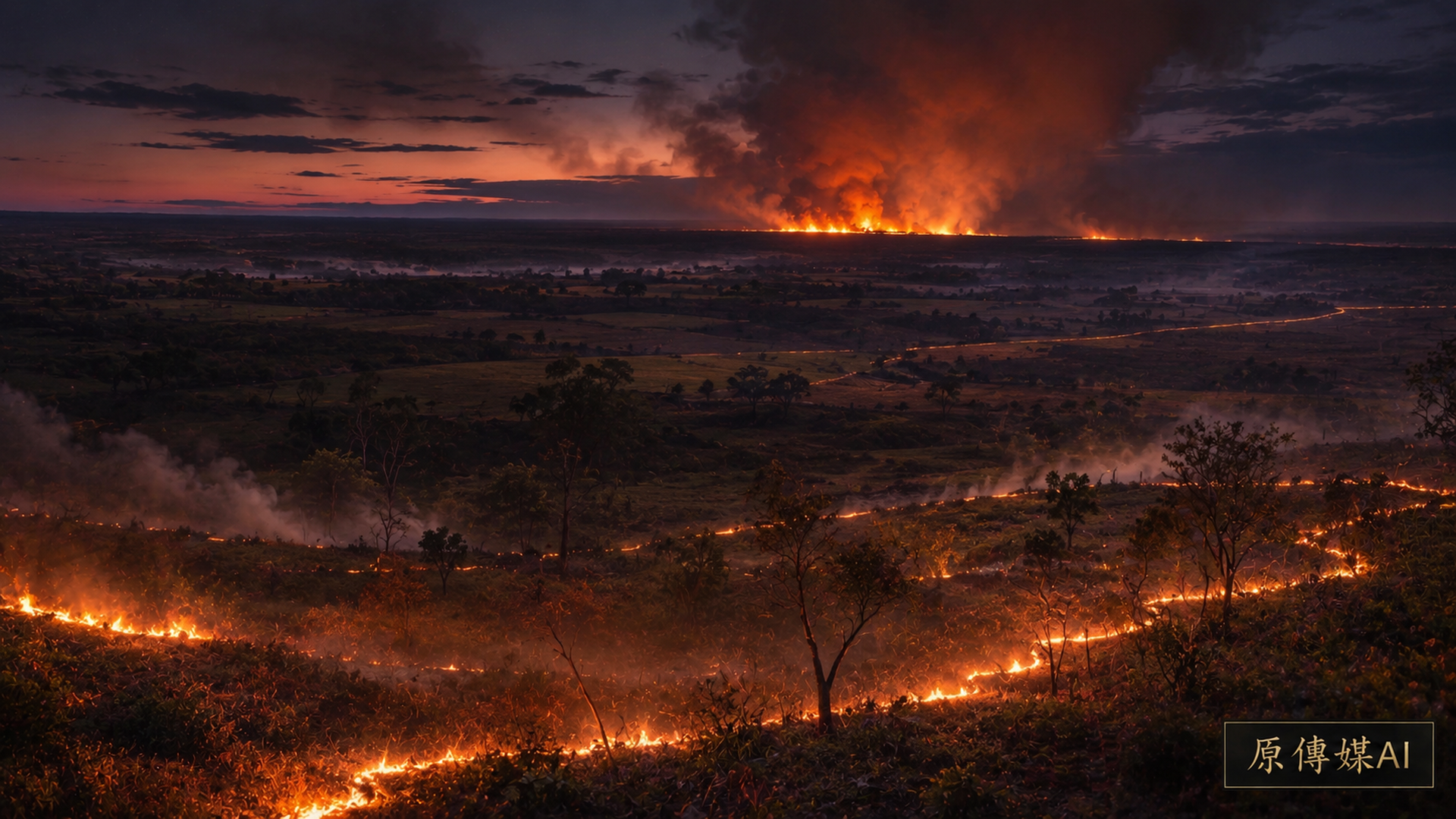
When people talk about forest fire use, their first reaction is often 'dangerous', 'destructive', 'must be banned immediately'. This response is understandable: extreme wildfire imagery around the globe has become increasingly shocking year after year, and no one wants to see forests and homes turned into black wounds. But the problem lies in how modern systems too frequently treat all fire as a single thing: uncontrolled wildfires, deliberate arson, agricultural slash-and-burn, cultural burning, fuel management—all flattened into a blanket 'fire is bad' category. As a result, many places believe they are reducing risk while actually pushing landscapes toward more dangerous accumulation states.
Cultural Burning Is Not 'Setting the Forest on Fire'
The core of Indigenous cultural burning has never been about burning large areas indiscriminately; it involves low-intensity, low-flame-height, spatially fine-grained fire use conducted at very specific times, under particular humidity and wind conditions, targeting specific vegetation and purposes. Objectives may include maintaining harvestable plants, improving hunting visibility, promoting certain habitats, reducing fuel accumulation, protecting corridors, sustaining cultural landscapes, or ensuring that some species persist across different post-fire stages.
Ecological Applications study on Karuk Aboriginal Territory indicates that cultural burning and lightning strikes together shaped the local historical fire regime. Researchers did not rely solely on oral narratives; they analyzed fire scars, vegetation patterns, and landscape features to quantify relationships between different fire frequencies and resource availability. This research is crucial because it demonstrates that Indigenous fire governance is not an abstract belief system but a management technology directly linked to landscape structure, biological resources, and long-term risk.
Fire Bans Often Turn Landscapes into Giant Powder Kegs
Many countries' modern forestry policies emerged during colonial periods, with the core logic being that fire should be controlled by the state and civilian burning ideally disappear. While this system has historical context, its side effects are pronounced: when all small fires are suppressed, ground fuels, dead branches, shrubs, and even-aged stands continuously accumulate. Landscapes once maintained by low-frequency, small-scale, predictable fire behavior can transform into catastrophic events ignited by a single spark.
Modern news often blames climate change entirely for worsening wildfire seasons; this is partially correct but incomplete. Ignoring how landscapes have been managed over time distorts analysis. Fire is not determined solely by weather—it is shaped by fuel continuity, aspect, historical use, vegetation composition, and human institutions. Removing fire from landscapes altogether may appear neutral but often functions as deferring the problem.
Noongar and Other Cases Remind Us: Fire Use Is Place-Specific
The Anthropocene Review article on Noongar fire knowledge reminds us that cultural burning is not a one-size-fits-all template; it is finely tuned according to season, soil type, vegetation, and community objectives. This means the most common mistake outsiders make is seeing Indigenous cultural burning as important and immediately trying to replicate a universal solution. In reality, fire regimes vary enormously across regions—there is no single 'ancestral mountain-burning' global standard.
Studies from southern India and other areas show that colonial and modern fire bans often excluded local communities from their traditional fire governance roles, leading to disconnection between state management and place-based knowledge. When communities can no longer actively manage small-scale fuels and governments cannot cover every forest patch long-term, the result is worse risk bills under extreme climate conditions.
Science Is Not the Enemy of Cultural Burning—Unless It Becomes a Translation Machine
Two-Eyed Seeing in fire governance presents high complexity because fire involves safety responsibility, regulations, insurance, air pollution, land jurisdiction, and ecological consequences. Therefore, for cultural burning to collaborate effectively with modern wildfire science, it cannot simply translate local knowledge into a few combustion parameters and claim integration is complete. Good collaboration must include: jointly defining objectives, co-designing experiments, monitoring post-fire effects together, deciding which knowledge remains open versus culturally protected, and recognizing that some fire governance knowledge is inherently cultural and ethical practice rather than merely technical guidance.
Modern fire behavior models excel at simulating wind speed, humidity, slope, and fuel characteristics; Indigenous knowledge often attends more sensitively to plant life histories, harvest needs, animal habitats, and long-term landscape rhythms. Integrating both into a single research framework can avoid two extremes: blind faith in tradition or blind faith in models. Mature governance must simultaneously acknowledge risk, purpose, and place-specificity.
Cultural Burning Is Also a Biodiversity Issue
When discussing fire, people often focus solely on disaster aspects; however, for many ecosystems the issue is not merely whether fire occurs but how its scale, frequency, and seasonality have changed. Certain plants require post-fire germination, some open habitats depend on periodic low-intensity burning, and certain harvest resources peak in abundance at specific post-fire ages. If a landscape long-term only experiences 'never burn' or 'extreme wildfire', biodiversity may actually be compressed.
This is why cultural burning cannot be reduced to disaster mitigation techniques; it simultaneously manages food systems, plant relationships, animal habitats, and cultural landscapes. Modern institutions that only recall fire governance after disasters have typically arrived too late.
Taiwan Can Learn Methods Without Rushing to Copy Answers
Taiwan's mountainous wildfire types, forest composition, regulations, and Indigenous community histories differ from North America and Australia; therefore there is no need to immediately call for restoring traditional burning upon hearing about cultural fire use. What truly merits learning are research and governance methods: how to identify fuel conditions across different aspects, forest types, and seasons; how to co-define with local knowledge holders which plants, habitats, and harvest needs relate to fire; how to conduct small-scale experiments within safety boundaries rather than creating misunderstandings in media discourse.
Taiwan does not need slogans but precise fire ecology research, community dialogue, and risk negotiation. This is far more difficult than writing cultural burning as tourism copy, yet also far more authentic.
Forests Are Not Safe Just Because They're Banned From Burning
What we most urgently need to let go of is the seemingly obvious statement: 'not burning is best'. For certain landscapes, true safety actually comes from being moderately burned at low intensity and fine scale; the real danger lies in all fire being suppressed until it finally erupts catastrophically. The importance of Indigenous cultural burning does not stem from romantic tradition but because it treats fire as a tool requiring knowledge, ethics, and responsibility.
Fire can destroy forests or help them breathe. The key is not fire itself but who uses it, when, at what scale, and for what purpose. When modern wildfire science genuinely dialogues with local knowledge on this point, disaster resilience will no longer be merely another name for firefighting budgets.
Supplementary Observation: Cultural Burning Cannot Be Reduced to a Single Technique
Cultural burning may use similar tools as general fuel reduction but is not the same thing. The former typically connects specific lands, seasonal judgments, species relationships, responsibility divisions, and intergenerational transmission; if governance agencies only extract 'low-intensity ignition' actions, they may superficially adopt methods while excluding those who originally determine timing and purpose. Collaborative design must simultaneously discuss ecological objectives, cultural responsibilities, and regulatory authorization—not treat knowledge holders merely as labor.
Effectiveness evaluation should not focus solely on burned area or fire frequency. More meaningful indicators include whether fuels form mosaic patterns at multiple scales, how target species and harvest resources change, whether smoke exposure can be controlled, whether communities genuinely participate in decision-making, and whether plans establish sustainable training and responsibility systems. These outcomes require multi-year observation and cannot be proven by a single demonstration event or fire season.
When borrowing across regions, the most important thing is preserving stop conditions: vegetation types, slope, monsoon patterns, drought regimes, land rights, and firefighting systems differ, altering fire risk and feasibility. If Taiwan wishes to study related practices, it should first have local communities, fire ecologists, firefighting agencies, and land management authorities jointly define small-scale experiments, monitoring methods, and emergency termination procedures before deciding which experiences can be compared. Such caution does not deny cultural burning but avoids turning it into another placeless policy slogan.
Sources retained from the Chinese original
AI use and content-safety disclosure
This article was assisted by AI in data organization, structural drafting, and sentence polishing; editorial verification set the direction of viewpoint and fact-checking