The Brain Ages Unevenly: Precision fMRI Finds the Language Network More Preserved Than Executive-Control Networks
Original Chinese title: 大腦老了,語言系統卻可能沒有跟著老:精準 fMRI 發現「語言網路」比執行功能更耐時間
A Nature Communications precision-fMRI study comparing 64 older adults with 483 younger adults found clear age-related differences in the Multiple Demand network while the language-selective network preserved its topography, lateralization, selectivity, and within-network connectivity.
Lawrence Lee
Lawrence Lee | Scholar at the University of Leeds in the United Kingdom and Yuan Media AI science-and-nature writer focused on how humans observe and record difficult-to-reach worlds.
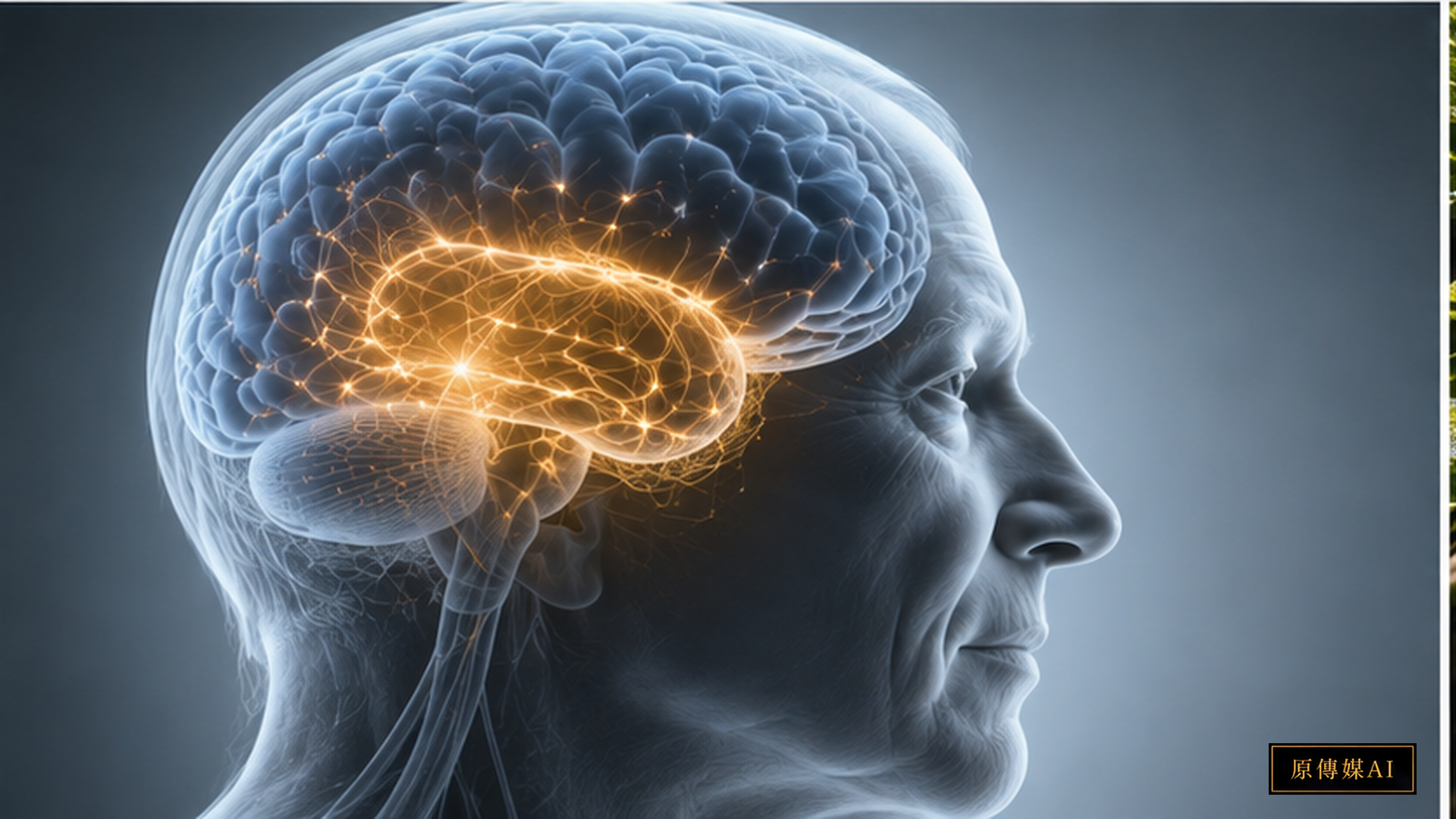
Aging Does Not Pull Every Function Down Together
Healthy aging is often described as a single downward curve, but everyday experience already suggests that different abilities change at different rates. A Nature Communications study published on August 24, 2026 used precision fMRI to compare 64 older adults with 483 younger adults. The researchers individually localized a language-selective network and the Multiple Demand network, which supports attention, working memory, and cognitive control. The two systems showed strikingly different age-related patterns.
What Exactly Is Preserved in the Language Network?
In the older group, the language network remained similar to that of younger adults across several neural measures: overall topography, regional location, left-hemisphere lateralization, response strength and selectivity during language-comprehension tasks, and functional connectivity within the network. This does not mean that every language behavior is immune to aging. It means that a core neural architecture supporting language comprehension appears to remain relatively stable in healthy older adults.
The Multiple Demand Network Follows a Different Trajectory
The domain-general Multiple Demand network showed a different picture. Older adults had weaker and less spatially extensive task responses, greater variability in activation topography, and reduced within-network functional connectivity. Those findings are more consistent with age-related changes often observed in processing speed, working-memory demands, and attentional control. The important point is not that one brain region is simply “stronger.” Aging appears to affect functional networks selectively rather than uniformly.
Why Precision fMRI Matters
Traditional group-average brain imaging overlays many participants, even though functional regions do not occupy exactly the same coordinates in every person. Precision fMRI uses individual functional localizers to identify each participant’s language and Multiple Demand regions before comparing responses. That reduces the risk that a group looks weaker merely because its functional areas are less perfectly aligned. The method therefore strengthens the argument that observed differences reflect function rather than only spatial averaging artifacts.
Do Not Turn This into “Older People’s Language Never Declines”
The study focuses on healthy aging and primarily on language comprehension. It does not establish that naming, word retrieval, speech production, reading speed, or every form of complex communication remains unchanged. It also cannot be extended directly to stroke, Alzheimer’s disease, other dementias, or neurodegenerative disorders. Individual variation remains substantial. Brain imaging can reveal population-level tendencies, but it cannot replace clinical assessment or justify diagnosing one person from a group-average pattern.
Everyday Observation Can Reshape the Laboratory Question
Family members and community care workers often distinguish between temporarily failing to retrieve a word and failing to understand a conversation. They also see abilities that standardized tests may underrepresent: comprehension of familiar stories, humor, metaphor, a familiar language, or socially meaningful narratives. Those observations can reshape laboratory questions by reminding researchers that “language” is not one score. The strongest two-way exchange, in the spirit of Two-Eyed Seeing, lets precise neural measurement and real-world functional observation correct each other.
Older-Adult Services Should Not Call Every Change Cognitive Decline
If different brain networks age at different rates, public services should not reduce every older adult to one “cognitive function” score. A person may become slower at rapid task switching or complex multitasking while retaining sophisticated language comprehension, narrative ability, and social knowledge. Interfaces, medical communication, and public information can use preserved abilities rather than simplifying everything merely because of chronological age. Functional design should respond to specific demands, not stereotypes.
The Most Important Question Is How Differences Accumulate
Future work should follow how age, education, bilingual experience, hearing, social interaction, and health influence language-network resilience. Cross-sectional comparisons are informative, but longitudinal data are needed to understand change within the same individuals. The most useful direction in aging science may not be to locate one universal “aging center,” but to understand why some networks remain stable, why others change, and whether everyday environments allow preserved abilities to continue being used.
Turning a Research Result into a Publicly Verifiable Question
Any new study entering public discussion should keep direct evidence separate from mechanism and policy inference. Neuroimaging results can be reanalyzed and replicated, while explanations for why one network is more resilient require broader samples and longitudinal evidence. For Taiwan, the most responsible translation into practice is not to label older adults as having preserved or impaired language from age alone, but to build services that are testable, traceable, and responsive to individual function. Uncertainty is part of the evidence, not a flaw to hide.
Preserved Language Does Not Mean Every Conversation Feels Equally Easy
Language comprehension is not the only process involved in real conversation. Hearing, attention, working memory, vision, social inference, and contextual judgment can all contribute. In a noisy clinic, a crowded station, or a fast-changing digital interface, changes in executive-control or sensory systems may make communication difficult even when the core language network remains stable. Older-adult-friendly design therefore involves reducing unnecessary time pressure and competing information, not merely enlarging text or simplifying vocabulary.
Individualized Neuroimaging Also Warns Us Not to Worship the Average
Group research is powerful, but an “average aging brain” is not an individual destiny. Some people retain strong executive function late in life; others change earlier. Language performance also interacts with education, occupation, reading habits, bilingual experience, hearing, and health. Precision fMRI acknowledges individual differences in functional anatomy before making group comparisons. Public policy can learn from the same logic: chronological age should not be used as a crude proxy for ability when functional needs can be assessed more directly.
Language May Be a Resource for Resilience
If language comprehension remains relatively robust, language itself may become a resource in service design. Clear narratives, familiar vocabulary, text that can be reread, and context-rich spoken explanations may sometimes be more helpful than reducing every message to a few icons. Preserving linguistic richness can support autonomy and dignity. The finding also sharpens clinical vigilance: a sudden or substantial language-comprehension change should not automatically be dismissed as normal aging simply because the person is older.
More Languages and Cultural Contexts Still Need to Be Studied
Much language-neuroscience research still concentrates on particular languages, literacy traditions, and research populations. Bilingualism, multilingualism, education, writing systems, and cultural experience may influence how people use and compensate within language networks. If language-network resilience is to be treated as a broad feature of healthy aging, future research needs more cross-linguistic, cross-cultural, and longitudinal evidence. Public services likewise should preserve language choice and familiar communicative contexts rather than generalizing from one-language laboratory tasks.
Preserved Ability Still Needs an Environment That Lets It Work
A preserved ability can still be suppressed by a badly designed environment. An older adult may understand complex language well but struggle when information disappears quickly from a screen, when announcements compete with background noise, or when a task requires simultaneous navigation through several interfaces. Age-friendly communication should reduce unnecessary attentional competition and time pressure so that stable language comprehension can actually be used. The goal is not to make every message simpler; it is to make the conditions for understanding more reliable.
Main References
AI use and content-safety disclosure
This article was organized and reviewed through the Yuan Media AI editorial process. AI-assisted translation was used with human editorial responsibility for factual accuracy and source fidelity.