Were Neanderthals Really Cut into Climate Islands? New Models Find Their Habitats Remained Connected Before Extinction
Original Chinese title: 尼安德塔人不是被氣候切成「孤島」?最新模型反而發現,滅絕前的棲地仍然連得起來
A Communications Earth & Environment study published on 25 August 2026 finds no large-scale increase in climate-driven habitat fragmentation before Neanderthal extinction. A June Nature ancient-DNA study likewise points to substantial connectivity among late northwestern European Neanderthals.
陳錦瑜
陳錦瑜 | Professor at National Taiwan University of Science and Technology; teaches courses on chatbots and cultural exploration, with a focus on cultural interpretation, diversity, the UN SDGs, global citizenship, and sustainable partnerships.
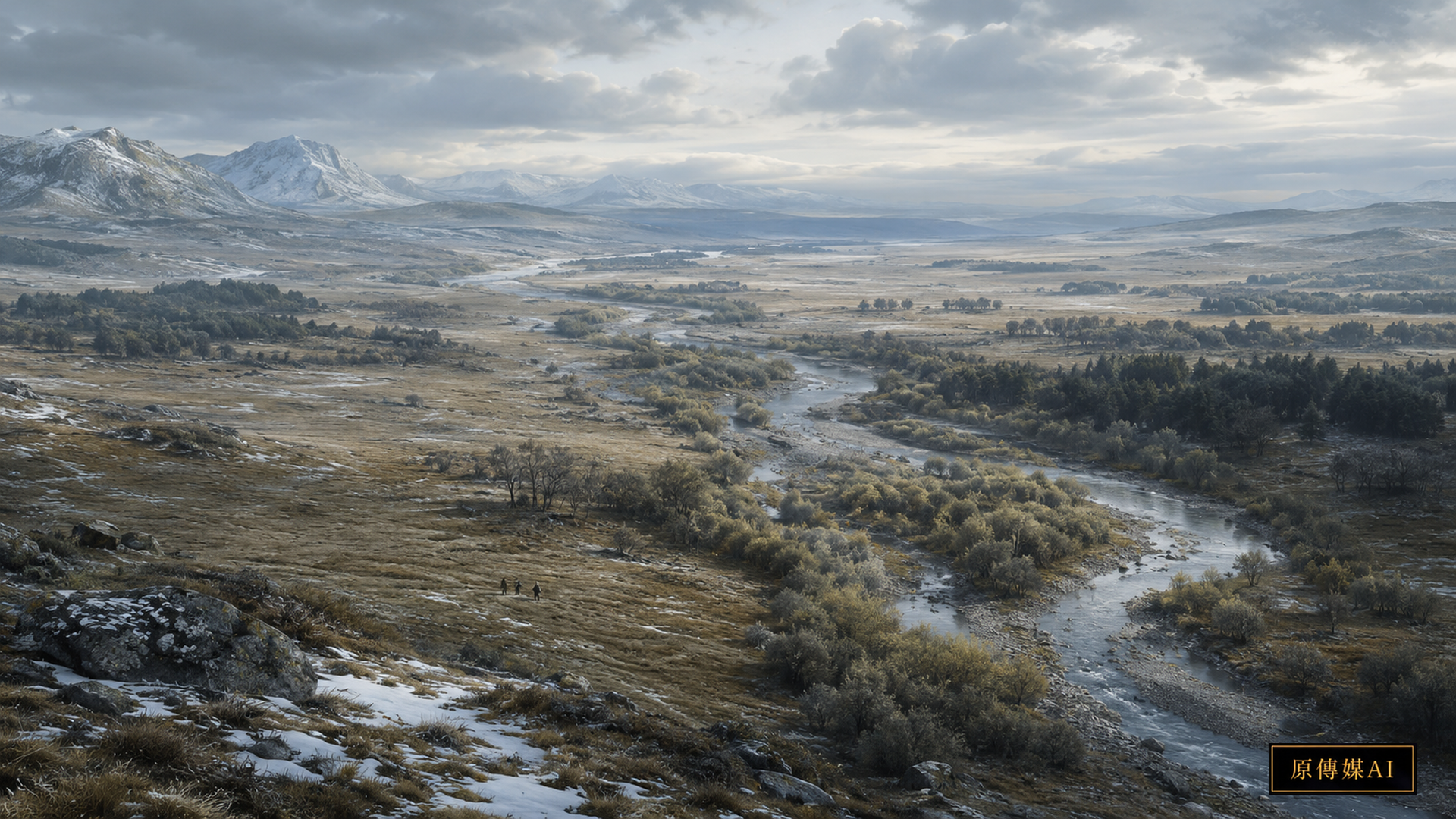
An extinction story that was too tidy is losing support
“Climate deterioration fragmented Neanderthal habitat into islands; populations became isolated, declined, and finally disappeared.” It is an appealing narrative because it compresses a complex history more than forty thousand years old into a clean causal chain. A study published in *Communications Earth & Environment* on 25 August 2026 directly tests one of its crucial links: before Neanderthals vanished, did the landscapes suitable for them actually become more fragmented and harder to move through?
The research team combined high-resolution palaeoenvironmental data with ensemble species-distribution models, reconstructing conditions from roughly 130,000 years ago through about 40,000 years ago. Suitable habitat did decline to some degree toward Marine Isotope Stage 3, but the simulations did not show a corresponding large-scale collapse in connectivity, rise in landscape resistance, or fragmentation of the habitat network. In some regions, connectivity even increased and major dispersal corridors remained available.
That does not mean climate had no influence on Neanderthals. The narrower claim that loses support is this: at the scale and resolution tested by these models, the study did not find progressively worsening, climate-driven habitat fragmentation immediately before extinction.
Less area does not automatically mean a broken network
This distinction is the technical heart of the paper. The total amount of suitable habitat can shrink while the remaining areas stay connected. Conversely, a large total area can be divided into isolated patches by mountains, glaciers, dry zones, or other barriers. If an extinction mechanism depends on isolation, it is not enough to map habitat suitability; researchers also need connectivity, landscape resistance, and plausible dispersal pathways.
The study finds that core habitat in western Europe and several important coastal areas remained comparatively stable across multiple time slices. It does not reveal a single “final moment” when the whole network suddenly broke apart. Treating Late Pleistocene climate variability as equivalent to populations being cut into isolated islands is therefore not supported by this analysis.
Ancient DNA from June raises a similar question from a different evidence stream
A *Nature* study published in June 2026 analysed 27 Neanderthal individuals from ten archaeological sites in Belgium and France dating to within roughly the last 52,500 years, including a high-coverage genome from a Goyet individual around 45,000 years old. The results suggest that late Neanderthals in northwestern Europe lived in small groups but were not necessarily closed genetic islands. The study did not identify the strong close-kin signal seen in some Altai Neanderthals, nor a simple trend of genetic load worsening through time.
More importantly, the data are consistent with meaningful regional connectivity. This is not the same kind of evidence as a habitat model: one asks whether a landscape *could* remain connected, while the other uses genomes to infer whether populations *were* connected. Neither alone proves the cause of extinction, but when both fail to support a final phase of total isolation, the simplest fragmentation story needs to be downgraded.
Suitable habitat in a model is not the same thing as a place people actually lived
Species-distribution models are widely used in modern ecology by relating known occurrences to environmental variables and then estimating suitability elsewhere. In deep-time human research, the biases are larger. Archaeological sites are shaped by preservation, sedimentation, erosion, cave geography, research history, and excavation effort. “No site” can mean no preservation, no discovery, or no excavation—not necessarily no people.
The NeanderEDGE project at Aarhus University emphasizes this problem: presence and absence should not be treated one-to-one as evidence of adaptive success or failure. Behaviour, technology, mobility, and local archaeological context need to be brought into the model. A model formalizes environmental constraints; it is not a census of people living forty thousand years ago.
Time resolution can change the story we think we are seeing
Palaeoclimate models usually divide very long periods into representative time slices. Archaeological dates can carry uncertainties of hundreds or thousands of years, while ancient DNA comes from a small number of unusually well-preserved individuals. If a demographic collapse occurred over only a few centuries, coarse time slices could miss it. A corridor usable only in a particular season could also disappear inside annual averages.
The safest reading of the new result is therefore “no evidence for a large-scale, steadily intensifying fragmentation signal,” not “every region remained continuously open.” That qualification matters because scientific progress often does not replace one old answer with one new answer; it breaks apart a causal chain that no longer has enough support.
If habitat fragmentation is not the whole explanation, what returns to the table?
The authors argue that the results fit scenarios that give more attention to ecological and demographic processes and to interactions with expanding *Homo sapiens*. Several mechanisms remain plausible: small populations are more vulnerable to local shocks; prey and resource structures may have changed; human groups may have differed in technology, social networks, and demographic replenishment; and the arrival of modern humans in Europe may have produced competition, replacement, coexistence, or complex contact.
But weakening the evidence for “climate fragmentation” does not mean “therefore *Homo sapiens* killed them” automatically wins. Eliminating one simple mechanism does not prove another. The June ancient-DNA study also did not detect recent modern-human gene flow in this particular set of late northwestern European Neanderthals, reminding us that contact between populations was uneven in time and space.
The three evidence streams should challenge one another, not merely endorse one another
Good palaeoanthropology allows models, archaeology, and genetics to create problems for each other. If a model says a region remained suitable, archaeologists can ask whether sites are actually present and whether absence reflects preservation bias or an overly permissive model. If ancient DNA indicates connectivity, models can ask where and when routes were physically available. Behavioural archaeology can add another challenge: geographic connection does not guarantee social interaction, so did people actually exchange stone, technology, or partners?
This approach is more realistic than searching for a single “cause of extinction.” Neanderthals occupied enormous parts of Eurasia over hundreds of thousands of years. Different regions may have experienced different final processes. Public narratives should allow multiple local processes to converge into species disappearance instead of replacing one unique culprit with another every few years.
Two-Eyed Seeing in deep-time research means admitting that landscapes contain more than climate variables
Neanderthals left no living traditional knowledge system that can speak directly to us, so present-day Indigenous knowledge must not be projected back forty thousand years as if it were direct evidence. What can be borrowed is a methodological lesson. Contemporary Indigenous landscape knowledge often reminds researchers that land usability is not a simple function of annual temperature and vegetation class; it also involves seasonality, routes, timing of resources, risk, and social rules. That insight can improve the questions asked by palaeoanthropological models without becoming evidence about Neanderthal behaviour itself.
Two-Eyed Seeing here is an epistemic discipline: scientific models acknowledge which dimensions of lived landscapes they abstract away, while contemporary local knowledge is not mislabelled as evidence from deep time. Together they teach us not to equate “environmentally suitable” with “a place in which people could actually make a life.”
There is also a lesson for today’s climate debate
This study cannot be used to claim that climate change does not cause extinction. Habitat fragmentation remains a major biodiversity risk today under different species, rates of change, and human pressures. What the Neanderthal study demonstrates is methodological: when we propose a causal chain, we should measure the intermediate mechanism instead of merely observing that climate changed and a species later disappeared.
For Neanderthals, one proposed intermediate mechanism is connectivity. The new study does not find that connectivity collapsing dramatically before extinction. The story becomes less tidy, but the evidence chain becomes more reliable.
The truth of extinction may be a network still missing nodes rather than a final full stop
The most defensible conclusion today is layered. Habitat models indicate that broad-scale corridors persisted; ancient DNA indicates connectivity and diversity in at least some late northwestern European populations; archaeology continues to fill in behaviour and local context. More direct dates, genomes from more regions, and palaeoenvironmental models with finer temporal resolution may alter the picture again.
Neanderthals have not been “brought back” by this paper, and climate has not been cleared of every possible role by one model. What has been challenged is our preference for a simple story.
Sources retained from the Chinese original
AI use and content-safety disclosure
This article was organized and reviewed through the Yuan Media AI editorial process. AI-assisted translation was used with human editorial responsibility for factual accuracy and source fidelity.