Why Asian–African Rice Crosses Often Become Sterile—and Why a Gene Finding Does Not Choose a Crop for Farmers
Original Chinese title: 亞洲稻和非洲稻跨洲雜交,為什麼常卡在「不育」?Science 找到稻米基因組裡的三方「毒素—解毒」衝突
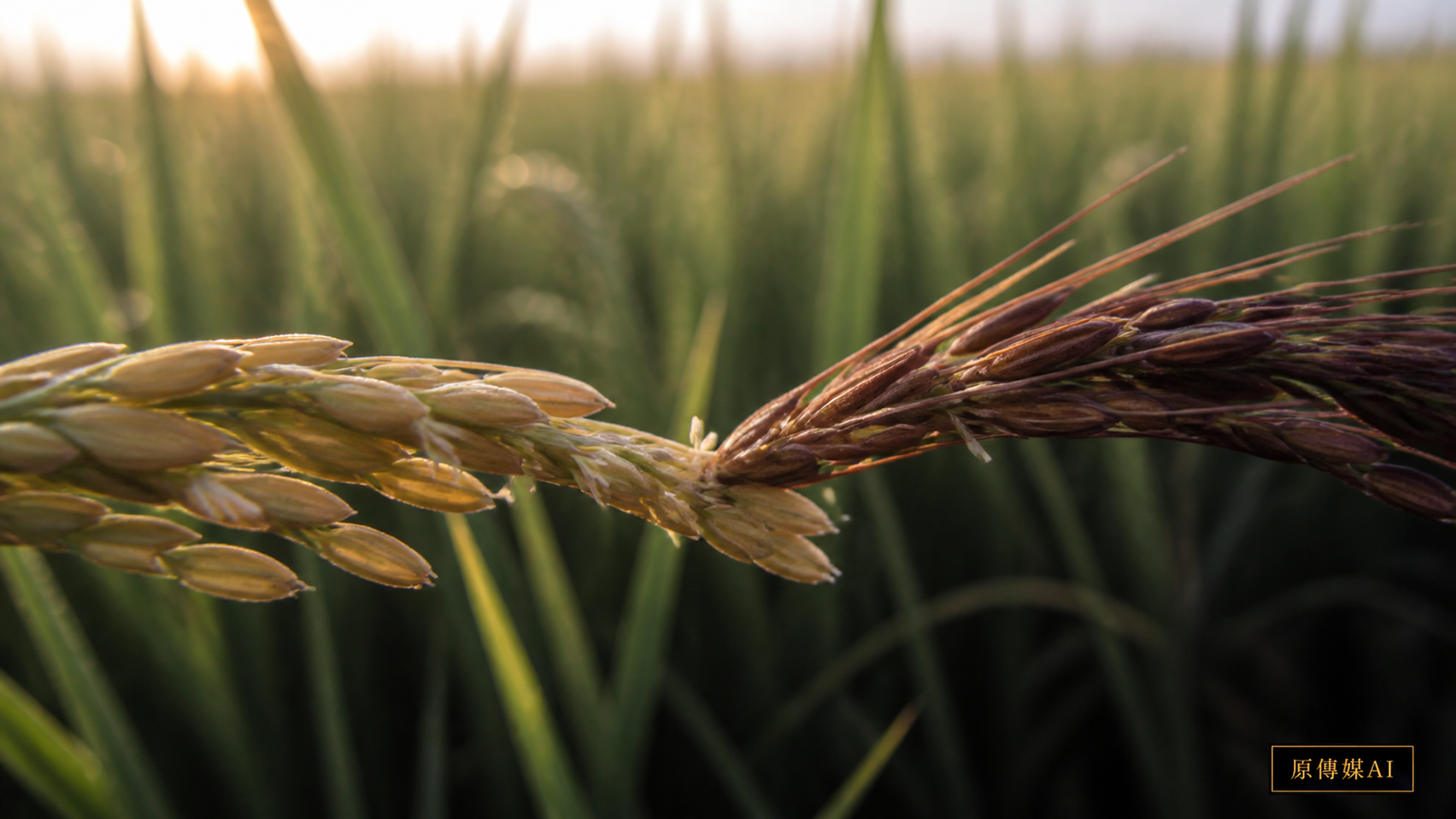
A Science study identifies a tripartite genetic conflict involved in sterility between Asian and African rice. It expands a breeding pathway, but farmer evaluation, seed systems and local food preferences still decide the value of a resulting line.
鄭淑禎
鄭淑禎 | Full-time Assistant Professor, Shih Chien University | Focuses on industrial transformation, agricultural value chains, local economies and the application of technology.
What the Evidence Actually Shows
This section keeps the central finding in proportion. A Science study identifies RHS3 as a tripartite toxin–antidote genetic conflict associated with hybrid sterility between Asian rice and African rice; AfricaRice’s NERICA history shows that crossing barriers were only one part of a longer participatory selection process. It is useful because it gives practitioners and readers a concrete point to inspect, rather than an invitation to assume that a single study, fund, breeding mechanism, monitoring result or cultural account has solved the whole problem. The evidence should travel with its conditions: who or what was studied, where, when, by which method, and which alternatives were not measured. That discipline protects public discussion from turning a carefully bounded result into an all-purpose claim.
The public question is therefore not whether to accept or reject the finding wholesale. It is how to use it responsibly. Taiwan can use the lesson as an order of decisions: clarify biological limits, test across real field conditions, then let growers and users define which trade-offs count as success. A molecular explanation can be turned into a productivity promise, while germplasm stewards and farmer choices are reduced to a source of extractable traits. A Two-Eyed Seeing approach means that technical evidence and the knowledge of people living with the consequences can each change the question, the measurements and the interpretation. Over time, decision makers should Track fertility across backgrounds, yield stability under low-input and extreme conditions, grain quality, seed access, grower preference and whether benefit sharing follows germplasm contributions. The conclusion should be revised when those observations show a different pattern, unequal harm or a condition that the original evidence did not cover.
The Boundary of the Claim
This section keeps the central finding in proportion. A Science study identifies RHS3 as a tripartite toxin–antidote genetic conflict associated with hybrid sterility between Asian rice and African rice; AfricaRice’s NERICA history shows that crossing barriers were only one part of a longer participatory selection process. It is useful because it gives practitioners and readers a concrete point to inspect, rather than an invitation to assume that a single study, fund, breeding mechanism, monitoring result or cultural account has solved the whole problem. The evidence should travel with its conditions: who or what was studied, where, when, by which method, and which alternatives were not measured. That discipline protects public discussion from turning a carefully bounded result into an all-purpose claim.
The public question is therefore not whether to accept or reject the finding wholesale. It is how to use it responsibly. Taiwan can use the lesson as an order of decisions: clarify biological limits, test across real field conditions, then let growers and users define which trade-offs count as success. A molecular explanation can be turned into a productivity promise, while germplasm stewards and farmer choices are reduced to a source of extractable traits. A Two-Eyed Seeing approach means that technical evidence and the knowledge of people living with the consequences can each change the question, the measurements and the interpretation. Over time, decision makers should Track fertility across backgrounds, yield stability under low-input and extreme conditions, grain quality, seed access, grower preference and whether benefit sharing follows germplasm contributions. The conclusion should be revised when those observations show a different pattern, unequal harm or a condition that the original evidence did not cover.
Why the Context Matters
This section keeps the central finding in proportion. A Science study identifies RHS3 as a tripartite toxin–antidote genetic conflict associated with hybrid sterility between Asian rice and African rice; AfricaRice’s NERICA history shows that crossing barriers were only one part of a longer participatory selection process. It is useful because it gives practitioners and readers a concrete point to inspect, rather than an invitation to assume that a single study, fund, breeding mechanism, monitoring result or cultural account has solved the whole problem. The evidence should travel with its conditions: who or what was studied, where, when, by which method, and which alternatives were not measured. That discipline protects public discussion from turning a carefully bounded result into an all-purpose claim.
The public question is therefore not whether to accept or reject the finding wholesale. It is how to use it responsibly. Taiwan can use the lesson as an order of decisions: clarify biological limits, test across real field conditions, then let growers and users define which trade-offs count as success. A molecular explanation can be turned into a productivity promise, while germplasm stewards and farmer choices are reduced to a source of extractable traits. A Two-Eyed Seeing approach means that technical evidence and the knowledge of people living with the consequences can each change the question, the measurements and the interpretation. Over time, decision makers should Track fertility across backgrounds, yield stability under low-input and extreme conditions, grain quality, seed access, grower preference and whether benefit sharing follows germplasm contributions. The conclusion should be revised when those observations show a different pattern, unequal harm or a condition that the original evidence did not cover.
A Decision Cannot Be Reduced to One Metric
This section keeps the central finding in proportion. A Science study identifies RHS3 as a tripartite toxin–antidote genetic conflict associated with hybrid sterility between Asian rice and African rice; AfricaRice’s NERICA history shows that crossing barriers were only one part of a longer participatory selection process. It is useful because it gives practitioners and readers a concrete point to inspect, rather than an invitation to assume that a single study, fund, breeding mechanism, monitoring result or cultural account has solved the whole problem. The evidence should travel with its conditions: who or what was studied, where, when, by which method, and which alternatives were not measured. That discipline protects public discussion from turning a carefully bounded result into an all-purpose claim.
The public question is therefore not whether to accept or reject the finding wholesale. It is how to use it responsibly. Taiwan can use the lesson as an order of decisions: clarify biological limits, test across real field conditions, then let growers and users define which trade-offs count as success. A molecular explanation can be turned into a productivity promise, while germplasm stewards and farmer choices are reduced to a source of extractable traits. A Two-Eyed Seeing approach means that technical evidence and the knowledge of people living with the consequences can each change the question, the measurements and the interpretation. Over time, decision makers should Track fertility across backgrounds, yield stability under low-input and extreme conditions, grain quality, seed access, grower preference and whether benefit sharing follows germplasm contributions. The conclusion should be revised when those observations show a different pattern, unequal harm or a condition that the original evidence did not cover.
The People Whose Knowledge Changes the Work
This section keeps the central finding in proportion. A Science study identifies RHS3 as a tripartite toxin–antidote genetic conflict associated with hybrid sterility between Asian rice and African rice; AfricaRice’s NERICA history shows that crossing barriers were only one part of a longer participatory selection process. It is useful because it gives practitioners and readers a concrete point to inspect, rather than an invitation to assume that a single study, fund, breeding mechanism, monitoring result or cultural account has solved the whole problem. The evidence should travel with its conditions: who or what was studied, where, when, by which method, and which alternatives were not measured. That discipline protects public discussion from turning a carefully bounded result into an all-purpose claim.
The public question is therefore not whether to accept or reject the finding wholesale. It is how to use it responsibly. Taiwan can use the lesson as an order of decisions: clarify biological limits, test across real field conditions, then let growers and users define which trade-offs count as success. A molecular explanation can be turned into a productivity promise, while germplasm stewards and farmer choices are reduced to a source of extractable traits. A Two-Eyed Seeing approach means that technical evidence and the knowledge of people living with the consequences can each change the question, the measurements and the interpretation. Over time, decision makers should Track fertility across backgrounds, yield stability under low-input and extreme conditions, grain quality, seed access, grower preference and whether benefit sharing follows germplasm contributions. The conclusion should be revised when those observations show a different pattern, unequal harm or a condition that the original evidence did not cover.
What Taiwan Would Need to Test
This section keeps the central finding in proportion. A Science study identifies RHS3 as a tripartite toxin–antidote genetic conflict associated with hybrid sterility between Asian rice and African rice; AfricaRice’s NERICA history shows that crossing barriers were only one part of a longer participatory selection process. It is useful because it gives practitioners and readers a concrete point to inspect, rather than an invitation to assume that a single study, fund, breeding mechanism, monitoring result or cultural account has solved the whole problem. The evidence should travel with its conditions: who or what was studied, where, when, by which method, and which alternatives were not measured. That discipline protects public discussion from turning a carefully bounded result into an all-purpose claim.
The public question is therefore not whether to accept or reject the finding wholesale. It is how to use it responsibly. Taiwan can use the lesson as an order of decisions: clarify biological limits, test across real field conditions, then let growers and users define which trade-offs count as success. A molecular explanation can be turned into a productivity promise, while germplasm stewards and farmer choices are reduced to a source of extractable traits. A Two-Eyed Seeing approach means that technical evidence and the knowledge of people living with the consequences can each change the question, the measurements and the interpretation. Over time, decision makers should Track fertility across backgrounds, yield stability under low-input and extreme conditions, grain quality, seed access, grower preference and whether benefit sharing follows germplasm contributions. The conclusion should be revised when those observations show a different pattern, unequal harm or a condition that the original evidence did not cover.
Ethics, Governance and Fairness
This section keeps the central finding in proportion. A Science study identifies RHS3 as a tripartite toxin–antidote genetic conflict associated with hybrid sterility between Asian rice and African rice; AfricaRice’s NERICA history shows that crossing barriers were only one part of a longer participatory selection process. It is useful because it gives practitioners and readers a concrete point to inspect, rather than an invitation to assume that a single study, fund, breeding mechanism, monitoring result or cultural account has solved the whole problem. The evidence should travel with its conditions: who or what was studied, where, when, by which method, and which alternatives were not measured. That discipline protects public discussion from turning a carefully bounded result into an all-purpose claim.
The public question is therefore not whether to accept or reject the finding wholesale. It is how to use it responsibly. Taiwan can use the lesson as an order of decisions: clarify biological limits, test across real field conditions, then let growers and users define which trade-offs count as success. A molecular explanation can be turned into a productivity promise, while germplasm stewards and farmer choices are reduced to a source of extractable traits. A Two-Eyed Seeing approach means that technical evidence and the knowledge of people living with the consequences can each change the question, the measurements and the interpretation. Over time, decision makers should Track fertility across backgrounds, yield stability under low-input and extreme conditions, grain quality, seed access, grower preference and whether benefit sharing follows germplasm contributions. The conclusion should be revised when those observations show a different pattern, unequal harm or a condition that the original evidence did not cover.
A Practical Path for Public Action
This section keeps the central finding in proportion. A Science study identifies RHS3 as a tripartite toxin–antidote genetic conflict associated with hybrid sterility between Asian rice and African rice; AfricaRice’s NERICA history shows that crossing barriers were only one part of a longer participatory selection process. It is useful because it gives practitioners and readers a concrete point to inspect, rather than an invitation to assume that a single study, fund, breeding mechanism, monitoring result or cultural account has solved the whole problem. The evidence should travel with its conditions: who or what was studied, where, when, by which method, and which alternatives were not measured. That discipline protects public discussion from turning a carefully bounded result into an all-purpose claim.
The public question is therefore not whether to accept or reject the finding wholesale. It is how to use it responsibly. Taiwan can use the lesson as an order of decisions: clarify biological limits, test across real field conditions, then let growers and users define which trade-offs count as success. A molecular explanation can be turned into a productivity promise, while germplasm stewards and farmer choices are reduced to a source of extractable traits. A Two-Eyed Seeing approach means that technical evidence and the knowledge of people living with the consequences can each change the question, the measurements and the interpretation. Over time, decision makers should Track fertility across backgrounds, yield stability under low-input and extreme conditions, grain quality, seed access, grower preference and whether benefit sharing follows germplasm contributions. The conclusion should be revised when those observations show a different pattern, unequal harm or a condition that the original evidence did not cover.
What to Watch Over Time
This section keeps the central finding in proportion. A Science study identifies RHS3 as a tripartite toxin–antidote genetic conflict associated with hybrid sterility between Asian rice and African rice; AfricaRice’s NERICA history shows that crossing barriers were only one part of a longer participatory selection process. It is useful because it gives practitioners and readers a concrete point to inspect, rather than an invitation to assume that a single study, fund, breeding mechanism, monitoring result or cultural account has solved the whole problem. The evidence should travel with its conditions: who or what was studied, where, when, by which method, and which alternatives were not measured. That discipline protects public discussion from turning a carefully bounded result into an all-purpose claim.
The public question is therefore not whether to accept or reject the finding wholesale. It is how to use it responsibly. Taiwan can use the lesson as an order of decisions: clarify biological limits, test across real field conditions, then let growers and users define which trade-offs count as success. A molecular explanation can be turned into a productivity promise, while germplasm stewards and farmer choices are reduced to a source of extractable traits. A Two-Eyed Seeing approach means that technical evidence and the knowledge of people living with the consequences can each change the question, the measurements and the interpretation. Over time, decision makers should Track fertility across backgrounds, yield stability under low-input and extreme conditions, grain quality, seed access, grower preference and whether benefit sharing follows germplasm contributions. The conclusion should be revised when those observations show a different pattern, unequal harm or a condition that the original evidence did not cover.
Sources
This section keeps the central finding in proportion. A Science study identifies RHS3 as a tripartite toxin–antidote genetic conflict associated with hybrid sterility between Asian rice and African rice; AfricaRice’s NERICA history shows that crossing barriers were only one part of a longer participatory selection process. It is useful because it gives practitioners and readers a concrete point to inspect, rather than an invitation to assume that a single study, fund, breeding mechanism, monitoring result or cultural account has solved the whole problem. The evidence should travel with its conditions: who or what was studied, where, when, by which method, and which alternatives were not measured. That discipline protects public discussion from turning a carefully bounded result into an all-purpose claim.
The public question is therefore not whether to accept or reject the finding wholesale. It is how to use it responsibly. Taiwan can use the lesson as an order of decisions: clarify biological limits, test across real field conditions, then let growers and users define which trade-offs count as success. A molecular explanation can be turned into a productivity promise, while germplasm stewards and farmer choices are reduced to a source of extractable traits. A Two-Eyed Seeing approach means that technical evidence and the knowledge of people living with the consequences can each change the question, the measurements and the interpretation. Over time, decision makers should Track fertility across backgrounds, yield stability under low-input and extreme conditions, grain quality, seed access, grower preference and whether benefit sharing follows germplasm contributions. The conclusion should be revised when those observations show a different pattern, unequal harm or a condition that the original evidence did not cover.
AI use and content-safety disclosure
This English translation was prepared with AI assistance for organization, drafting and language editing. Human editorial review remains responsible for viewpoint, factual verification and publication.