When a Storm Arrives, Plastic Is More Than Litter: It May Change How an Intertidal Flat Breathes and Moves Nitrogen
Original Chinese title: 風暴來時,塑膠不只是被沖走的垃圾:它可能改變潮間帶「怎麼呼吸、怎麼排氮」
An in-situ experiment in New Zealand found different post-storm oxygen and nitrogen responses in polyester-containing intertidal sediment. The result does not diagnose every coast, but it shows why pollution and extreme events cannot always be assessed separately.
Lawrence Lee
Lawrence Lee | Yuan Media AI science and nature observer | Writes about deep oceans, space and how people record difficult-to-reach worlds.
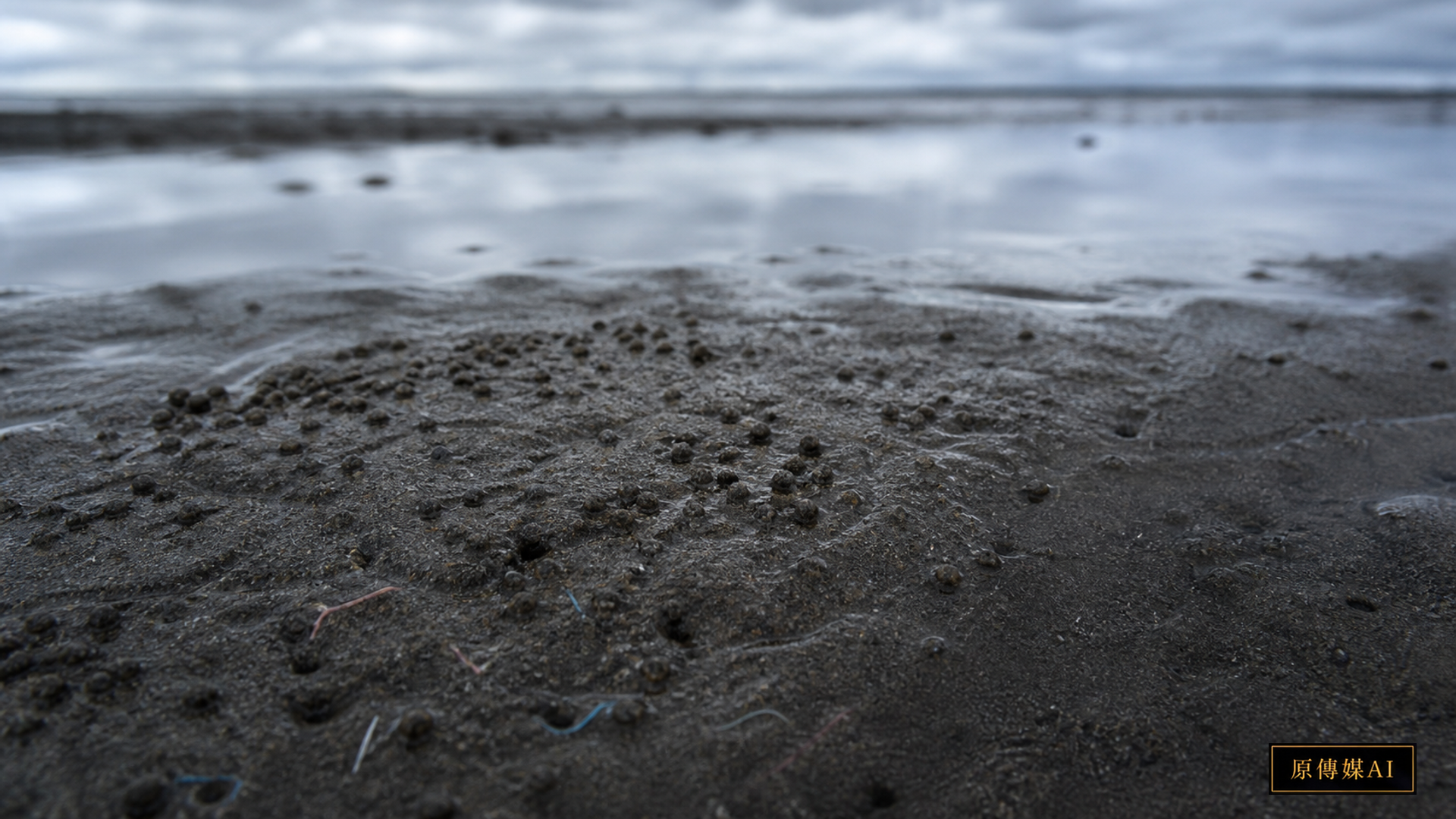
What the Evidence Actually Shows
This section keeps the central finding in proportion. A two-month in-situ experiment at Mahurangi Harbour reported different post-storm oxygen-consumption and nitrogen-cycling responses in sediment containing polyester netting compared with controls. It is useful because it gives practitioners and readers a concrete point to inspect, rather than an invitation to assume that a single study, fund, breeding mechanism, monitoring result or cultural account has solved the whole problem. The evidence should travel with its conditions: who or what was studied, where, when, by which method, and which alternatives were not measured. That discipline protects public discussion from turning a carefully bounded result into an all-purpose claim.
The public question is therefore not whether to accept or reject the finding wholesale. It is how to use it responsibly. Taiwan can begin with event-based monitoring that joins rain and tide records, local observations, sediment sampling and watershed sources rather than counting plastic particles only on calm days. One harbour and one plastic form can be overstated as a verdict on all coasts, while visible cleanup is mistaken for recovery of sediment function. A Two-Eyed Seeing approach means that technical evidence and the knowledge of people living with the consequences can each change the question, the measurements and the interpretation. Over time, decision makers should Track storm timing, plastic form and concentration, oxygen demand, pore-water nutrients, nitrogen fluxes, benthic condition and the duration of recovery. The conclusion should be revised when those observations show a different pattern, unequal harm or a condition that the original evidence did not cover.
The Boundary of the Claim
This section keeps the central finding in proportion. A two-month in-situ experiment at Mahurangi Harbour reported different post-storm oxygen-consumption and nitrogen-cycling responses in sediment containing polyester netting compared with controls. It is useful because it gives practitioners and readers a concrete point to inspect, rather than an invitation to assume that a single study, fund, breeding mechanism, monitoring result or cultural account has solved the whole problem. The evidence should travel with its conditions: who or what was studied, where, when, by which method, and which alternatives were not measured. That discipline protects public discussion from turning a carefully bounded result into an all-purpose claim.
The public question is therefore not whether to accept or reject the finding wholesale. It is how to use it responsibly. Taiwan can begin with event-based monitoring that joins rain and tide records, local observations, sediment sampling and watershed sources rather than counting plastic particles only on calm days. One harbour and one plastic form can be overstated as a verdict on all coasts, while visible cleanup is mistaken for recovery of sediment function. A Two-Eyed Seeing approach means that technical evidence and the knowledge of people living with the consequences can each change the question, the measurements and the interpretation. Over time, decision makers should Track storm timing, plastic form and concentration, oxygen demand, pore-water nutrients, nitrogen fluxes, benthic condition and the duration of recovery. The conclusion should be revised when those observations show a different pattern, unequal harm or a condition that the original evidence did not cover.
Why the Context Matters
This section keeps the central finding in proportion. A two-month in-situ experiment at Mahurangi Harbour reported different post-storm oxygen-consumption and nitrogen-cycling responses in sediment containing polyester netting compared with controls. It is useful because it gives practitioners and readers a concrete point to inspect, rather than an invitation to assume that a single study, fund, breeding mechanism, monitoring result or cultural account has solved the whole problem. The evidence should travel with its conditions: who or what was studied, where, when, by which method, and which alternatives were not measured. That discipline protects public discussion from turning a carefully bounded result into an all-purpose claim.
The public question is therefore not whether to accept or reject the finding wholesale. It is how to use it responsibly. Taiwan can begin with event-based monitoring that joins rain and tide records, local observations, sediment sampling and watershed sources rather than counting plastic particles only on calm days. One harbour and one plastic form can be overstated as a verdict on all coasts, while visible cleanup is mistaken for recovery of sediment function. A Two-Eyed Seeing approach means that technical evidence and the knowledge of people living with the consequences can each change the question, the measurements and the interpretation. Over time, decision makers should Track storm timing, plastic form and concentration, oxygen demand, pore-water nutrients, nitrogen fluxes, benthic condition and the duration of recovery. The conclusion should be revised when those observations show a different pattern, unequal harm or a condition that the original evidence did not cover.
A Decision Cannot Be Reduced to One Metric
This section keeps the central finding in proportion. A two-month in-situ experiment at Mahurangi Harbour reported different post-storm oxygen-consumption and nitrogen-cycling responses in sediment containing polyester netting compared with controls. It is useful because it gives practitioners and readers a concrete point to inspect, rather than an invitation to assume that a single study, fund, breeding mechanism, monitoring result or cultural account has solved the whole problem. The evidence should travel with its conditions: who or what was studied, where, when, by which method, and which alternatives were not measured. That discipline protects public discussion from turning a carefully bounded result into an all-purpose claim.
The public question is therefore not whether to accept or reject the finding wholesale. It is how to use it responsibly. Taiwan can begin with event-based monitoring that joins rain and tide records, local observations, sediment sampling and watershed sources rather than counting plastic particles only on calm days. One harbour and one plastic form can be overstated as a verdict on all coasts, while visible cleanup is mistaken for recovery of sediment function. A Two-Eyed Seeing approach means that technical evidence and the knowledge of people living with the consequences can each change the question, the measurements and the interpretation. Over time, decision makers should Track storm timing, plastic form and concentration, oxygen demand, pore-water nutrients, nitrogen fluxes, benthic condition and the duration of recovery. The conclusion should be revised when those observations show a different pattern, unequal harm or a condition that the original evidence did not cover.
The People Whose Knowledge Changes the Work
This section keeps the central finding in proportion. A two-month in-situ experiment at Mahurangi Harbour reported different post-storm oxygen-consumption and nitrogen-cycling responses in sediment containing polyester netting compared with controls. It is useful because it gives practitioners and readers a concrete point to inspect, rather than an invitation to assume that a single study, fund, breeding mechanism, monitoring result or cultural account has solved the whole problem. The evidence should travel with its conditions: who or what was studied, where, when, by which method, and which alternatives were not measured. That discipline protects public discussion from turning a carefully bounded result into an all-purpose claim.
The public question is therefore not whether to accept or reject the finding wholesale. It is how to use it responsibly. Taiwan can begin with event-based monitoring that joins rain and tide records, local observations, sediment sampling and watershed sources rather than counting plastic particles only on calm days. One harbour and one plastic form can be overstated as a verdict on all coasts, while visible cleanup is mistaken for recovery of sediment function. A Two-Eyed Seeing approach means that technical evidence and the knowledge of people living with the consequences can each change the question, the measurements and the interpretation. Over time, decision makers should Track storm timing, plastic form and concentration, oxygen demand, pore-water nutrients, nitrogen fluxes, benthic condition and the duration of recovery. The conclusion should be revised when those observations show a different pattern, unequal harm or a condition that the original evidence did not cover.
What Taiwan Would Need to Test
This section keeps the central finding in proportion. A two-month in-situ experiment at Mahurangi Harbour reported different post-storm oxygen-consumption and nitrogen-cycling responses in sediment containing polyester netting compared with controls. It is useful because it gives practitioners and readers a concrete point to inspect, rather than an invitation to assume that a single study, fund, breeding mechanism, monitoring result or cultural account has solved the whole problem. The evidence should travel with its conditions: who or what was studied, where, when, by which method, and which alternatives were not measured. That discipline protects public discussion from turning a carefully bounded result into an all-purpose claim.
The public question is therefore not whether to accept or reject the finding wholesale. It is how to use it responsibly. Taiwan can begin with event-based monitoring that joins rain and tide records, local observations, sediment sampling and watershed sources rather than counting plastic particles only on calm days. One harbour and one plastic form can be overstated as a verdict on all coasts, while visible cleanup is mistaken for recovery of sediment function. A Two-Eyed Seeing approach means that technical evidence and the knowledge of people living with the consequences can each change the question, the measurements and the interpretation. Over time, decision makers should Track storm timing, plastic form and concentration, oxygen demand, pore-water nutrients, nitrogen fluxes, benthic condition and the duration of recovery. The conclusion should be revised when those observations show a different pattern, unequal harm or a condition that the original evidence did not cover.
Ethics, Governance and Fairness
This section keeps the central finding in proportion. A two-month in-situ experiment at Mahurangi Harbour reported different post-storm oxygen-consumption and nitrogen-cycling responses in sediment containing polyester netting compared with controls. It is useful because it gives practitioners and readers a concrete point to inspect, rather than an invitation to assume that a single study, fund, breeding mechanism, monitoring result or cultural account has solved the whole problem. The evidence should travel with its conditions: who or what was studied, where, when, by which method, and which alternatives were not measured. That discipline protects public discussion from turning a carefully bounded result into an all-purpose claim.
The public question is therefore not whether to accept or reject the finding wholesale. It is how to use it responsibly. Taiwan can begin with event-based monitoring that joins rain and tide records, local observations, sediment sampling and watershed sources rather than counting plastic particles only on calm days. One harbour and one plastic form can be overstated as a verdict on all coasts, while visible cleanup is mistaken for recovery of sediment function. A Two-Eyed Seeing approach means that technical evidence and the knowledge of people living with the consequences can each change the question, the measurements and the interpretation. Over time, decision makers should Track storm timing, plastic form and concentration, oxygen demand, pore-water nutrients, nitrogen fluxes, benthic condition and the duration of recovery. The conclusion should be revised when those observations show a different pattern, unequal harm or a condition that the original evidence did not cover.
A Practical Path for Public Action
This section keeps the central finding in proportion. A two-month in-situ experiment at Mahurangi Harbour reported different post-storm oxygen-consumption and nitrogen-cycling responses in sediment containing polyester netting compared with controls. It is useful because it gives practitioners and readers a concrete point to inspect, rather than an invitation to assume that a single study, fund, breeding mechanism, monitoring result or cultural account has solved the whole problem. The evidence should travel with its conditions: who or what was studied, where, when, by which method, and which alternatives were not measured. That discipline protects public discussion from turning a carefully bounded result into an all-purpose claim.
The public question is therefore not whether to accept or reject the finding wholesale. It is how to use it responsibly. Taiwan can begin with event-based monitoring that joins rain and tide records, local observations, sediment sampling and watershed sources rather than counting plastic particles only on calm days. One harbour and one plastic form can be overstated as a verdict on all coasts, while visible cleanup is mistaken for recovery of sediment function. A Two-Eyed Seeing approach means that technical evidence and the knowledge of people living with the consequences can each change the question, the measurements and the interpretation. Over time, decision makers should Track storm timing, plastic form and concentration, oxygen demand, pore-water nutrients, nitrogen fluxes, benthic condition and the duration of recovery. The conclusion should be revised when those observations show a different pattern, unequal harm or a condition that the original evidence did not cover.
What to Watch Over Time
This section keeps the central finding in proportion. A two-month in-situ experiment at Mahurangi Harbour reported different post-storm oxygen-consumption and nitrogen-cycling responses in sediment containing polyester netting compared with controls. It is useful because it gives practitioners and readers a concrete point to inspect, rather than an invitation to assume that a single study, fund, breeding mechanism, monitoring result or cultural account has solved the whole problem. The evidence should travel with its conditions: who or what was studied, where, when, by which method, and which alternatives were not measured. That discipline protects public discussion from turning a carefully bounded result into an all-purpose claim.
The public question is therefore not whether to accept or reject the finding wholesale. It is how to use it responsibly. Taiwan can begin with event-based monitoring that joins rain and tide records, local observations, sediment sampling and watershed sources rather than counting plastic particles only on calm days. One harbour and one plastic form can be overstated as a verdict on all coasts, while visible cleanup is mistaken for recovery of sediment function. A Two-Eyed Seeing approach means that technical evidence and the knowledge of people living with the consequences can each change the question, the measurements and the interpretation. Over time, decision makers should Track storm timing, plastic form and concentration, oxygen demand, pore-water nutrients, nitrogen fluxes, benthic condition and the duration of recovery. The conclusion should be revised when those observations show a different pattern, unequal harm or a condition that the original evidence did not cover.
Sources
This section keeps the central finding in proportion. A two-month in-situ experiment at Mahurangi Harbour reported different post-storm oxygen-consumption and nitrogen-cycling responses in sediment containing polyester netting compared with controls. It is useful because it gives practitioners and readers a concrete point to inspect, rather than an invitation to assume that a single study, fund, breeding mechanism, monitoring result or cultural account has solved the whole problem. The evidence should travel with its conditions: who or what was studied, where, when, by which method, and which alternatives were not measured. That discipline protects public discussion from turning a carefully bounded result into an all-purpose claim.
The public question is therefore not whether to accept or reject the finding wholesale. It is how to use it responsibly. Taiwan can begin with event-based monitoring that joins rain and tide records, local observations, sediment sampling and watershed sources rather than counting plastic particles only on calm days. One harbour and one plastic form can be overstated as a verdict on all coasts, while visible cleanup is mistaken for recovery of sediment function. A Two-Eyed Seeing approach means that technical evidence and the knowledge of people living with the consequences can each change the question, the measurements and the interpretation. Over time, decision makers should Track storm timing, plastic form and concentration, oxygen demand, pore-water nutrients, nitrogen fluxes, benthic condition and the duration of recovery. The conclusion should be revised when those observations show a different pattern, unequal harm or a condition that the original evidence did not cover.
AI use and content-safety disclosure
This English translation was prepared with AI assistance for organization, drafting and language editing. Human editorial review remains responsible for viewpoint, factual verification and publication.