Europe’s Bumblebees Are Losing Climatically Suitable Habitat: Pollinator Decline Is Not Only About Pesticides, and Researchers Are Starting to Quantify Climate Change’s Contribution
Original Chinese title: 歐洲熊蜂正在失去「適合居住的氣候」:授粉危機不只剩農藥,研究開始把氣候責任算出來
Research on declining climatic suitability for European bumblebees places pollinator risk in the shared context of climate responsibility, agricultural landscapes and biodiversity monitoring.
Sulangal
Consultant: 莊溪
Sulangal is a Puyuma senior cultural and visual-media practitioner; advisory consultant 莊溪 is associated with plant knowledge and is an Education Dedication Award recipient.
# Europe’s Bumblebees Are Losing Climatically Suitable Habitat: Pollinator Decline Is Not Only About Pesticides, and Researchers Are Starting to Quantify Climate Change’s Contribution
By Sulangal | Puyuma | Senior cultural and visual-media practitioner; Advisory Consultant: 莊溪 | 認識植物 | Education Dedication Award recipient
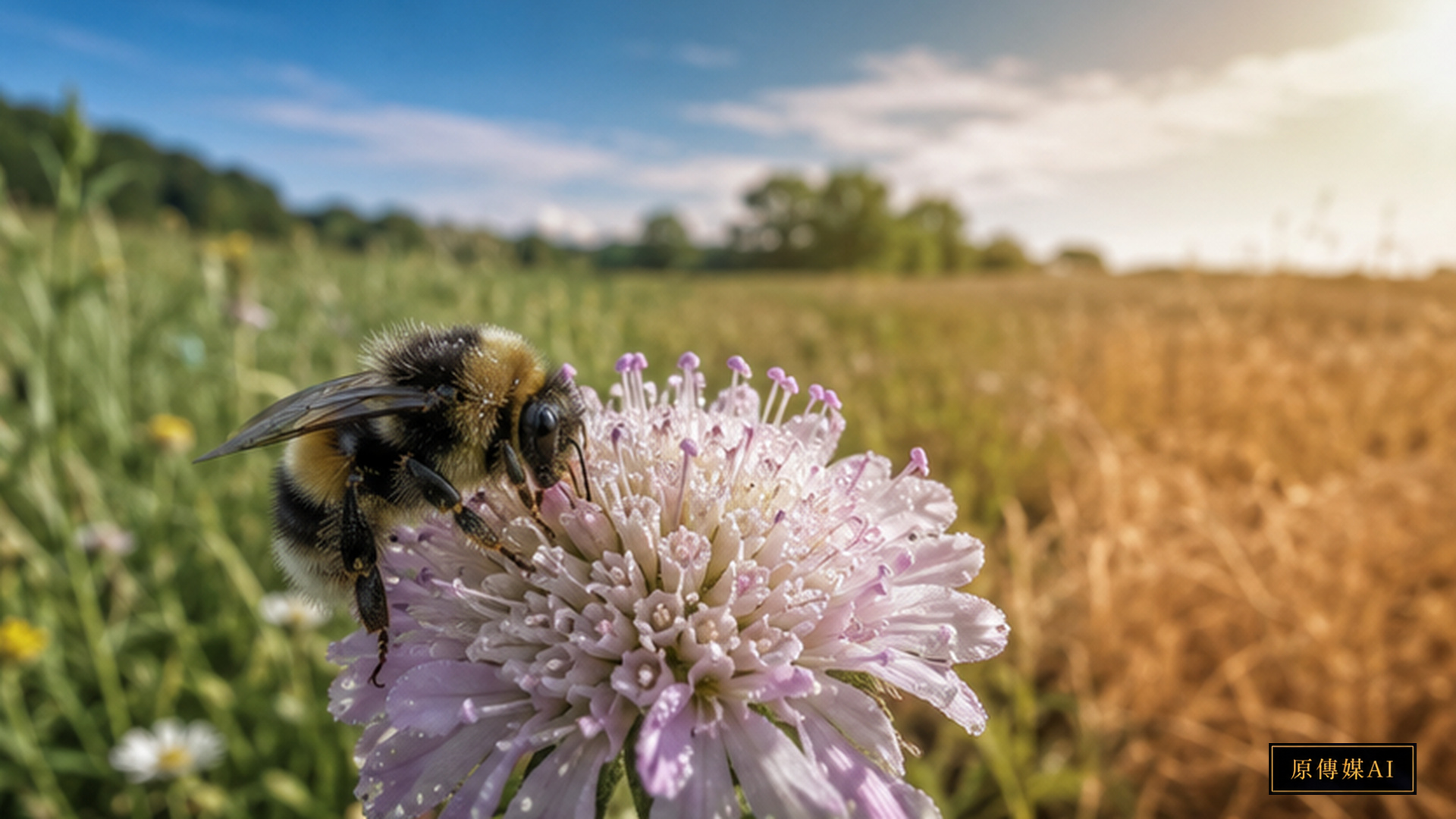
When wild bees and other pollinating insects decline, the first explanations that come to mind are often pesticides, habitat fragmentation and agricultural simplification. Those pressures remain important. A study published in *Nature Climate Change* on 2 September, however, brings another difficult-to-isolate driver into sharper focus: how much has climate change itself made places less suitable for bumblebees? Rather than merely placing a warming trend beside a declining-bee trend, the researchers compared factual and counterfactual climate conditions in order to estimate how the ecological suitability of European bumblebee habitat from 1901 to 2019 might have differed without the same historical influence of human-caused climate change.
The analysis covered 47 European bumblebee species. At the community level, climate change reduced ecological suitability across Europe by about 5 percent on average and by as much as 19 percent locally. Declines were particularly pronounced in southern Europe and central European lowlands. In Alpine and Boreal regions, by contrast, gains at higher elevations partly offset losses elsewhere, leaving smaller net changes in some areas. The most important point is not the number five by itself. It is that attribution methods are becoming capable of estimating the climate contribution separately from other pressures, allowing conservation policy to ask more precise questions about which losses are associated with changing temperature and moisture conditions and which are still driven mainly by land use, pesticides or habitat management.
The easiest mistake is to translate “attributable to climate change” into “bumblebee decline has now been proved to be entirely caused by climate change.” Those statements are not equivalent. Attribution research is not a search for a single culprit. Its purpose is to estimate the marginal contribution of one driver in a real world where many drivers change at the same time. Pesticides, inadequate floral resources, fragmented habitat, disease, management practices and simplified agricultural landscapes do not disappear because of this paper. Climate change can instead compound them: a landscape already short of flowers may cross an ecological threshold more quickly during heat and drought.
A counterfactual climate can be understood through a simplified question. Researchers first estimate whether temperature, precipitation and related climate conditions are suitable for a species under the history that actually occurred. They then construct a simulated world without an equivalent level of anthropogenic climate influence and estimate suitability again. The difference between those worlds is not a diagnosis of why each individual bee died. It is a statistical attribution of large-scale climatic habitat suitability. The strength of this method is that it gets closer to causal reasoning than a simple correlation. Its limitations remain important: it depends on species records, model assumptions and climate data, and ecological suitability is not the same thing as a guaranteed, stable population in the field.
This is precisely why local observation and modelling need to work in both directions. A continental model can span Europe and look back over more than a century, something no single farmer, beekeeper or naturalist can do. Long-term local observers, however, may notice earlier flowering, mismatches between bloom and bumblebee activity, a sudden shortening of floral resources at low elevation, or rapid declines in nest activity after a heatwave. Those observations do not by themselves establish climate causality, but they can identify phenological mismatches and microhabitat differences that models should test. In the other direction, models can help local observers determine whether an anomaly reflects local management or a broader climatic pressure reshaping suitable range.
The policy timing is also significant. The EU Nature Restoration Regulation requires Member States to improve pollinator diversity, reverse population decline by 2030 at the latest and maintain an increasing trend thereafter. In 2025 the European Commission established a standardized, science-based EU Pollinator Monitoring Scheme for annual data collection on pollinator abundance and diversity. Current Commission guidance says Member States should implement the scheme by 16 December 2026. The new research therefore arrives not as an isolated academic finding but during a period in which countries are preparing to track pollinators with more comparable data.
Counting bees alone will not capture every important signal. Useful monitoring should also examine species and functional-group change, shifts across elevation and latitude, synchrony between flowering and visitation, recovery after extreme heat, and the continuity of floral resources across agricultural landscapes. For farming, the relevant risk is not only complete pollinator disappearance. Pollination can become unreliable during the few weeks when a crop actually needs it. A stable annual average can still conceal a heatwave that coincides with crop flowering and sharply reduces pollinator activity.
Adaptation should therefore not be reduced to a choice between “use fewer pesticides” and “plant more flowers.” Reducing chemical pressure, restoring semi-natural habitat and improving floral continuity remain valuable. Under increasing climatic stress, however, landscape design may also need shade, moisture refuges, elevational connectivity, plants with staggered flowering times and places where pollinators can survive heat and drought. The mix will differ by region; a single prescription should not be imposed across Europe.
Researchers should also resist the temptation to hand every remaining uncertainty to a larger AI model. Higher-resolution climate data, long-term monitoring, standardized surveys, museum records and citizen science can all improve attribution, but data gaps have to be made visible. If mountains, private farmland or particular seasons are poorly sampled, a model may mistake a lack of records for an absence of species. More credible attribution will require uncertainty and sampling bias to be reported alongside risk maps.
The reason to revisit the bumblebee crisis today is not that climate change has replaced pesticides as a new universal culprit. It is that scientific methods are becoming better at separating interacting pressures so that causal attribution and response can be more realistic. A 5 percent Europe-wide average tells us climate is already a present ecological pressure; local declines reaching 19 percent tell us averages can hide severe regional impacts. Attribution is not the end of the investigation. Once we know climate is changing the space in which bumblebees can live, the next question is how farming, conservation and local monitoring can jointly preserve places to move, flowers to visit and enough seasonal time to complete a life cycle.
Primary sources
Role-Driven Inquiry
Yuan Media AI | Guided Questions by Role
Select a role first, then review the complete questions from that perspective; clicking a question will display Yuan Media AI’s response in real time.
Select a role
European bumblebee ecology and pollination researcher
Examine the article's evidence, governance boundaries, data rights, and actionable steps from the perspective of a European bumblebee ecology and pollination researcher.
Choose a question
AI use and content-safety disclosure
This English edition is an AI-assisted translation of the Chinese article, reviewed for source parity and evidence boundaries.