Why Are Scientists Rediscovering Crops Once Dismissed as “Backward” in a Changing Climate?
Original Chinese title: 被叫做「落後作物」的食物,為什麼氣候變遷後又被科學家找回來?
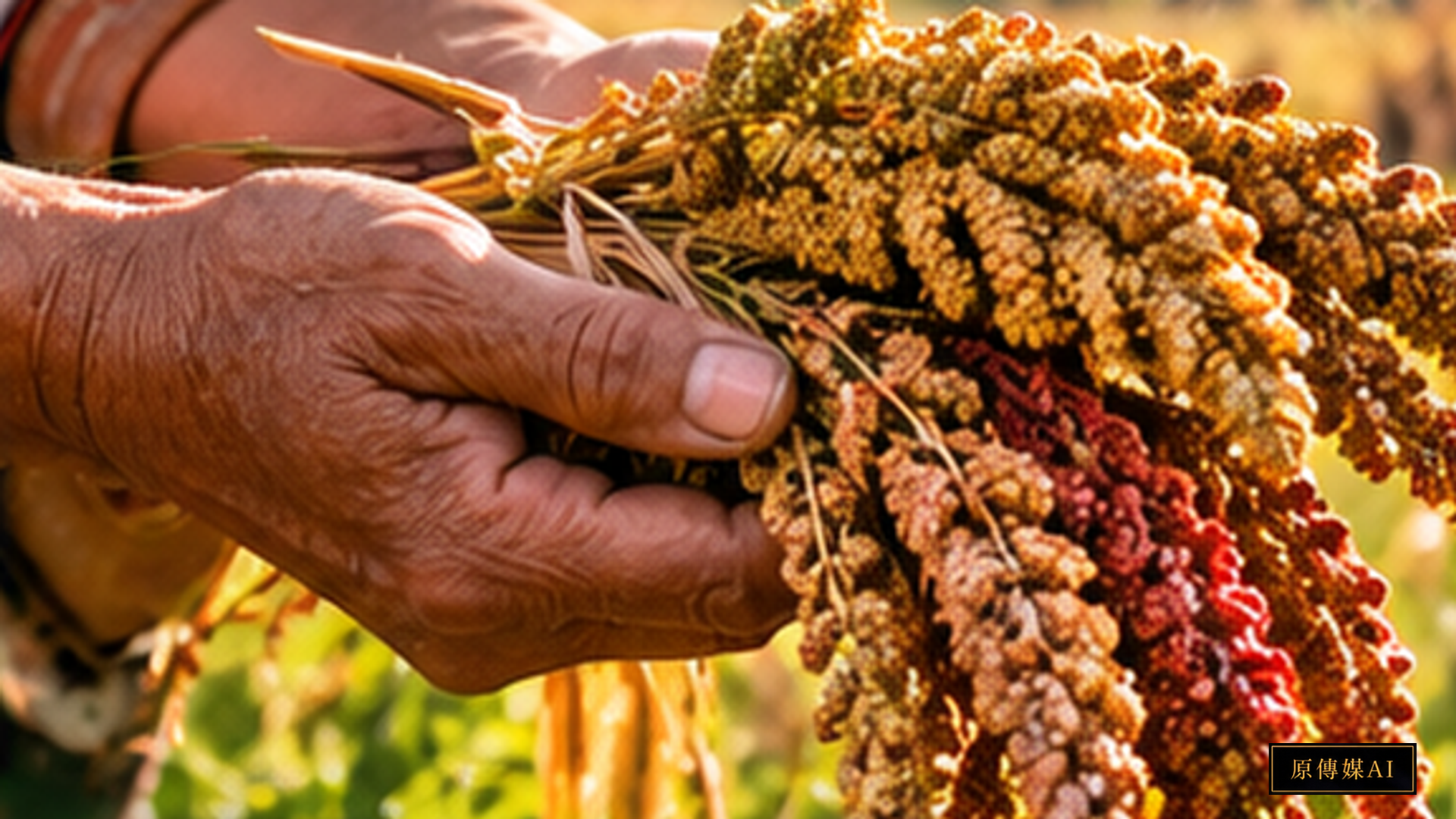
Some crops were marginalized because they yielded less, looked less uniform or did not fit large-scale markets. Under climate pressure, researchers are revisiting whether locally maintained crops may hold forms of resilience that modern systems now need.
鄭淑禎|實踐大學專任助理教授|關注產業轉型、農業價值鏈、地方經濟與科技應用
# Why Are Scientists Rediscovering Crops Once Dismissed as “Backward” in a Changing Climate?
Author: 鄭淑禎|實踐大學專任助理教授|關注產業轉型、農業價值鏈、地方經濟與科技應用
Some crops were marginalized because they yielded less, looked less uniform or did not fit large-scale markets. Under climate pressure, researchers are revisiting whether locally maintained crops may hold forms of resilience that modern systems now need.
Key facts
- A 2026 review links Indigenous Peoples’ food systems with biodiversity, nutrition, sustainability and climate resilience.
- Industrial agriculture often prioritizes yield, uniformity and market efficiency, while local systems may also value drought tolerance, storage, slope, season, mixed cropping and culinary use.
- Farmers may not speak in genetic terminology yet can retain long-term experience about which seeds perform reliably under specific conditions.
- AI can compare farm records, weather histories, soils, satellite imagery and interviews, turning experiential observations into hypotheses for field verification.
Why this matters to ordinary readers
This is not a topic only for specialists. It touches everyday decisions about health, storytelling, food, crops, risk and community responsibility. The goal is not to bury readers in jargon, but to make the underlying question understandable and useful.
Supporting evidence and its limits
FAO’s initiative on indigenous, drought-resilient and nutritious crops considers drought resilience, nutrition, biodiversity and field-to-fork value chains together, using local consultations and field trials to assess crop choices. This adds a practical perspective to food-systems research. The label “indigenous crop” does not guarantee drought tolerance or high returns. Whether a particular variety suits a community in Taiwan still needs to be assessed jointly through local soil and water conditions, cultivation records and community priorities.
Resilience should not be reduced to whether one plant survives drought. A variety may perform reliably on a particular slope, in a particular planting sequence or in mixed cropping, yet still depend on specific storage, cooking, exchange or market arrangements before it can genuinely support a household. Pulling seed away from those conditions and speaking only of “stress-tolerance genes” can hide farmers’ long work of adapting land, labor and food use. Research can test traits, but it cannot decide what kind of harvest is useful to a community.
FAO’s field-to-fork emphasis also shows why crop revival is not achieved simply by planting again. Availability of seed, willingness to grow it, ways to store and cook a harvest, and whether someone will buy it all shape whether a crop remains in everyday life. These questions do not have one technical answer. They need agricultural trials, local markets and community food choices to be discussed together.
What modern science can contribute
Modern science is strong at measurement, comparison and verification. It can test whether a pattern appears repeatedly across places and times, while also showing where evidence is still weak. Yet research only measures what its design includes, so relationships, norms and lived context may still be missed.
Field trials can make a question more precise by comparing emergence, disease, harvest or storage under the same site, season and care conditions. Their results still need to be interpreted with growers. If success is defined only by the heaviest or most uniform produce for a market, it may miss cooking, seed continuity, distribution and risk spreading that a community values. What can be measured is not automatically what matters most, but it can be one piece of evidence for a shared discussion.
Two-Eyed Seeing: two-way knowledge does not make both sides identical
Indigenous traditional knowledge is better described here as accumulated norms, taboos, observations, experiential rules and practices. Two-way knowledge does not force these into the mold of Western science, nor does it ask science to validate culture. It places different ways of forming judgments beside each other so that similarities, differences and unanswered questions become visible.
AI should organize, not judge
AI can index interviews, images, environmental records, public research and historical material. It can help detect patterns in time, place and events. But it should not decide cultural meaning for communities, generalize one person’s account to an entire people, or turn correlation into causation.
Bringing the question back to Indigenous communities in Taiwan
The useful move is not to copy an overseas answer, but to turn it into a local question that can be observed. Do similar patterns appear in different communities? Do elders and younger people notice the same environmental changes? Where do sensor data, public records and lived experience intersect?
For a small-scale effort in an Indigenous community in Taiwan, people can first choose one crop or one cultivation record they are willing to discuss publicly, then decide what to compare: planting time, rainfall, storage performance or whether households actually eat it. Records need not begin as big data. Clear dates, locations, care practices and exceptions already provide material for a group to review in the next season. Whether to expand planting, share seed or publish records remains a community decision.
Here AI is best used for organization rather than selection. It can place field notes from different years, public weather data and interview indexes side by side to identify patterns worth returning to the field to check. It should not announce from a small record that one variety is necessarily better, nor automatically disclose seed origins, gathering sites or restricted knowledge. Data sovereignty and revocable consent are prerequisites for technology to serve growers instead of replacing them.
Preserve how conclusions were formed
If these materials are to be used by future AI systems, the context of each record matters: time, place, speaker, practice, exceptions and source. Preserving this context prevents cultural material from being reduced to decontextualized fragments and helps readers understand how a conclusion was reached.
Moving beyond the international case
The purpose of this feature is not to copy an overseas case into Taiwan and assume it applies unchanged. It is to turn the case into a question that Indigenous readers can understand, discuss and verify locally. A 2026 review links Indigenous Peoples’ food systems with biodiversity, nutrition, sustainability and climate resilience. Industrial agriculture often prioritizes yield, uniformity and market efficiency, while local systems may also value drought tolerance, storage, slope, season, mixed cropping and culinary use. Farmers may not speak in genetic terminology yet can retain long-term experience about which seeds perform reliably under specific conditions. AI can compare farm records, weather histories, soils, satellite imagery and interviews, turning experiential observations into hypotheses for field verification. Future fieldwork or databases should preserve who said what, when, where and under what conditions, so later comparisons remain meaningful.
What this means for Yuan Media AI
Yuan Media AI should not translate every traditional practice into scientific jargon. Its role is to maintain a reading framework that can hold modern research and local experience together. When science provides data, we ask what lived context may have been omitted. When local experience provides a norm or taboo, we ask under what conditions it formed and whether exceptions exist. AI can index and compare; contextual judgment remains human.
Conclusion
Preserving local crops means more than saving a bag of seeds. Seeds often exist together with planting calendars, choices about land, cooking practices, relationships of exchange and family memories. The value of two-way knowledge is to help modern agricultural technology recognize these relationships, rather than retaining only a label that says “ancient variety.”
Main source
- 《食品科學與技術趨勢》|重振原住民族食物系統:特徵、挑戰與政策方向
- 聯合國糧農組織|原生耐旱與營養作物計畫
- Trends in Food Science & Technology, Volume 172, June 2026, 105694; highlights sustainability, biodiversity, nutrition and climate resilience in Indigenous Peoples’ Food Systems.
How general readers can approach this topic
When reading topics that cross cultures and technologies, begin with four questions. First, is the article describing an observation, an association, or evidence of causation? Second, in what environment and relationships did the local experience develop? Third, does modern technology offer better measurement, more data, or simply faster generation? Fourth, if the case is brought into your own community, which aspects can be compared directly and which require new fieldwork? Reading this way helps avoid two extremes. It prevents traditional experience from being dismissed as superstition, while also preventing a similar finding in modern research from being taken to mean that ancestors already knew every scientific principle. Mature two-way knowledge allows questions to be asked of different methods and leaves room for not yet having an answer.
Role-Driven Inquiry
Yuan Media AI | Guided Questions by Role
Select a role first, then review the complete questions from that perspective; clicking a question will display Yuan Media AI’s response in real time.
Select a role
Indigenous community youth and general reader
Examine the article's evidence, governance boundaries, data rights, and actionable steps from the perspective of a Indigenous community youth and general reader.
Choose a question
AI use and content-safety disclosure
This English translation was supplied in the daily feature package and remains subject to editorial review.