Reactivate a Memory Before Sleep and the Dream Can Change: Influencing Dream Content Is Not the Same as Owning the Right to Interpret It
Original Chinese title: 睡前叫醒一段記憶,夢真的會跟著變:9月4日最新實驗碰上 Māori 的 tohu——能影響夢的內容,不等於擁有解釋夢的權力
A September 4, 2026 SLEEP Advances study found that reactivating emotional autobiographical memories before sleep can influence subsequent dream emotion, without proving that dreams automatically regulate emotion or determine their own meaning.
王莉如
Counseling psychology supervisor with a long-standing focus on trauma recovery, couple and family relationships, helping-profession ethics, and social and emotional support.
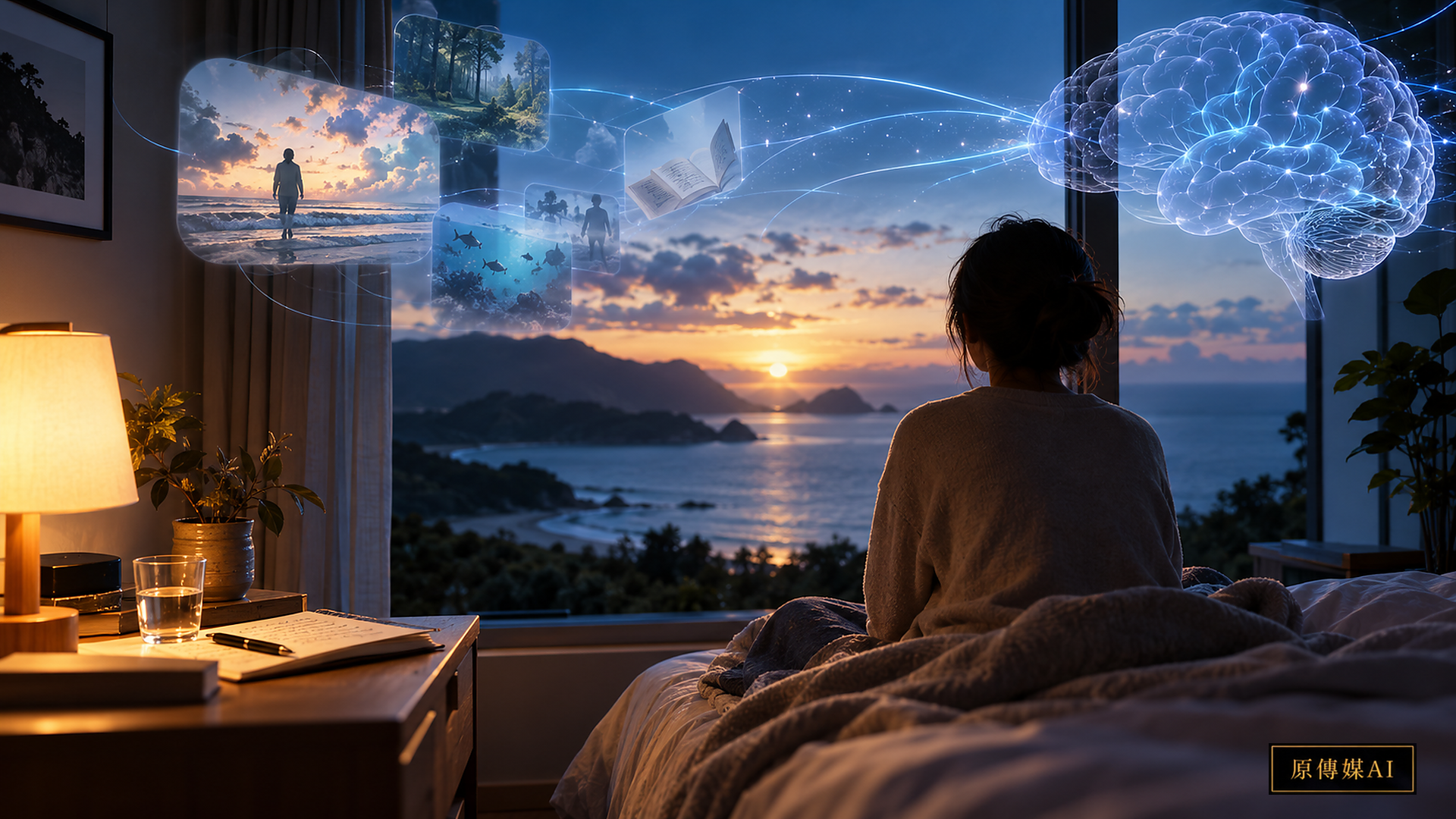
When neuroscience can influence tonight’s dream, what exactly has it gained?
A study published in SLEEP Advances on September 4, 2026 by Henderson S. Holder and Erin J. Wamsley asked participants to reactivate highly emotional autobiographical memories before sleep across three nights. Forty-two participants provided dream reports while sleep was monitored with wrist actigraphy. The emotional valence of the reactivated memories influenced subsequent dream emotion.
That finding can easily become a sensational claim that scientists can “control dreams.” The paper itself is more careful. Negative memories were not significantly more likely than positive memories to be incorporated into dreams, and dreaming about an emotional memory was not associated with an overnight reduction in emotional reactivity. The study supports experimental influence over some dream content and affect. It does not prove that dreams automatically heal trauma, nor that researchers therefore know what a dream means.
This distinction leads to the central question: when neuroscience gains the capacity to influence what a person may dream tonight, are the powers to influence, measure and interpret dreams actually the same power?
Mechanism: what enters the dream?
Dream science has long examined how waking experience is incorporated into dreams. The 2026 experiment is important because it prospectively reactivated a specific remote autobiographical memory before sleep instead of asking participants after waking to guess which past experiences had influenced the dream.
The result strengthens a mechanistic claim: waking-memory activation can alter subsequent dream experience. But the null findings matter just as much. They block an attractive but unsupported story in which negative memory is preferentially processed and dreaming then reduces emotional reactivity.
Scientific progress includes knowing where the evidence stops.
Experience: some dreams continue after waking
In August 2026, Don Kuiken and Ming-Ni Lee published studies on impactful dreams in Frontiers in Psychology. Their work examined nightmares, existential dreams and transcendent dreams and the forms of experience that persist after waking.
For counseling, this shifts attention away from “What does this symbol stand for?” toward “What remains with you after the dream?” Some dreams function less like puzzles with fixed answers and more like living metaphors whose significance continues to unfold.
A therapist therefore does not need to claim symbolic expertise to work responsibly with dreams. The clinically relevant questions may concern sleep disruption, trauma symptoms, emotional carryover, safety, meaning-making and daily functioning.
Meaning and authority: who gets to decide what a dream means?
Māori research introduces another layer. Haami and colleagues interviewed Māori adults from multiple iwi and described themes including tohu or guidance, ako as a space for learning, and tau as stability, calm and direction. Participants located sleep and wairua experiences within relationships, wellbeing and waking life.
The correct scientific reading is precise. The study documents how participants understand and live these experiences. It does not experimentally prove metaphysical travel or a universally verifiable predictive mechanism. Respecting Indigenous knowledge does not require turning cultural accounts into claims the study never made.
The reverse is equally important. Explaining memory incorporation through neuroscience does not give neuroscience the final authority over the cultural meaning of a dream. Mechanism and meaning answer different questions.
Sleep can also be relational
Māori-led work on Moemoeā places sleep within whānau practices, intergenerational knowledge, ritual and care. This challenges the assumption that sleep is only an eight-hour biological event inside one individual.
Clinical sleep advice can still be useful, but it may be incomplete when sleep difficulty is entangled with family responsibilities, cultural disruption, place, grief or community relationships. Two-way knowledge begins by allowing the definition of “healthy sleep” itself to be questioned.
East Asia is not one dream culture
A 2026 Frontiers in Psychology study comparing Chinese, Japanese and U.S. samples found cultural differences in dream structure and self-construal. U.S. dreams more often displayed an active, agentic dream ego, while Chinese and Japanese patterns were more relational in different ways. Crucially, China and Japan were not identical.
That finding is a warning against the crude formula “West equals individualism, East equals collectivism.” No universal dream dictionary can substitute for the dreamer’s own cultural and relational context.
Counseling ethics: assess impact without seizing interpretive ownership
Suppose a client says, “I dreamed of a snake, and an elder in my family says this is not an ordinary dream.” A culturally safe therapist need not immediately declare a psychoanalytic symbol, nor affirm a supernatural explanation as clinical fact. A better opening is: “In your own life, family or cultural world, how is a dream like this usually understood? What did it feel like to you?”
Clinical assessment still matters. Is the dream causing recurrent insomnia? Is it linked to trauma intrusion, psychosis, severe anxiety, self-harm or suicide risk? Cultural respect does not replace risk assessment; risk assessment does not erase cultural authority.
AI and the future of dream influence
The 2026 study is not a commercial dream controller, but the direction is enough to raise governance questions. If future wearables, sound, scent or AI-personalized prompts can more reliably influence dream content, companies may market “creative dreams,” “mood dreams” or therapeutic dream services.
Dream-related data would be unusually intimate. A platform might know which memory was reactivated, what the user reported dreaming, and how mood changed on waking. For Indigenous knowledge governance, some dream narratives may also involve whānau, iwi, ancestors or knowledge that is not meant for unrestricted circulation. Automatic transcription and embedding into AI systems could therefore create a collective-data problem, not merely an individual privacy problem.
Conclusion: the ability to influence a dream is not ownership of the dream
The September 4 experiment is a meaningful scientific advance because it shows that reactivating emotional autobiographical memories before sleep can influence subsequent dream experience. It is equally valuable because it shows what was not demonstrated.
Influencing a dream is an intervention. Measuring it is research. Interpreting it is a matter of personhood, relationship, culture and power. The dream may be over, but its meaning has not yet been decided.
Allow dream accounts to remain unrecorded
A service using dream journals could allow clients to discuss only their feelings on waking or keep the full narrative in their own possession. Agreeing to discuss a dream should not automatically authorize recording, uploading or model training. This is a service-design proposal, not a treatment validated by the dream experiment. Purpose, access, retention and withdrawal should be explained beforehand, with necessary support available even when a person declines digital recording.
Dream data can involve collective authority
Dream narratives may identify relatives or reveal intimate relationships, trauma, religious experience and cultural knowledge. Removing a name may not make such a distinctive account anonymous. An AI service would need explicit rules on access, retention, deletion and secondary use.
Individual agreement may not authorize unrestricted publication of knowledge involving a family or community. Local processing and minimal storage are possible design choices, rather than assuming that every account should enter a large training dataset.
Different disciplines can cooperate while keeping their boundaries
Neuroscience can examine memory reactivation and dream reports. Counseling can explore distress, daily functioning and meaning-making. Cultural knowledge can situate an experience within ancestry, relationships and responsibilities. None of these approaches alone settles all three questions.
Two-Eyed Seeing does not require a single universal interpretation. Experimental questions need appropriate evidence, clinical concerns need professional assessment, and cultural interpretation needs the dreamer's own context and relevant knowledge holders. Cooperation is stronger when those boundaries remain clear.
Yuan Media AI | Continue by role
- Counseling psychology supervisor: How should recurring dreams, nightmares, ancestor dreams and culturally meaningful dreams be differentiated from trauma symptoms, sleep disturbance and psychopathology?
- Māori / Indigenous psychology researcher: Why should tohu, ako, tau and wairua not be flattened into Western dream-symbol categories?
- Sleep / dream neuroscience researcher: What exactly did the September 4 memory-reactivation experiment demonstrate, and why is influencing dreams not the same as proving emotional regulation?
- Chinese / East Asian cultural psychology researcher: What do China-Japan-U.S. differences in dream structure really tell us, and why is “East Asian collectivism” insufficient?
Sources
- Holder & Wamsley|Experimentally Manipulating Dream Content by Reactivating a Remote Emotional Memory
- Kuiken & Lee|From living metaphors in impactful dreams to sublime disquietude and sublime enthrallment
- Haami et al.|Kei te moe te tinana, kei te oho te wairua
- Konakawa et al.|Dream structures in China, Japan, and the United States
- Moemoeā Māori-led sleep intervention|PubMed
- Gunn, Moewaka Barnes & McCreanor|Wairua in the everyday
Role-Driven Inquiry
Yuan Media AI | Guided Questions by Role
Select a role first, then review the complete questions from that perspective; clicking a question will display Yuan Media AI’s response in real time.
Select a role
Counseling psychologist supervisor
Examine the article's evidence, governance boundaries, data rights, and actionable steps from the perspective of a Counseling psychologist supervisor.
Choose a question
AI use and content-safety disclosure
AI-assisted editorial illustration and English text based on the supplied feature package.