Beyond Online Forms: How Local Connectors Support Disability Services in Remote First Nations Communities
Original Chinese title: 偏遠地區不是「把表單搬上網」就叫無障礙:澳洲 NDIS 為什麼用在地 Connector 重做 First Nations 身障服務?
Australia’s NDIS remote framework combines local people, community organisations and continuing visits, showing why an online portal alone cannot establish access to disability support.
劉展瑞|台灣身心障礙人福利促進協會|泰雅族|雙向知識實驗室以原住民族知識、資料主權、文化治理與 AI 應用為核心;共同作者劉展瑞長期關注身心障礙者權益、無障礙公共服務、原住民族社會參與與數位近用
An entry point may still leave services out of reach
Putting an application online can reduce paperwork without necessarily bringing support to a disabled person in a remote community. Reliable connectivity, comprehensible forms, assistance expressing needs and an available provider after approval are separate requirements. Counting accounts and submitted applications can mistake completed administration for the removal of barriers in everyday life.
Australia's NDIS Remote Service Delivery framework offers a useful case. The current page is dated July 16, 2026 and describes place-based provision involving regional teams, regular face-to-face visits and local Connectors. The issue is how eligible people can connect with the system in their communities, with arrangements responsive to local conditions.
Connectors work in two directions
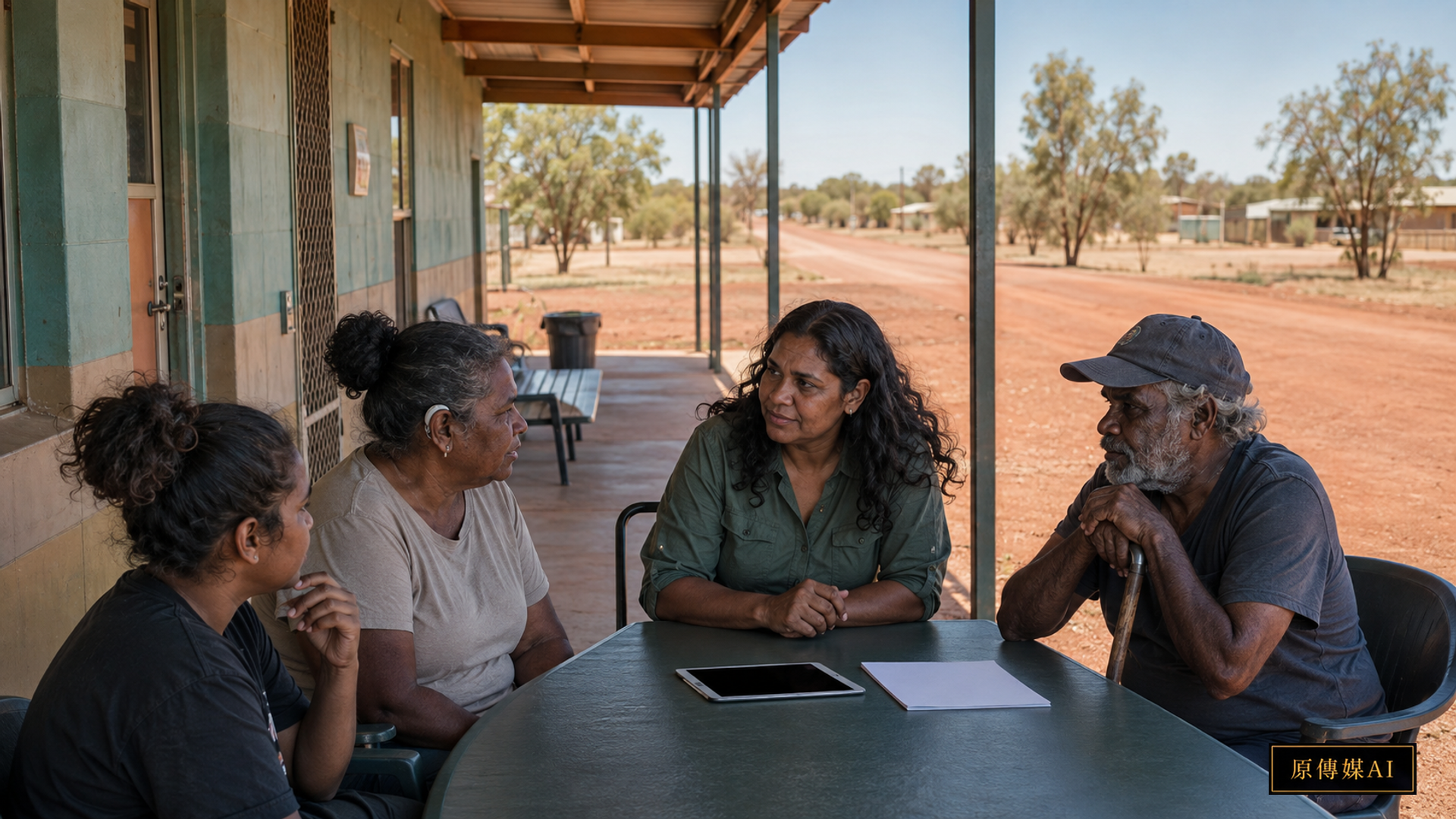
NDIS describes Remote Community Connectors as local people who help residents understand and access the scheme and find appropriate contacts. The framework stresses sustained community relationships, local protocols, cultural safety and informed decisions. Institutional information needs to fit residents' circumstances before it becomes usable.
This article argues that the role can extend beyond reading a form in another language. Connectors may help institutions recognise assumptions about email access, convenient contact hours or the adequacy of one interview. Those observations can improve processes instead of locating every difficulty in residents' supposed lack of ability.
Funding and coverage belong to their reporting year
The Australian government's 2025 Disability Royal Commission progress report records AU$14.5 million for the Remote Community Connectors network, with 38 contracts covering more than 480 communities and an intended expansion to about 575. These are the report's contemporary arrangements and expectations, not a September 7 funding announcement. Planned expansion is not proof that all locations have been reached.
The same document emphasises community leadership, sustained resources and training. Contract numbers describe scale without establishing service quality. Staff turnover, missing transport for visits or failed handovers can leave practical gaps beneath a complete-looking coverage map. Public reporting needs to distinguish commitments, implementation and residents' experiences.
Having used the internet is not independent access
The official Closing the Gap dashboard reports that in 2022–23, 79.8% of Aboriginal and Torres Strait Islander people aged 15 and over in remote areas and 71.7% in very remote areas had used the internet for personal purposes in the previous three months. This measures any such use, not reliable household broadband or independent use of public services.
Digital access can therefore be examined through equipment, connection, understanding and completed support. Someone comfortable with messaging may be unable to open an inaccessible document. Another person may log in without understanding eligibility, or apply without transport to an assessment. Treating all these barriers as a connectivity problem can reduce the response to buying equipment.
Family voices should not replace the person's own
Local relationships can build trust while preserving individual choice. A helper should establish who the person wants present, their preferred communication method and what can be shared with relatives. A family's presence does not justify directing every question to them. Needing additional time to communicate does not diminish a person's preferences.
A suggested approach is to explain the meeting's purpose simply and offer feasible options such as paper, spoken communication or communication aids. Record lack of understanding, indecision and disagreement separately; silence should not automatically mean acceptance. This is a design proposal, not an observation about specific Australian cases or an eligibility judgment under Taiwan's system.
Community workers need institutional support
A Connector familiar with residents cannot absorb every institutional gap. Contact, explanation, accompaniment, referral and follow-up all take time. Personal commitment cannot replace missing assessments or providers. A system that credits tools for success and blames frontline workers for failure will struggle to improve.
Sustainable arrangements need a clear remit, professional backup, handovers and manageable workloads. Cross-agency issues should identify who responds and when. Residents need an alternative contact when a worker is absent or leaves. Support should continue as a dependable service rather than depend on exceptional effort by a few individuals.
AI can organise information without making decisions
Potential starting points for digital tools include organising authorised service information, tracking unanswered requests and drafting simpler explanations. Simplification still needs checking for changes to rights, conditions or deadlines. Eligibility, budgets and personal needs cannot be settled solely through model output. This article proposes boundaries; it does not claim NDIS uses these AI practices.
Shared phones and public spaces make display choices important. Notifications need not expose diagnoses or complete case details, and records should contain necessary information only. People should know who can access data, its purpose and how to correct it. Easier sharing between agencies can impose a new burden if personal control does not increase with it.
Evaluation should follow support through to delivery
A service journey can cover awareness, expressing needs, understanding options, assessment, a decision and actual use of support. Each stage can reveal waiting, withdrawal and failed transfers. Application totals miss people who leave during initial explanations and people approved for support who cannot find a provider.
Feedback should be available without demanding repeated lengthy surveys. People could choose brief spoken responses, anonymous feedback or trusted interviews, with room to criticise without affecting support. Small-community statistics also need care: detailed combinations of disability, age and location may identify someone even without a name.
Where Taiwan's communities might begin
NDIS differs from Taiwan's disability services, so a Connector is not a role to transplant wholesale. The useful question is how local conditions enter process design: how people find the right contact, who coordinates health, social services, transport and education, and whether lasting human support exists alongside digital channels.
A pilot could address one specific difficulty, such as repeated explanations or follow-up after a remote consultation. Define improvement first, then compare costs and experience. Indigenous communities, disabilities and families are diverse; one representative cannot speak for every need. Accessibility should expand feasible choices rather than teach everyone to tolerate one process.
Users ultimately measure the distance to a service
The Connector case illustrates a basic principle: institutions must enter everyday life and remain open to correction by it. Forms, platforms and reminders have value when they improve people's ability to express needs, understand decisions and receive support.
Frontline reports that a rule does not work locally need a responsive channel, and people choosing non-digital access need a viable alternative. Maintaining that two-way correction helps prevent a service that looks close online from remaining distant in a remote household's daily life.
Assign responsibility for handovers
A referral can include confirmation of receipt instead of merely giving someone another telephone number. With the person's agreement, the original contact could check whether the receiving service has the necessary information, can accept the referral and will communicate the next step. Failed handovers should return to a responsible coordinator rather than leave residents to determine which agency is accountable. This requires time and interagency arrangements, not unpaid extra work by frontline staff.
Records should contain only what the handover requires, without copying sensitive details merely to demonstrate activity. Evaluation could compare repeated explanations, unanswered days and actual support received, then ask whether people feel they have more choice. These are proposed improvements, not measured Australian outcomes obtained for this article.
Sources and further reading
Role-Driven Inquiry
Yuan Media AI | Guided Questions by Role
Select a role first, then review the complete questions from that perspective; clicking a question will display Yuan Media AI’s response in real time.
Select a role
First Nations persons with disabilities and families
Examine the article's evidence, governance boundaries, data rights, and actionable steps from the perspective of a First Nations persons with disabilities and families.
Choose a question
AI use and content-safety disclosure
AI-assisted illustration and English translation. Proposed applications are distinguished from documented results.