A Single Raindrop Carries an Electrical Charge: How Water Sliding Over Leaves and Plastics Inspires Novel Corrosion-Resistant Engineering for Vehicles, Bridges, and Vessels
Original Chinese title: 一滴雨也帶著電:滑過葉面與塑膠的水滴,如何啟發車橋船舶的新防蝕設計?
Controlled experiments demonstrate that water droplets sliding over certain surfaces can acquire electric charge and damage protective dielectric films; this does not mean all rainwater causes electrostatic corrosion, as outdoor assets remain governed by salt spray, pollutants, temperature, UV, mechanical wear, coatings, and maintenance schedules.
山海資料庫;共同作者:李文驤|天主教達人高中地理老師
Co-authors: 李文驤
Mountain and Ocean Database focuses on urban landscapes, spatial data, and public governance; co-author 李文驤 is a geography teacher at Catholic Daren High School, assisting readers in understanding the interplay between infrastructure and natural conditions through geographic education, spatial relationships, and environmental contexts.
# A Single Raindrop Carries an Electrical Charge: How Water Sliding Over Leaves and Plastics Inspires Novel Corrosion-Resistant Engineering for Vehicles, Bridges, and Vessels
Rainwater corroding metal appears to be the most pedestrian of physical phenomena. Standard engineering models ascribe rust to electrochemistry involving water, dissolved oxygen, ambient chlorides, and metal substrates; coastal infrastructures further factor in marine aerosol salinity, atmospheric humidity, and protective coating degradation. However, new materials research published in Nature reveals that when water droplets slide across certain surfaces, the droplets themselves can accumulate significant electrical charge. When these electrified droplets subsequently strike metal surfaces shielded by thin dielectric films, localized micro-discharges can puncture tiny defects into the protective barrier, initiating early corrosion sites. This transforms rainwater from a passive wetting agent into an active mobile medium carrying its own electrical history.
The 2026 Nature study investigated droplet charging after sliding across natural plant leaves, polyvinyl chloride (PVC), and other synthetic polymers. Investigators recorded that moving water droplets accumulate measurable nanocoulomb charges. When these electrified droplets contact metal surfaces coated with insulating dielectric films, localized dielectric breakdown occurs, inflicting nanoscale film damage. Compared to uncharged control droplets, surfaces impacted by charged droplets exhibited distinct localized degradation patterns. This establishes a novel mechanistic paradigm: corrosion may occur not simply because water wets metal, but because droplets first harvest charges from an upstream polymer or organic surface, delivering concentrated electric fields to their downstream point of impact.
Why do water droplets acquire charge? Everyday experience associates static electricity with solid triboelectric rubbing, yet solid-liquid contact electrification involves far more intricate chemical dynamics. As a liquid droplet traverses a solid substrate, solid-liquid contact lines continuously advance and recede, causing ions and electrons at the electrical double layer to redistribute dynamically. Surface functional groups, roughness, droplet velocity, transit distance, and water purity all govern the net charge acquired. Consequently, empirical research must isolate and benchmark these parameters within stringently controlled laboratory environments.
When a charged water droplet contacts a metal substrate protected by a thin dielectric or conversion coating, the electrostatic potential concentrates locally. If the localized electric field exceeds the dielectric breakdown threshold of the thin protective layer, micro-discharges occur. Macroscopically, rust may not appear immediately, but if the protective film suffers micro-pinholes, chemical fissures, or local thinning, water and dissolved electrolytes rapidly penetrate the barrier, establishing aggressive corrosion initiation centers.
The brilliance of this mechanism is that it accounts for the physical trajectory of water prior to contact. A raindrop may slide across natural vegetation canopy, a composite fairing, a painted plastic bumper, or polymer insulation before dripping onto a critical metal weld; across outdoor equipment, water flows across interfaces between disparate materials. Historically, corrosion engineering assessed each material independently; this research proves that the holistic multi-material drainage pathway itself dictates corrosion vulnerability.
This does not mean that every passing rain shower unleashes micro-lightning that destroys cars, suspension bridges, or maritime cargo vessels. Laboratory evidence was established under specific materials, droplet velocities, and controlled settings. Real-world outdoor atmospheric corrosion is concurrently driven by marine chloride deposition, acid rain pH, gaseous pollutants, thermal cycles, solar ultraviolet degradation, abrasive mechanical wear, coating thickness, and maintenance intervals. Declaring that all rain causes electrostatic corrosion oversimplifies complex reality and fosters unwarranted panic.
The constructive next step is bridging this mechanism into realistic environmental testing. Coastal bridges can be evaluated under combined marine aerosols and droplet electrification; commercial fishing vessels can map drainage pathways where composite decks meet metallic bulkheads; agricultural machinery can be tested under slurry, fertilizers, and wet-dry cycles. Only through field-relevant testing can engineers determine what proportion of real-world corrosion is attributable to charged droplet micro-discharge.
For civil infrastructure, this will reshape how anti-corrosion materials are certified. Traditional qualification standards emphasize salt-spray chambers, water immersion, abrasion resistance, and accelerated UV weathering. If continuing research confirms that electrified droplets accelerate dielectric failure, novel testing protocols must be developed. Existing standards remain valid, but materials science is illuminating an interfacial electro-chemo-mechanical phenomenon long overlooked.
The spatial perspective of the Mountain and Ocean Database elevates this inquiry into geographic scale. Rainfall patterns, prevailing wind directions, aerosol salinity, and material selection vary drastically across geographic regions. Windward coasts buffeted by monsoon gales, busy maritime ports, humid alpine valleys, and elevated highway viaducts encounter divergent environmental stresses. Layering meteorological data, maintenance logs, structural materials, and corrosion topologies on spatial maps allows engineers to identify which infrastructure corridors warrant prioritized sensor monitoring.
Two-Eyed Seeing is far from an abstract slogan here. Materials laboratories measure nanocoulomb charges, surface potentials, dielectric breakdown thresholds, and microscopic fissures; bridge inspection crews, shipyard technicians, agricultural operators, and historic preservationists know where water ponds, which gaskets fail first, and which seasonal transitions accelerate degradation. Integrating frontline observations into experimental design anchors laboratory science in ground truth.
Cultural heritage preservation can also draw valuable insights. Historic outdoor sculptures, architectural metalwork, and composite heritage artifacts endure chronic moisture and surface aging. Conservationists cannot routinely replace original fabric as in commercial industry; they must arrest corrosion at its inception. Suppressing microscopic dielectric defects can extend maintenance cycles and minimize invasive interventions on irreplaceable cultural heritage.
For the general public, the primary value of this research is not the novelty of "electrified raindrops," but observing how materials science connects microscopic physics to massive public infrastructures. The structural longevity of bridges, vessels, and vehicles depends not solely on steel tensile strength, but on surface interfaces, coatings, drainage dynamics, environmental chemistry, and preventative maintenance. A raindrop's charge does not decide a bridge's fate alone, but it supplies a crucial missing link in the chain of structural degradation.
Knowing that water alters its electrical properties upon touching different surfaces transforms the core engineering question: it is no longer simply "which paint resists water best," but "where does the water come from, what materials did it contact along its drainage path, and where does it finally land?" Connecting nanoscale interfaces with spatial geography and maintenance governance marks the true promise of basic science serving public infrastructure.
From a maintenance governance standpoint, this research alters inspection methodologies rather than replacing materials overnight. Engineers traditionally schedule inspections based on asset age, atmospheric corrosivity categories, coating appearance, and visible rust; if future evidence demonstrates that specific multi-material water drainage paths reliably concentrate electrostatic charges and breach protective films, those exact junction nodes can be designated as high-priority inspection points. In short, laboratory breakthroughs translate into concrete operational decisions: where inspectors look first and which components receive preventative maintenance.
Coastal Indigenous townships and fisheries infrastructure hold distinctive relevance. Fishing harbors, aquaculture pens, workboats, farm tractors, and mountain bridges simultaneously endure high humidity, salt spray, solar UV, and contact between dissimilar materials. Local mechanics and operators have long known which seams fail first, even if they could not articulate the underlying nanoscale physics. Marrying experimental research with localized operational knowledge will produce smarter coating specifications, refined joint geometry, and improved drainage designs. This represents Two-Eyed Seeing in applied engineering: frontline experience articulates the problem, laboratory science deciphers the mechanism, and collaborative field trials validate the solution.
Public procurement can become significantly more strategic. Evaluating bids solely on initial acquisition cost frequently results in selecting cheap coatings that incur catastrophic maintenance bills over time. Life-cycle costing must incorporate coating longevity, inspection frequency, environmental exposure, downtime, and replacement expense. As this corrosion mechanism matures, procurement authorities can incorporate dielectric endurance benchmarks into performance specifications without restricting bidding to specific corporate brands, protecting competitive markets while incentivizing life-cycle durability.
This science may also catalyze novel sensing instrumentation. If localized micro-discharges or electrostatic surface potential fluctuations can be detected prior to visible rust formation, engineers could deploy low-cost wireless sensors to continuously monitor high-risk nodes across bridges, ships, or offshore structures. While early in development, the architectural concept is compelling. Mature predictive maintenance does not carpet an asset with indiscriminate sensors; it targets critical failure mechanisms, links sensor telemetry to maintenance workflows, and establishes clear human accountability for anomaly triage.
Ultimately, this study's enduring worth is not sensationalized science, but its power to link a single water droplet to civil infrastructure. When researchers illuminate the microscopic interface, engineers can redesign multi-material joints; when frontline maintenance crews share empirical failure records, scientists know which laboratory experiments yield genuine real-world value. When rigorous basic science and frontline stewardship unite, discoveries transform into durable, cost-effective, and resilient public infrastructure.
Reliable Sources
Role-Driven Inquiry
Yuan Media AI | Guided Questions by Role
Select a role first, then review the complete questions from that perspective; clicking a question will display Yuan Media AI’s response in real time.
Select a role
Surface and materials researcher
Examine the article's evidence, governance boundaries, data rights, and actionable steps from the perspective of a Surface and materials researcher.
Choose a question
AI use and content-safety disclosure
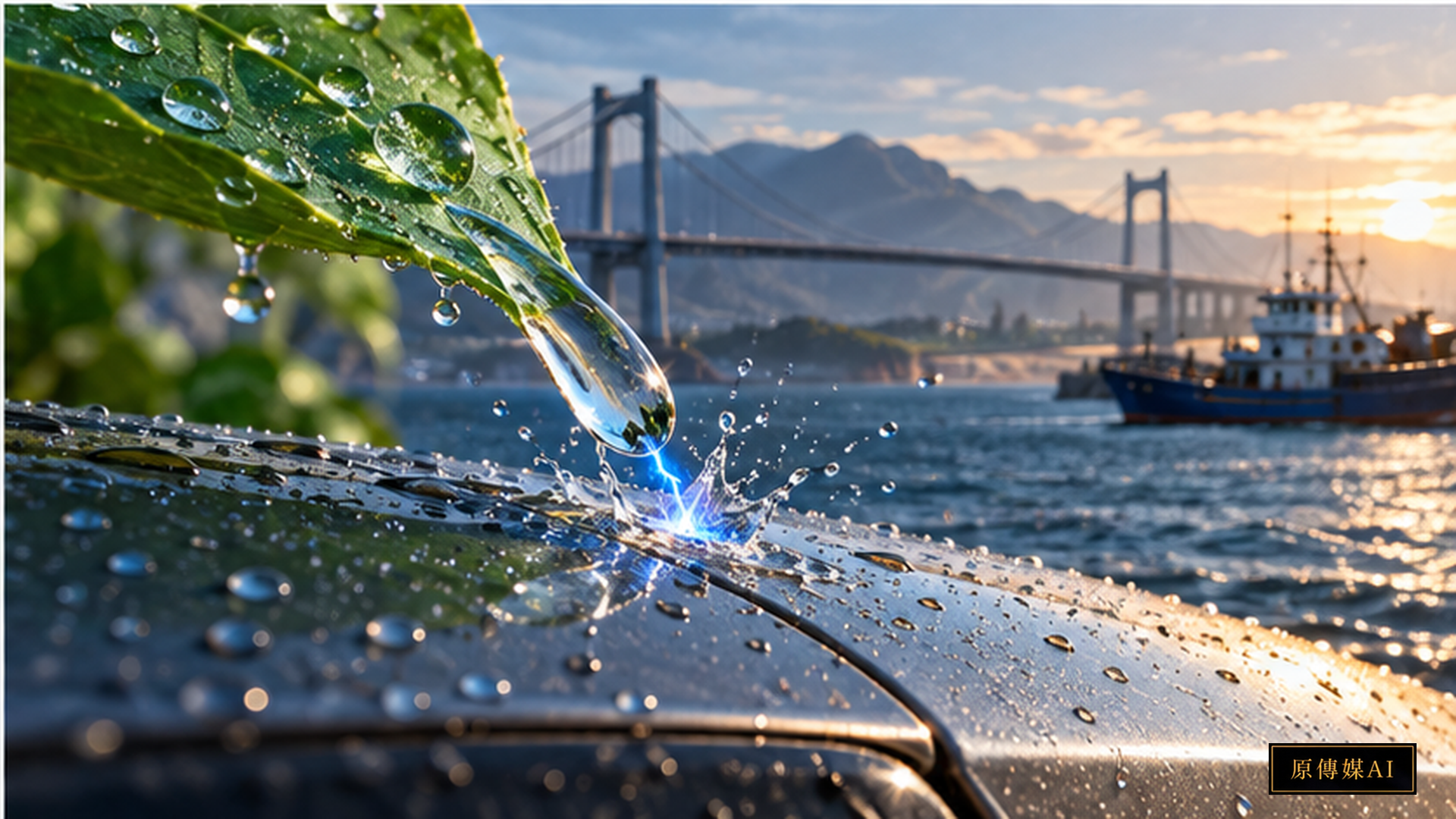
This article was compiled from official and research sources; established facts, research limitations, cultural contexts, and extended analyses are presented separately. The cover is an AI-assisted concept illustration.