What Each Crop Leaves for the Next: Mungbean–Wheat Rotation Links Breeding, Soil, and Farmers’ Experience
Original Chinese title: 每一季作物都為下一季留下禮物:綠豆—小麥輪作如何把育種、土壤與農民經驗連成一個系統?
An Australian trial with more than 300 genetically diverse mungbean materials found different outcomes in a common following wheat crop, opening a breeding question about crop legacies while leaving mechanism and local transfer uncertain.
鄭淑禎|實踐大學專任助理教授;專家諮詢:歐錫坤博士|前農業試驗所作物組組長
鄭淑禎 is a full-time assistant professor at Shih Chien University and writes on industrial transition, agricultural value chains, local economies, and technology applications. Expert adviser 歐錫坤博士 formerly headed the Crop Science Division of the Taiwan Agricultural Research Institute.
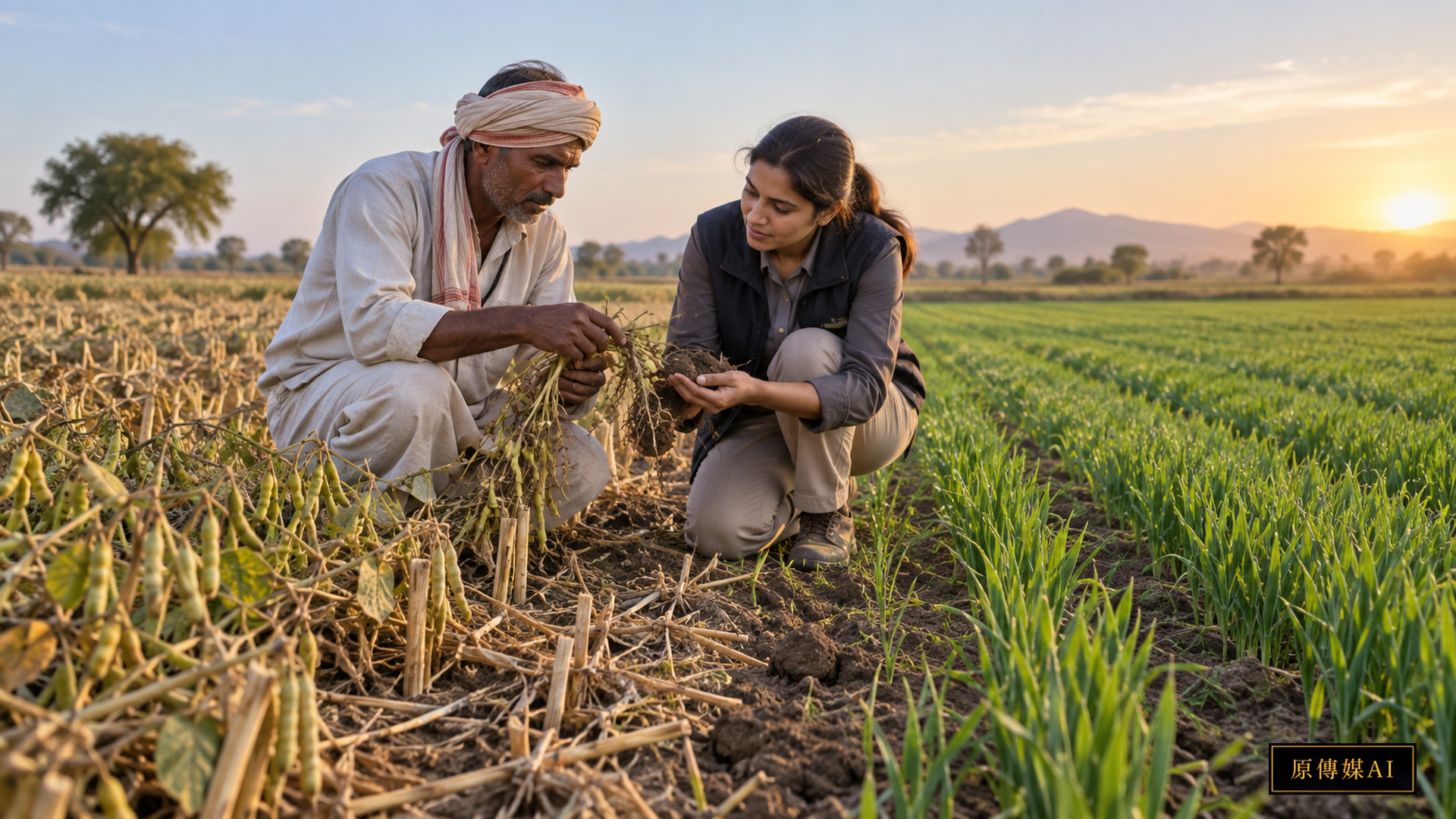
# What Each Crop Leaves for the Next: Mungbean–Wheat Rotation Links Breeding, Soil, and Farmers’ Experience
A field does not reset at harvest
A mungbean field does not return to a blank slate at harvest. The following wheat crop inherits conditions shaped by the previous crop. Farmers already rotate crops to manage pests, nutrients, and labor. If mungbean genotypes leave different conditions, variety choice affects more than the first harvest. Queensland researchers ask whether a variety can be judged partly by what it enables next season. Answering requires two crops, soil measurements, and attention to farmers’ costs.
One wheat cultivar, many predecessors
At a southern Queensland research station, scientists grew more than 300 genetically diverse mungbean materials and then planted the same wheat cultivar on every plot. This design reduces variation in the follower crop’s genetics and makes the predecessor comparison clearer. UQ reports wheat performance differences of up to about one tonne per hectare, with some predecessor lines associated with gains and others with losses. These are results in defined trial conditions, not a promise that any mungbean will improve wheat.
Percentages need their denominators
UQ reports that some predecessor lines raised following wheat yields by 45%, while others halved them. These eye-catching figures require their comparisons, location, season, and uncertainty. They cannot become an advertisement that rotation guarantees a 45% increase. Weather, sowing date, topography, and management can affect individual plots. The design makes genetic differences a candidate explanation, but results need replication across years, soils, and farms. A grower needs two-season net returns and risk, not one headline percentage.
Possible legacies in soil
Predecessor crops might change nitrogen and nutrient reserves, water use, root channels, soil structure, and rhizosphere microbes. Being a legume does not mean all mungbean genotypes leave identical nitrogen for wheat; nutrient removal at harvest can offset benefits. A Nature Genetics perspective lays out heritable crop legacy pathways, while researchers say the biology behind the trial result is not yet resolved. Measuring water, nitrogen, structure, and microbes together is more useful than declaring one mechanism too soon.
Breeding goals across a system
Conventional evaluation emphasizes a crop’s own yield, maturity, and disease resistance because farmers harvest that crop. Including effects on the follower requires two-season trials and records, so selection does not maximize mungbean while harming wheat. The Queensland team reports simulations in which selecting both crops can improve both outcomes. A simulation is not a universal farm result. Seed availability, climate adaptation, and markets still matter.
What a wider review can and cannot add
A Nature Communications meta-analysis finds advantages from legume-based rotations under many conditions and examines differences in rainfall, fertilization, and management. It provides background for studying rotations. It does not verify every genetic effect among the Queensland mungbean lines, nor predict the same gains everywhere. Separating general rotation benefits from differences among varieties clarifies the new question: which predecessor genotype should be selected?
Two-Eyed Seeing: two-way knowledge: farm experience shapes the question
Farmers may know that a field behaves differently after particular predecessors, but one yield table may not explain why. Researchers and farmers can jointly record sowing date, residue handling, fertilizer, water, pests, and grain quality, using nearby comparisons. Farmers identify meaningful differences; laboratories measure soil and genetic traits. Results should return to participating farms, with agreed rules on seed, field data, and commercial use.
Taiwan needs local tests first
A Queensland mungbean–wheat station trial cannot be moved wholesale to Taiwanese rice, upland, or warm wet farming. Soil, rainfall, dates, machinery, irrigation, markets, and varieties differ. Local teams should choose rotations farmers can actually use, compare them across sites and seasons, and calculate fertilizer, water, labor, and returns together. Without these data, lower input use is a research direction, not a guaranteed saving.
A two-season ledger farmers can use
A pilot need not begin with costly equipment. Mark plots and varieties clearly; record the predecessor harvest and residue treatment, soil sampling dates, follower sowing and inputs, and two-season gross margins, including poor years. Researchers recommending a line should disclose comparisons and unsuccessful plots. Cooperatives can compare farm conditions so one demonstration field is not mistaken for the norm. Selection becomes system-oriented when the next crop is part of the decision.
The unseen work of predecessor roots
Roots may change pores, deep water use, and microbial habitats even when fields look alike above ground. Measuring only mungbean and wheat yields leaves the pathway unexplained. Sampling before planting, after mungbean harvest, and during wheat growth, including plots without expected benefits, helps separate genetic effects, environmental differences, and random variation.
Nitrogen is not the only answer
Legumes and nitrogen fixation are linked, but nitrogen available to wheat depends on genotype, nodules, soil, residue management, and nutrients removed at harvest. Water shortage or disease may override a nitrogen benefit. A message that mungbean simply fertilizes wheat can obscure field differences. Tests should record nitrogen balance, water, soil properties, and fertilizer management together.
Farmer goals beyond yield
Farmers may value quality, stable harvests, seed prices, disease risk, and the timing of the next sowing. More wheat may not improve household returns if seed or labor costs rise. Users should help rank breeding goals, including two-season margins, inputs, and losses in extreme years. Station averages can overlook farms least able to bear trial risk. Participation should be voluntary and reversible.
Replication across environments
A genotype may leave different legacies under different soils, rain, and management. Moving beyond a station requires shared records and randomized or matched comparisons across farms, with local results alongside averages. A line that helps only on one soil can still be useful if its conditions are stated. Stability and economic risk determine whether the trait is a practical breeding target.
Results must return beyond the paper
Participating farmers should receive readable comparisons with similar fields, known uncertainties, and options for the next season. Researchers can analyze samples, cooperatives can organize seed and market information, and public agencies can support multi-season costs. Duties should be agreed in advance. Results that remain only in papers cannot be checked against a farm’s circumstances. Disappointing outcomes require the same shared review.
Lower inputs need a full ledger
Breeding for rotations may reduce external inputs, but actual fertilizer, water, and emissions must be assessed across the whole system. Shifting fertilizer to the mungbean season or adding irrigation and transport does not establish an environmental gain from wheat yield alone. Record seed, fertilizer, water, energy, pesticides, and transport within consistent boundaries. That makes lower input claims checkable.
A legacy still to be tested
Every crop leaves something for the next, but that legacy may be water depletion, disease, or a nutrient gap. The study matters because it makes such effects measurable and comparable, without romanticizing rotation. Farmers need reliable seed and feedback; researchers need evidence across environments; policy must make room for unsuccessful trials to be reported. Putting this harvest and the following crop on the same ledger can reveal routes toward productive, less resource-intensive systems.
Continue asking by role
- Farmer: Ask about evidence, limits, and feasible action.
- Plant breeder or geneticist: Ask about evidence, limits, and feasible action.
- Soil, microbiome, or agronomy researcher: Ask about evidence, limits, and feasible action.
- Extension, cooperative, or agricultural governance worker: Ask about evidence, limits, and feasible action.
Sources and further reading
Role-Driven Inquiry
Yuan Media AI | Guided Questions by Role
Select a role first, then review the complete questions from that perspective; clicking a question will display Yuan Media AI’s response in real time.
Select a role
Farmer
Examine the article's evidence, governance boundaries, data rights, and actionable steps from the perspective of a Farmer.
Choose a question
AI use and content-safety disclosure
This article draws on official and research sources. Evidence, limitations, and analysis are distinguished. The cover is an AI-assisted concept image.