Let Two Healing Pathways Stand on Their Own: How Elder-Governed Cultural Therapy Accompanies 20 Aboriginal Young People in Australia
Original Chinese title: 讓兩條療癒路徑各自站穩:長者治理的文化療癒,如何陪伴20名澳洲原住民青少年?
An elder-governed cultural-therapy evaluation involving 20 Aboriginal young people offers a careful way to discuss cultural authority, clinical safety and parallel pathways without reducing either to an accessory.
王莉如
王莉如 is a counseling psychologist supervisor whose work focuses on trauma recovery, partner and family relationships, helping-professional ethics, and socio-emotional support.
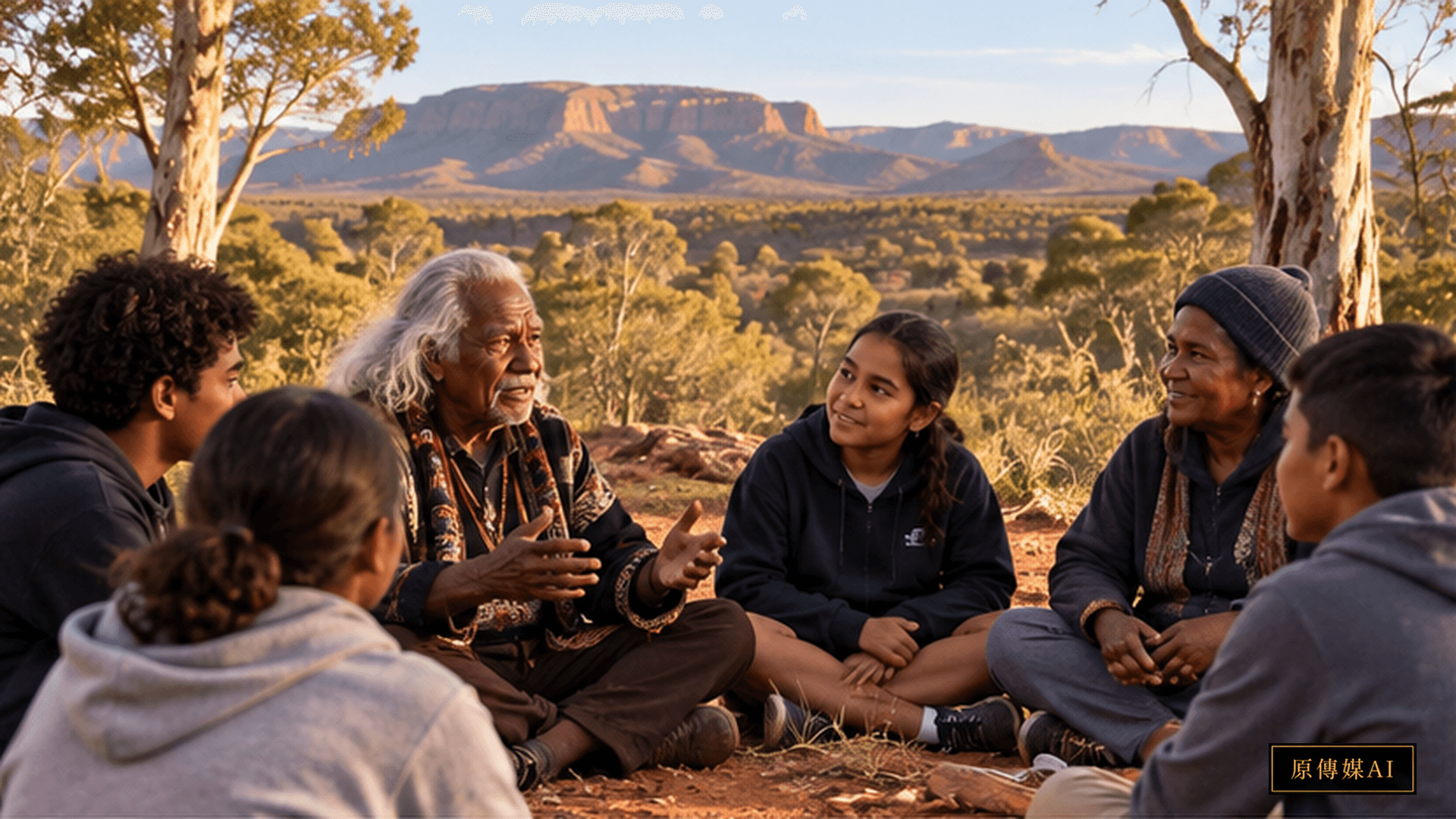
# Let Two Healing Pathways Stand on Their Own: How Elder-Governed Cultural Therapy Accompanies 20 Aboriginal Young People in Australia
By 王莉如 | Counseling Psychologist Supervisor
This feature uses the approved primary sources to distinguish what a study or official rule can directly support from interpretation and local governance questions. The evidence concerns the approved topic; it should not be read as a universal outcome for every community, place or institution.
Establish what the evidence can actually say
A reliable reading begins with the population, time period, method and limits of the source. Measured patterns can guide questions, but they do not automatically settle causation, rights or the meaning of a change for people who live with it.
It is equally important to state what was not measured. A finding about one service, watershed, calendar practice or forest-management setting cannot by itself determine what should happen in another place.
Do not make one knowledge system speak for another
Scientific and administrative records can make some conditions visible. Local knowledge holders and frontline practitioners identify responsibilities, relations, changing conditions and boundaries that a dataset cannot infer. A responsible process lets both contributions remain distinct and open to correction.
This does not make evidence optional. It makes the question more precise: which observation supports which claim, who can challenge it, and what should happen when observations conflict?
Design data, consent and accountability together
Data collection needs a stated purpose, access rules, correction routes, retention limits and an explanation of who decides secondary use. Participation is not complete when a meeting is held; people affected by a decision must be able to influence it, challenge it and leave it where appropriate.
Participation also needs material support. Time, travel, translation, caregiving and follow-up work should be budgeted rather than quietly shifted to knowledge holders or frontline workers without compensation.
Do not turn an international case into a shortcut
The evaluation involving twenty young people should be read as a report on a particular method and service experience, not as a universal verdict on cultural therapy. It can support questions about safety, access, elder leadership and referral pathways in that setting; it cannot erase differences in family circumstances, housing, health access or cultural responsibility elsewhere.
Australia's health plan is useful as a governance reference because it connects cultural safety, community control and public responsibility. It is not an administrative template for Taiwan: local law, community organisations, clinical resources and relationships must be examined separately. A careful comparison records sample, timing, service conditions and what requires local confirmation.
Begin the Taiwan discussion with governance
For Taiwan, the practical question is how to connect evidence with local authority, transparent responsibilities and a safe way to report error or harm. Technology can assist observation and documentation, but it cannot replace consent, field verification or accountable decision-making.
A workable pathway is to record an observed signal, invite local review, provide a responsible agency response and publish an appropriate explanation without exposing sensitive places or people.
Keep uncertainty inside the institution
Attendance, scales and completed referrals may matter, but none alone can show whether a young person feels able to return, understands their choices or believes relationships have been respected. Positive stories also cannot conceal acute risk, confidentiality boundaries or the need for clinical referral. Different evidence has a place without becoming a substitute for the rest.
A shared process should make refusal, pausing and changing participation possible; clarify what elders will not record or disclose; and explain clinical responsibility in a crisis. Digital tools may help organise feedback, but they must not replace the judgement of young people, families, elders and practitioners. Access, deletion and correction rules need agreement before data are collected.
Conclusion: place the verifiable beside the irreplaceable
The durable lesson is not a slogan. It is a process in which evidence, local observation and governance responsibility can correct one another, while rights holders retain meaningful control over disclosure, correction and participation.
Primary sources
AI use and content-safety disclosure
This English edition is an AI-assisted translation of the Chinese article, reviewed for source parity and evidence boundaries.